
Not For The Farmer
The real beneficiary of Direct Benefit Transfer of fertiliser subsidy will be the industry.
 Fertiliser price has two components — the retail price which is fixed and the subsidy component which is variable.
The industry strategy on fertiliser subsidy remains similar to the tobacco industry’s response to cancer claims since 1954. Robert Proctor, a historian at Stanford coined a term for it, “agnotology”, that is, when ignorance is deliberately produced and indisputable facts do not win arguments. Proponents of the “Direct Benefit Transfer (DBT) of Fertiliser Subsidy” pilot claim it generates point of sale farmer traceability to stops leakages and timely payments to the industry; which while good, does not present the complete picture. To pick these low hanging fruit, one needn’t cut down the tree itself. But that is exactly what’s planned.
The truth is that DBT is about transferring benefits to the fertiliser industry. The fertiliser subsidy DBT pilot project in 17 districts is a well-planned Trojan horse. It is misleading as it doesn’t incorporate all the draconian measures that will eventually be a part of the full roll-out. The final form of the DBT will allow the industry to price fertilisers at will, and the burden of collecting the subsidy from the government will be transferred to farmers. It’s all similar to US sugar industry in 1960 successfully paying scientists & academics to delink sugar and heart disease by diverting attention to saturated fat. Realising the enormous opportunity, for the first time international fertiliser giants like Yara International have started to buy Indian urea fertiliser plants to gain a toehold in the lucrative market.

Fertiliser price has two components — the retail price which is fixed and the subsidy component which is variable. Today, irrespective of how the international urea price fluctuates, the farmers get to buy the urea bag at a fixed cost of Rs 284. With the new DBT regime, that will be reversed. The price of a urea bag will become variable while the subsidy component will be constant. In 2008, the international urea price breached the $500 per tonne mark and in India the urea retail price was Rs 239 per bag. International prices are about half of that today, but are perking up. Should the international price rise to 2008 levels, under the new DBT regime the farmer could have to shell out Rs 1,200 per bag.
A perfect analogy to explain the final version of the DBT of fertiliser subsidy regime is the LPG gas cylinder cost borne by the consumers. Before the DBT on LPG, consumers paid Rs 450 for a gas cylinder. After the regime change, a gas cylinder’s price has risen to Rs 805. The consumer purchases the cylinder at full cost and is later reimbursed the subsidy component, if applicable. Similarly, farmers now pay the subsidised retail price and take home the bag of urea. However, in the new regime, the farmer will have to register with land documents (difficult to procure) and pay the full price upfront and be reimbursed the subsidised amount. It simply means that the capital expenditure and credit requirement for the farmer will increase by a third. The most common cause for farmer suicides remains credit.
Just as Tim Harford explained “distort, dispute, distract” in ‘The problem with facts’; first the fertiliser industry appeared to engage, next it sowed doubt on prioritising farmer needs over fertiliser industry profitability and in third stage employing their enormous pool of resources they are using amenable experts to undermine farmers concerns & real expertise.
The new regime will also limit the quantity of subsidised fertiliser a farmer will be allowed to purchase. Wheat, rice, potatoes, pulses, millets etc. each require different nutrients in varying quantities depending of soil and crop selection. The policy negates this fact and goes back to old bureaucratic generalisation of Indian agriculture which has failed the nation repeatedly. Today, 10 crore tenant farmers can buy subsidised fertilisers. In the new regime, they will not be entitled to the subsidy because land records don’t carry their names.
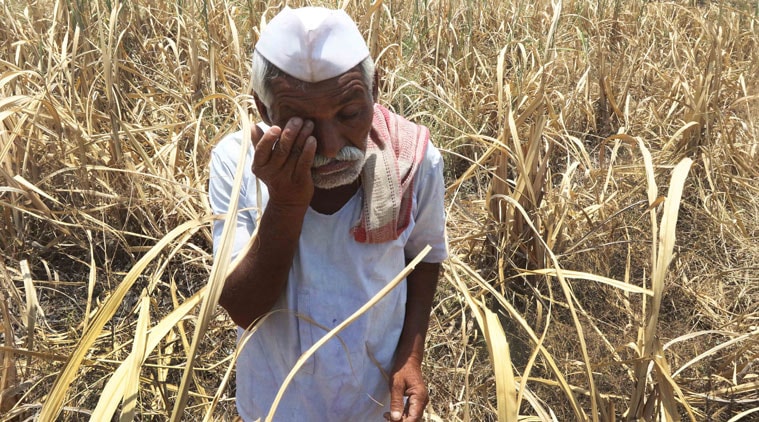
The DBT of fertiliser subsidy can be beneficial if it is tweaked to protect farmers. Farmers, with their backs to the wall, pray for a parliamentary guarantee safeguards because mere words aren’t legally binding. Framers are hurt and feeling betrayed because issues of livelihood are not the primary concern of farmer fertiliser cooperatives any more. The last bulwark against the international fertiliser mafia has fallen.
The government’s grand vision for a “New India” is at variance with its narrow economic policies. Officials only hope to rein in fertiliser subsidy expenditure. The number of economists advising the government has reached an affliction point and sadly “doubling farmer income” is becoming a parody against the establishment. Farmers’ voices are being drowned in the din generated by the fertiliser industry. Is anybody listening?
 Share


