The “triple talaq” hearing is an opportunity for the Supreme Court to finally remove some jurisprudential cobwebs that have enveloped constitutional secularism in India. It is an open question whether it will rise to the occasion or whether it will, as on previous occasions, simply fudge its way to a narrow ruling. Underlying the “triple talaq” questions are deeper issues about the nature of constitutional law in India. There are two claims that lie in the backdrop of this case that have caused a great deal of judicial confusion over the years. They have also produced deep distortions in our politics.
The first claim, very simply put, is over the constitutionality of personal laws. It is truly extraordinary that even after 70 years of Independence, thinking on this basic question remains confused. The source of mischief is a 1952 judgment in State of Bombay v Narasu Appa Mali, which, strangely enough, argued that personal laws do not count as “laws in force” under Article 13, and hence, are not subject to the test of constitutional validity. Different high courts tried at various points to overrule this, but the Supreme Court has let this strangest of claims stand.

This has had disastrous consequences for law and liberty. First, it rests on a bizarre understanding of what law is. On this point, Justice V.R. Krishna Iyer was right. It is odd not to treat personal laws as “laws.” He wrote, “Personal law is law by virtue of the sanction of the sovereign behind it.” Second, this doctrine seems to enshrine a law that is higher than the constitution. For, in effect, it says that there is a body of law that is exempt from constitutional scrutiny. One can only speculate on the reasons the Supreme Court has upheld this strange idea for 70 years.
I suspect it is confused between two different propositions. It may not want to rule outright that personal laws are unconstitutional. But surely, it does not follow from this fact that they should not be subject to constitutional scrutiny. Personal law, like the Ninth Schedule, cannot be a dark space, where we cannot shine constitutional light. Third, this doctrine gives rise to serious misunderstandings about the sites of justice. As an illustration, as Flavia Agnes pointed out, there is a Delhi High Court case from 1984, Harvinder Kaur vs Harmander Singh Choudhry. The judgment argued that “introduction of constitutional law in the home is most inappropriate. It is like introducing a bull in a China shop. It will prove to be a ruthless destroyer of the marriage institution and all that it stands for. In the privacy of the home and married life, neither Article 21, nor 14, have any place.”
In a nutshell, this argument can tell you how regressive the legacy of Narasu Appa is. Again, it is true that the meaning of the “home” and marriage are not exhausted by legal principles. But it does not follow that the legal structuring of the rights of individuals in the home is not subject to constitutional scrutiny. In fact, the home, and more specifically gender relations, are the sites of the most epic, intimate and consequential struggles for equality and liberty. Finally, the implication of Narasu Appa was to enshrine faith above constitution. There is a paradox here because, on the one hand, personal laws are often construed as not being religious; but they effectively provide a faith-based shield against constitutional scrutiny. Once this mischief is allowed, all kinds of faith-based arguments trump justice.
The court has a wonderful opportunity to undo this constitutional nonsense. This nonsense also created a distorted politics of secularism. Kapil Sibal may be acting in his professional capacity as a lawyer. But the symbolism of a senior Congress leader defending faith-based arguments trumping equality and freedom tells you in a nutshell what went wrong with Congress secularism (for an early brief critique, see my ‘Congress, Secularism and Freedom’, Seminar, 2003). It consistently allowed communal identities to trump both Article 14 and Article 21. Everyone swears by the constitution. Admittedly, the constitution is a complex text. But if Articles 14 and 21, individual liberty and equality, do not exercise moral sovereignty, then the Indian constitutional project is dead. When we say the law must pass the test of constitutionality, this is the core of the test. It’s high time the Supreme Court made it clear.
The second strange doctrine is a partial consequence of the first. This is the “essential practices” test of the court. In order to ascertain whether something deserves protection under religious liberty clauses, courts may have to inquire whether the practice is in fact religious. But our courts have gone further. Rather than subjecting religious practices to the test of constitutionality, they have given lexical priority to the religious practice. One line of argument in the triple talaq case suggests that the only issue in this case is whether the practice is genuinely Islamic. If it is, uphold; if not, abolish it.
This is again patent nonsense. Even if the practice is deemed by its adherents to be essential to a religion, it has to be subject to the test of constitutional morality. The essential practices test has often not stood in the way of social reform, because the court acquired power to regulate and redefine religion.
Our judges overreach by trying to act as pandits and maulvis. But this strategy has extracted a triple price. First, it is intellectually disingenuous. The court seems to think there is some “objective” descriptive test of what counts as essential to a religion. There is none. The court smuggles in its own regulative ideal in the guise of a descriptive test. Second, it involves the court in religious controversies, and sets the state up as arbiter of religious interpretation. This is a travesty for a secular state. But, most importantly, this test fails to convey a basic message. Religious practices cannot trump modern constitutional morality. There is something quite vapid about a court going to great lengths to show that religion, properly understood, is not in conflict with constitutional morality. It may be or it may not be; some adherents may see there is a conflict, some may not. But that is neither here nor there. The triple talaq case is not about Koranic exegesis, or faith-based protections. The core question is: Will the court redeem the constitutional promise of a society where the law treats all individuals as free and equal?
(This article first appeared in the print edition under the headline ‘No dark spaces’)

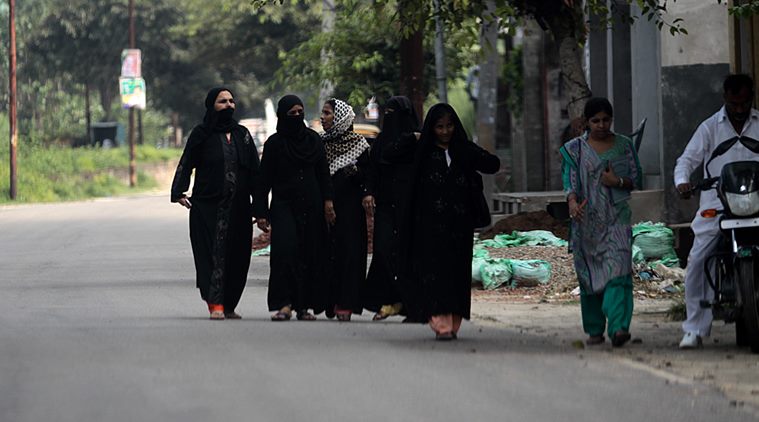 The court has a wonderful opportunity to undo this constitutional nonsense of Triple Talaq

 Share


