5 min readJun 25, 2025 03:15 PM IST
First published on: Jun 25, 2025 at 03:15 PM IST
Half a century has gone by since the midnight knocks of June 25, 1975, inaugurated the dictatorship that we euphemistically call the Emergency. Overnight, 676 politicians found themselves in jail. Over the following days, Indira Gandhi proceeded to ban opposition parties, abolish elections, cripple unions, and make quick work of such quaint ideas as judicial independence and press freedom. A few thousand died resisting the regime, some 110,000 wound up behind bars, and a staggering eleven million were forcibly sterilised on account of Mrs Gandhi and her son’s fixation with family planning.
But, thanks to Mrs Gandhi’s hubris, elections were called 18 months into the regime and the Emergency suspended. When she was duly defeated, it became possible to write the whole thing off as a bad dream — ghastly but, ultimately, brief and forgettable. The journalist Janardan Thakur, for instance, writes that when he had written up his history of the nightmarish biennium, he sealed his notes and clippings with Sellotape with the intention of never dusting them off again. The historian Bipan Chandra concluded his 2003 study of the Emergency by noting that the dictatorship was no more than a “passing interlude” in the “long march of Indian democracy…India’s political miracle has continued.”

Such judgements belong to a bygone era. With the misfortune of hindsight, we know this to be untrue. Echoes of the Emergency in our time serve as pointed reminders that it was not a parenthetical blip in India’s long march of deepening democracy, but rather a style of rule that is still with us today. One need only think of today’s cow vigilantes to be reminded of Sanjay Gandhi’s arm-twisting Youth Congress — both states within a state. Modi’s misuse of the CBI, whose motivated probes targeted over 20 opposition leaders for every NDA leader in 2014-24, recalls Mrs Gandhi’s weaponisation of state institutions.
Then we have the contempt for parliamentarism and the procedural trappings of democracy. Here is Modi’s broadcasting minister Anurag Thakur on the protestors opposing the citizenship law of 2019: “Desh ke gaddaron ko, goli maaro saalo ko (Shoot the bastards who betray the nation)”. No doubt he would have found an ally in Mrs Gandhi’s crony Bansi Lal, who declared during the Emergency, “Get rid of all this election nonsense. If you ask me, just make our sister president for life.” Like Mrs Gandhi, Modi often elects to rule by ordinance, interferes with judicial appointments, withholds advertisement revenue from newspapers that fail to toe the party line, and imprisons journalists, activists, and students who have the temerity to question his policies.
When I was writing my history of the Emergency with the French political scientist Christophe Jaffrelot, the contemporary parallels became impossible to ignore. Our rather canny publisher, Michael Dwyer, proposed the Cassandra-like title we happily plumped for: India’s First Dictatorship. As it was, the last general election gave credence to his intuition: 2024 had more than a whiff of 1977 to it. A good many opponents of Mrs Gandhi in the latter poll had campaigned against her from their prison cells; as for India’s first dictator and her son, they had briefly attempted enlisting the army to prevent the Janata Party from taking office. Modi’s third victory, likewise, was achieved in conditions that could hardly be described as free and fair: The opposition coalition had found its bank accounts frozen on the hustings; two chief ministers at the time were “ruling” their states from behind bars.
Modi is a product of his milieu. Born in 1950, he is roughly coeval with the postcolonial state. Growing up as a tea-seller in Jawaharlal Nehru’s India, he would have descried in the first prime minister no exemplary democrat. Some 40,000 Muslims were killed during the annexation of Hyderabad. Later, Nehru suppressed communism through mass incarceration and, when the CPI accepted democracy, by undemocratically overthrowing its Kerala government. None of the six non-Congress and Congress minority regional governments during Nehru’s tenure were allowed to complete their term in office.
Kashmir’s ruler was thrown in prison, and Hyderabad’s largest opposition party was banned for a decade. Independent trade unions were laid low by the Industrial Disputes Act. Press freedom was dealt a blow by the First Amendment. Dissent in the Northeast was crushed with the Armed Forces Special Powers Act. Preventive detention was introduced in 1950 and then continuously renewed until the Congress lost its majority in 1969. Simultaneously prime minister, defence minister, foreign minister, and chief of the planning commission, Nehru betrayed a blithe disregard for institutions. His daughter was groomed to replace him from the late Fifties onward.
Mrs Gandhi, of course, was more brazen and less democratic than her father, but the fact is that she was following in his illiberal footsteps on many counts — and, by extension, so is Modi today, though the comparison is bound to sting him. Between the three of them, the difference is not of substance but of degree. Emergency was a dark chapter, to be sure, but few others in independent India’s history have been much brighter.
The writer is a historian at the University of Oxford and author of Another India: The Making of the World’s Largest Muslim Minority, 1947-77

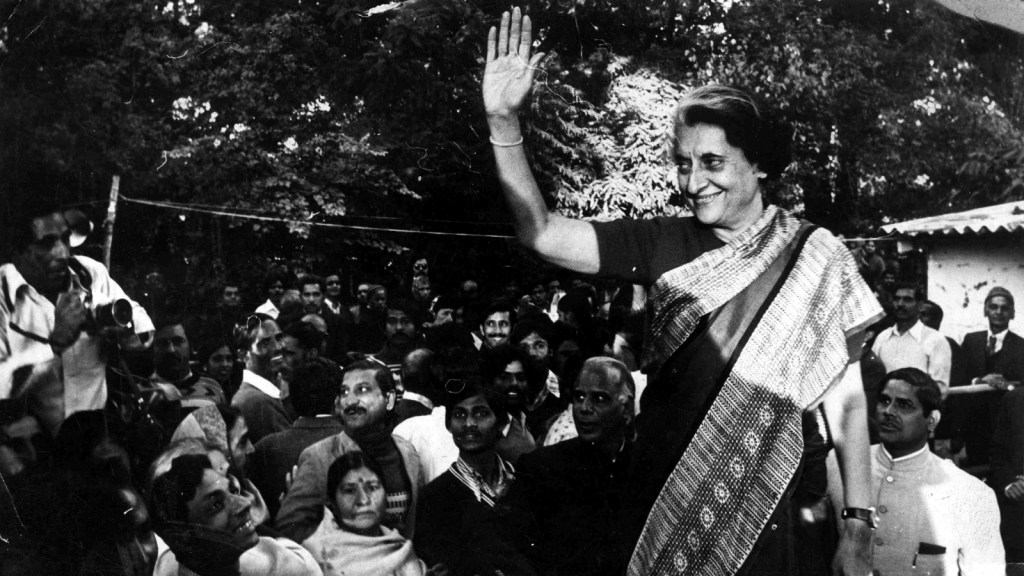 Mrs Gandhi, of course, was more brazen and less democratic than her father, but the fact is that she was following in his illiberal footsteps on many counts — and, by extension, so is Modi today, though the comparison is bound to sting him.


 Share


