A global non-profit focused on trade in wild animals and plants, TRAFFIC, assessed 25 years of data to document 2,551 seizures involving at least 3,808 tigers through June 2025, with persistent hotspots, a growing prominence of whole-animal seizures, and nearly one-fifth of incidents involving other trafficked species.
For much of tiger conservation’s history, wildlife crime had a familiar geography. A tiger reserve, poachers attempting to breach it, and traders waiting somewhere else. Protection, therefore, meant strengthening the boundary: More patrolling, more camps, better intelligence, better arms and communication, and quicker detection of intrusion.

All of these remain indispensable. But the tiger landscape has changed — and so has the world of wildlife crime.
Ordained by their life cycle requirements, tigers do move, and there are definite dynamics. Young animals disperse. Populations expand and contract. Tigers move through buffers, corridors, multiple-use forests, plantations, agricultural fields, riverine strips, and occasionally the edges of towns. There are ongoing human-tiger interface conflicts.
A tiger reserve may remain the biological source, but the life of the tiger increasingly unfolds across a much larger landscape. This creates a paradox of conservation success: As the tiger’s ecological space expands, its exposure space may expand as well.
A tiger safely monitored inside an intensively protected source population may become considerably more vulnerable once it moves through an inadequately monitored corridor or human-dominated landscape.
Changing face of wildlife crime
Available global evidence suggests several directional changes in tiger trafficking. Hotspots and routes can shift as enforcement, tiger populations, markets and criminal opportunities change. There is persistence accompanied by geographical redistribution.
The older image of tiger trafficking centred heavily on skin and bone. These remain important, but whole animals — dead and alive — and a wider range of derivatives have become increasingly prominent. There is commodity diversification.
Tigers may appear within a larger portfolio of illegally traded wildlife. The person trafficking tiger parts may also have links with networks dealing in leopard, bear, pangolin or other high-value wildlife. There is an obvious species convergence.
Communication, advertising, networking between buyers and sellers, and other elements of transactions can increasingly migrate to digital platforms. Wildlife crime has smartened with digital enablement.
The modern wildlife trafficker can potentially use transport systems, financial channels, communications, and intermediaries that extend far beyond the traditional wildlife trader. There is smart criminal adaptation and convergence with more networking.
Two landscapes are important in the context. The first is the “ecological”, comprising source, buffer, corridor, stepping stone, and interface. The other is the “crime landscape” with a linkage from poacher, collector, network, transit system, physical/digital market, and consumer. These two landscapes intersect and create the vulnerability.
A dispersing tiger passing through an unprotected forest division, for example, is not merely an ecological event. It is potentially a protection event. A livestock depredation episode is not merely a conflict-management issue. Repeated tiger movement through a poorly monitored interface may also become information available to people capable of exploiting it.
Tiger movement intelligence must therefore increasingly become protection intelligence. The protected-area boundary cannot be the boundary of protection.
Tiger vulnerability, criminal opportunity
Inside the source, protection can remain intensive and tiger-specific. In the buffer and beyond at the landscape scale, protection needs to become increasingly inclusive and intelligence-led — involving territorial forest staff, local communities, gainful community stewardship, police, transport and enforcement agencies, local administration and, where appropriate, cyber and financial-crime expertise.
The forest guard remains fundamental, but cannot carry this landscape-scale responsibility alone. Tiger concerns need to be factored amongst sectors and stakeholders where tiger is not the goal. There needs to be a quid pro quo understanding with gains for agreed actions.
The next generation of tiger protection needs to understand these parcels and causal linkages. Where are young tigers likely to disperse? Where do they repeatedly cross roads or agricultural landscapes? Which villages experience recurrent interface? Where have snares, traps, poisoning, or wildlife offences occurred historically? Where are transport nodes and traditional aggregation points? And where does field intelligence suggest emerging criminal opportunity?
Overlaying these layers creates the “Tiger Crime Opportunity Surface” — a dynamic representation of where tiger vulnerability and criminal opportunity are most likely to intersect. The purpose is simple: To act before mortality rather than investigate after its happening.
A movement alert from a camera trap or monitoring system could therefore trigger different responses depending upon where the tiger is heading. In a secure forest, it may require routine monitoring. In a conflict-prone village cluster, it may trigger community preparedness. In a historically vulnerable crime landscape, it could simultaneously trigger enhanced patrolling and intelligence.
From seizure to network
Our measure of success must also evolve. A seizure is important. An arrest is important. But neither necessarily dismantles the system that produced the crime.
Publicly available cases often show the focus on lower- and middle-level actors, while higher-level organisers and financiers were rarely prosecuted. This underlines the need to follow cases beyond seizure and arrest into intelligence, prosecution, financial investigation and network disruption.
The investigative question needs to progress from “Who killed the tiger?” to “Who commissioned, financed, transported, traded and ultimately benefited from it?” What other wildlife and criminal activities are connected to the same network?
Tiger conservation has already moved conceptually from isolated protected areas towards connected landscapes. Wildlife-crime management must make the same transition.
Gopal is secretary general, Global Tiger Forum, an intergovernmental non-profit

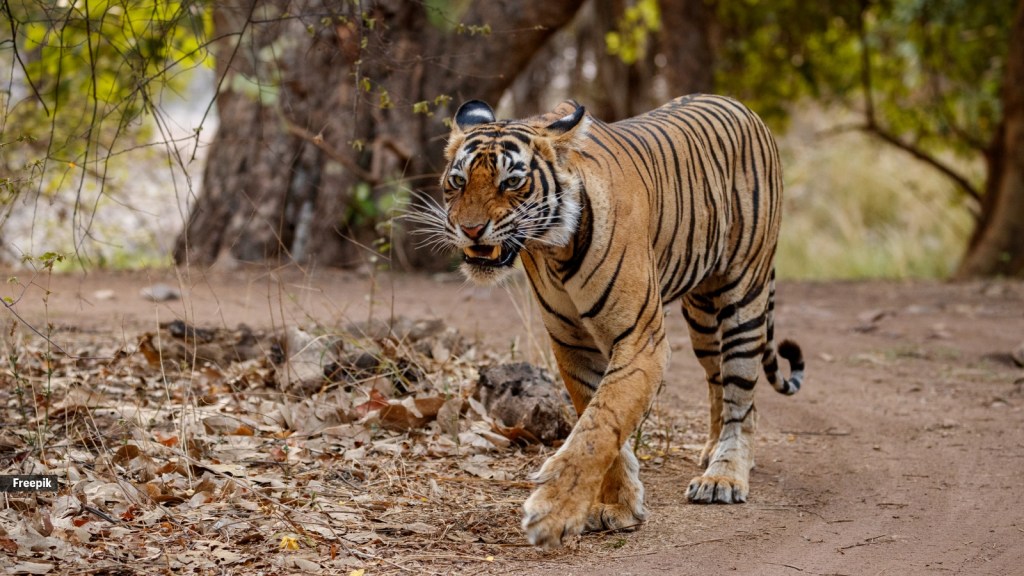 A tiger safely monitored inside an intensively protected source population may become considerably more vulnerable once it moves through an inadequately monitored corridor or human-dominated landscape.


 Share


