5 min readJul 11, 2025 10:12 PM IST
First published on: Jul 11, 2025 at 07:45 PM IST
Nearly a quarter of a century ago, Rajkumar Santoshi made a film called Lajja that, were it to come before the Central Board of Film Certification (CBFC) today, would likely have the members of that body calling for smelling salts. Starring Manisha Koirala, Madhuri Dixit, Rekha and Mahima Chaudhry, Lajja (2001) took on the hypocrisy of a society that venerates goddesses but mistreats and exploits flesh-and-blood women. It was a well-intentioned if melodramatic film that couldn’t resist — like so many other “women-centric” films of the time — tempering its feminist sympathies with a hefty dose of male saviourism. It was, in other words, typically Bollywood: A little bold, a little sanctimonious, and designed to be entertaining.
Could such a film, so thoroughly mainstream in 2001, be made today? One might well ask this question, considering the meltdown that the CBFC appears to have had over a Malayalam film called Janaki v/s State of Kerala, beginning with the name of the protagonist, who is a rape survivor. How, the CBFC demanded to know, could a sexual assault survivor be named after the goddess Sita? Its refusal to certify the film unless the title and character name were changed — along with several more cuts — led to the producers seeking relief in the High Court. And as if its objections had not been absurd enough, the CBFC stated in a counter-affidavit, “(the protagonist) is aided by a man belonging to a particular religious community and is cross-examined and asked harrowing questions by a person belonging to another religious community. This religious dichotomy in the treatment of the character bearing Goddess Sita’s sacred name has the potential to inflame communal tensions and create divisive narratives between religious groups.”

And here we come back to Lajja, in which not one, but four characters were named after Sita — Vaidehi, Maithili, Janki and Ram Dulaari. The very choice of these names was meant to drive home the film’s message about the horrors that women have to endure in a deeply patriarchal society. The same year, a film named Ravanaprabhu was made in Kerala, in which a woman named Janaki falls in love with the title character — it went on to become one of the top-grossing Malayalam films of that year. If these films could be made and released without hurting sentiments or disrupting public order in 2001, one can only despair over how far Indian society has regressed in the 24 years since — at least in the CBFC’s imagination.
Because that, too, is among the many troubling aspects of this whole controversy: The wounds that the CBFC is seeking to salve by holding up the release of a film that was already cleared by its regional office in Thiruvananthapuram are entirely imaginary. As the Court itself noted, not one protest has erupted in the state. Not only is the CBFC going beyond its remit to decide what filmgoers in India can and cannot watch, it is hypothesising about how they might feel about a film and acting on it before the film has even been released.
The CBFC has a long history of attempting to circumscribe artistic space and infantilising the audience, but in Kerala the case of Janaki v/s state of Kerala has an especially disturbing resonance given the controversy in March over L2: Empuraan, which suggests that the ground may indeed have shifted. In Empuraan’s case, it was not the CBFC that posed the problem, but some social media users and members of the Sangh Parivar who took offence to its depiction of the 2002 Gujarat riots. That the producers of the film and its star, Mohanlal, apologised and agreed to “voluntary modifications” to dialogues or scenes that may have “pained” anyone betrayed a sense of being under siege, not by the scissors of official censorship, but by “sentiments” of the easily offended.
Some in the Malayalam film industry have sought to trace the current controversy back to the capitulation seen during the L2:Empuraan episode, arguing that ceding space to the hurt sentiments brigade at that time has normalised such reactions. That may not be entirely fair; we’ve been seeing similar controversies and capitulations in the Hindi film industry for a while, after all. Malayalam cinema has, so far, been protected by the unselfconscious sense of religious harmony that has long characterised it and which has mostly kept artistic freedom and creativity from being hijacked by manufactured outrage. Could the furore over Janaki v/s… — whose producers have agreed to add the initial ‘V’ before ‘Janaki’ in the title, besides two more cuts — herald a narrowing of this space?
pooja.pillai@expressindia.com

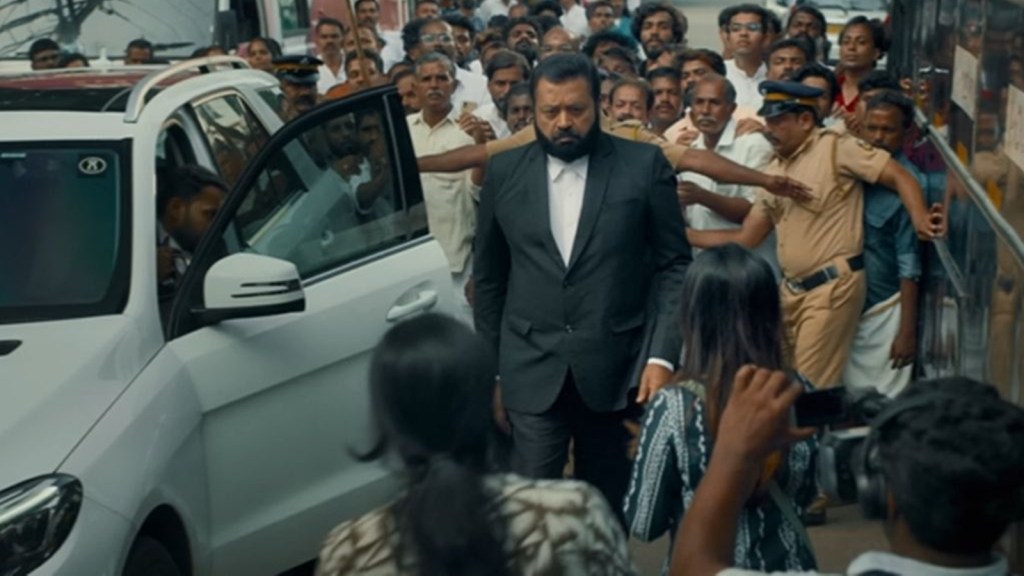 Could the furore over Janaki v/s… — whose producers have agreed to add
the initial ‘V’ before 'Janaki' in the title, besides two more cuts — herald a narrowing of the space for free expression in the Malayalam film industry? (Image: YouTube)



 Share


