
The young are talking back
Forty years after the Islamic Revolution, Iran’s regime is increasingly challenged by its people.
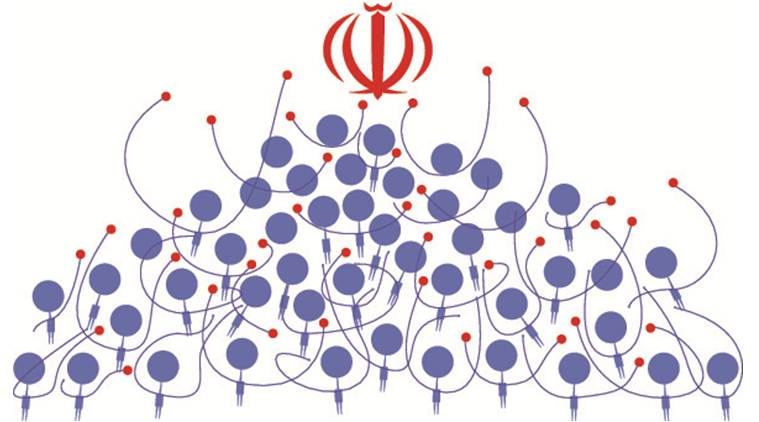 In the past 10 years, many protests in Iran — notably the Green Movement of 2009 — were products of the activities of the urban middle class youth. (Illustration: CR Sasikumar)
February 2019 marks the 40th anniversary of the Iranian Revolution, one of the major events of the 20th century and a momentous development in the modern history of Islam. The revolution opened a new chapter for political Islam in the late 20th and early 21st centuries and had a deep impact on revolutionary movements across the globe, especially those that were using the Islamic frame of reference for political activism. In fact, the “religious dimension” of the Iranian Revolution, through its dependence on Islam, was well-established in the decades leading up to the uprisings of 1978. We can refer here to the notion, popularised in the 1970s, that Iranians should return to their cultural roots by resisting the hegemonic influence of the West.
Hasty or emotionally-motivated understandings of the causes of the Iranian Revolution and the Shah’s downfall generally tend to focus either on the undemocratic nature of the Shah’s regime or on the economic gap between the rich and the poor in Iranian society of the 1970s. These factors also existed in some other Islamic countries — Morocco, for example — but they did not end up in a revolution and many dictators in these countries, including Hassan II of Morocco, died in their beds, without being forced, like the Shah of Iran, into exile.

Moreover, by the end of 1979, it was becoming increasingly apparent that a rigorous interpretation of Shi’ite Islam by Ayatollah Khomeini and the Iranian clergy was becoming the text of the law. The immediate consequence of this development was the establishment of a theocratic state with the institutionalisation of the power of the “faqih” (jurist), who was supposed to possess the necessary charismatic authority and political astuteness to rule the Islamic Republic. However, the establishment of the Velayat-e-Faqih (the rule of the jurist) could not put an end to the tensions between republicanism and authoritarianism, which had existed since the early days of the Iranian Revolution.
Since its inception, the Islamic Republic was dogged by tensions between two concepts of sovereignty — the divine and popular. The concept of popular sovereignty — derived from the indivisible will of the Iranian nation— is inscribed in Article 6 of the Islamic Republic’s Constitution. The article mandates popular elections for the presidency and parliament. But the concept of divine sovereignty, which is derived from God’s will through the medium of the imam, is bestowed on the existing “faqih” as the rightful ruler of the Shi’ite community. However, in the past 40 years in Iran, the idea of sovereignty of God on Earth has been less about what Michel Foucault called “the introduction of a spiritual dimension into political life” and more about the theologisation of politics.
As such, the first decade of the Iranian Revolution was marked by Khomeini’s theological governance and by the violent elimination of opposition groups and the enforcement of ideological controls on the Iranian population. The success of the ayatollahs against different social, ethnic, religious and political groups and minorities can be attributed to several factors. First, the Islamists enjoyed far greater support among the masses. Second, extraordinary economic and political measures were tolerated by the Iranian population because of the eight-year war with Iraq. Last, but not least, the Islamisation of Iranian society was a way for the ayatollahs to elicit the support of the bazaar and traditional socio-economic groups for whom the prospect of a “leftist revolution” was even more worrying.
Despite the forceful post-revolutionary imposition of Islamic values and ways of living and the insertion of cultural politics into the everyday lives of young Iranians in the name of Islamic purity, the Iranian youth — especially young women — have not identified with the conservative values of the Islamic regime. Moreover, the republican idea of popular sovereignty has found its place through social networks and is evident in the political activities of Iranian civil society — the women’s rights movements, the students’ movements, the online networks of young people and the work of dissident intellectuals and artists are good examples of such activism.
Today, more than 60 per cent of the Iranian population is under the age of 30. The image of Iran as a monolith does not reflect the mindset of those who have been fighting for change since the past 40 years. For nearly six million educated youngsters — many of whom have left Iran for the US, Canada, Australia and different parts of Europe — lack of jobs and the absence of social freedoms and everyday opportunities are the principal reasons of discontent and rebellion.
In the past 10 years, many protests in Iran — notably the Green Movement of 2009 — were products of the activities of the urban middle-class youth. But more recently, the turmoil in Iranian cities has largely been driven by disaffected young people in rural areas and small towns. They see it as a chance to express their frustration with the country’s economic problems, which are a fallout of Iran’s financial and military involvement in the conflicts in Syria and Yemen. A young educated population, whose dreams aren’t fulfilled, and the absence of a rationally-planned and cohesive political and economic programme portend a perilous situation.
Iran today is very much like the Soviet bloc before the fall of the Berlin Wall. The ideology of the Iranian Revolution has burnt out. Iranian youngsters are disenchanted. The Islamic Reform Movement has failed to fulfill popular demands and spontaneous riots occur in major cities of Iran almost every year. The winds of change have begun to blow but those riding the hungry tiger of the Iranian Revolution do not dare dismount it.
The writer is the Executive Director of the Mahatma Gandhi Centre for Nonviolence and Peace Studies and the Vice-Dean of the School of Law at Jindal Global University
 Share


