
A sinking, slow and steady
Nations can sleepwalk into the creeping authoritarianism of the 21st century because of its stealthy incrementalism.
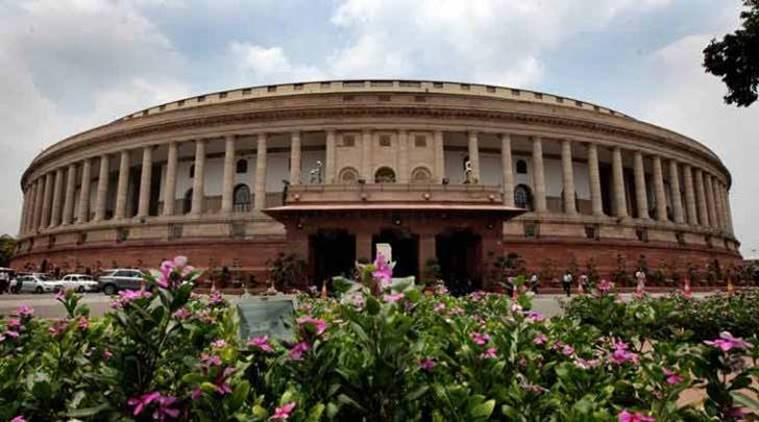 Nations can sleepwalk into the creeping authoritarianism of the 21st century because of its stealthy incrementalism.
During the 20th century, democratic constitutionalism was typically threatened by autocrats who staged a coup or declared a state of national emergency. Convicted of misusing government funds, this is what Indira Gandhi did in 1975: Within hours the prime minister’s political opponents were deprived of their liberty, and newspaper editors of their electricity supply. Today there is no declared State of Emergency, nor are tanks rolling on the streets of Delhi. And yet, in an unprecedented press conference in January this year, four senior judges of the Supreme Court announced that India’s democracy was under threat. In April, the main Opposition party launched a “Save the Constitution” campaign. Is our democracy really ailing?
Unlike their naked-fisted counterparts of the 20th century, autocrats of the 21st century — in Hungary, Poland, Sri Lanka, the US, Turkey, Venezuela and elsewhere — have used stealthier, incremental tools to undermine constitutionalism. Constitutionalism looks to independent institutions — the judiciary, election commission, corruption and human rights watchdogs, attorneys and auditors general, investigative and prosecution agencies — to check the most dangerous branch, that is, the political executive. Political parties are allowed to play the game we called democracy freely, even aggressively. But they must not cheat, they must accept the decisions of these checking institutions, and they must not change the rules of the game for partisan advantage.

Instead of challenging democratic constitutionalism outright, the latter day autocrats appropriate its vocabulary even as they undermine it. Rather than an all-out assault, they chip away at constitutional institutions. Each covert micro-assault keeps just on the right side of legality and, when isolated from the broader context, appears relatively unthreatening. Checking institutions, mindful of choosing their battles carefully, often tolerate these micro-assaults, until they are eventually captured by party loyalists. The war is lost even before the big battle worth-fighting-for materialises. Creeping authoritarianism destroys democratic constitutions not with a full-frontal assault, but with a thousand paper cuts.

Is India in the throes of creeping authoritarianism as well? One of the most rigorous, global, comprehensive data sets on the health of democracies (the Varieties of Democracy or “V-Dem” dataset) compiled by independent social science experts might provide an answer. In this data set, the Electoral Democracy Index tracks the health of political competition between parties, the freeness and fairness of elections, and the ability of civil society to influence politics. The Egalitarian Democracy Index tracks the degree to which different groups of citizens enjoy democratic rights and the country’s resources equally. The Free Expression Index tracks the degree of freedom of media, academic and cultural expression. And the Judicial Independence Index tracks the level of independence of the judiciary and its control over the executive. A higher score indicates a healthier democracy, while a lower score signals authoritarianism.
As the graph clearly demonstrates, India’s electoral democracy index score rose sharply with the inauguration of its 1950 Constitution, and — except for two exceptions — broadly remained stable. This is no mean feat. While many post-colonial states succumbed to dictators, the Indian army stayed in its barracks. Presidents did not dismiss prime ministers. Elections were mostly regular, free and fair. Political parties gracefully left office after losing elections. Judicial declarations of unconstitutionality of laws were generally respected. These are things Indians should be proud of, even while criticising the country’s flawed institutions and their inadequate attempts to deliver on the promises of independence (a shortcoming made painfully visible by the bottom-most line charting India’s consistently low Egalitarian Democracy Index).
All four V-Dem measures dropped sharply during Indira Gandhi’s imperious career in the 1970s (the first vertical line marks the start of the Emergency). With a few honourable exceptions, most checking institutions capitulated to her whims. The Emergency ended only when a mercifully-misplaced overconfidence in her own popularity led Indira Gandhi to go to polls in 1977. After her staggering defeat, the succeeding Janata government strengthened constitutionalism by making declarations of Emergencies harder. India’s democratic scores were revived, and remained more or less steadfast until recently (although some signs of vulnerability were already apparent under UPA-II).
For present purposes, the health of our Constitution since 2014 — when the Narendra Modi government took office (denoted by the second vertical line in the graph) — is particularly concerning. Barring the Indira years, the country is worse off on every single index since 1953. The decline is steady along all indicators, although the free expression index’s nosedive in the graph is especially dramatic. The government’s battles with the judiciary have intensified only recently, so the judicial independence index is likely to follow suit once the 2018 figures are in. Admittedly, attempts to reduce such complex phenomena to numbers is imperfect. Neither can all changes be attributed to the central government. Yet, a trend away from the constitutional checks and towards a creeping authoritarianism in India over the last few years is undeniable.
Indira Gandhi’s authoritarianism was of the older variety — hard to deny and harder still to defend. Nations can sleepwalk into creeping authoritarianism of the 21st century because of its stealthy incrementalism. Whether constitutional guardians are able and willing to resist institutional capture, check executive power, and protect opposition and citizen’s rights will ultimately determine the fate of Indian democracy.
 Share


