
In Defence Of Esoterica
Lack of high-end research has a cascading effect. It impacts people’s earning abilities
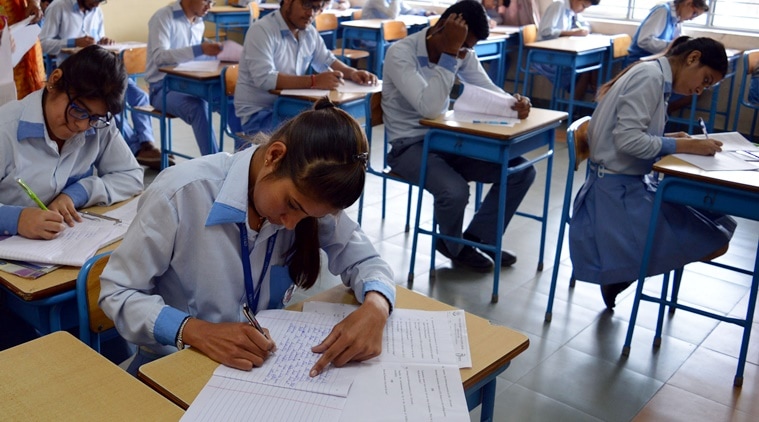 A division bench of the Bombay High Court suggested that the school boards examine the possibility of making Mathematics an optional subject for the Class X examination. (Representational)
Indians in India do not do high-end research. That is well-known. What is less well-known is that they do not do much low-end research either. This seems to have an anti-learning cascading effect lower down, and a disastrous impact on earning abilities. To add to this, in June, a division bench of the Bombay High Court suggested that the school boards examine the possibility of making Mathematics an optional subject for the Class X examination. Apparently, the Court found that 90 per cent of those who dropped out of school did so because of Mathematics and English which, in their view, was unfair if the student needed to study Arts subjects for which there was, the judges suggested, no need to know Mathematics.
If that happens, we can effectively bid goodbye to being a society committed to whatever little higher order learning that is happening in India. Could it be that in the absence of high-end research, not much exciting investigation seems to be happening at the lower-end of the research spectrum? And are we, as a society, giving up on formal learning in the misguided belief that if such learning is not insightful or exciting then why waste time on it? Data does suggest that this might be the case. The All India Survey of Higher Education says that in 2016, about 17 per cent of those who graduated from India’s colleges took a BSc degree, 15 per cent went in for an engineering degree, 11 per cent studied commerce, 3 per cent passed out with a medical degree and about 1 per cent studied law. Some 3.9 million graduates, half of the total number, preferred a BA degree. Whether this large mass of Indian BAs are making Indians better human beings is not yet known. What is known is that it is not enabling them to be wealth creators. What we also know is that young Indians do not seem to be particularly excited about taking the technical kind of education that primarily creates wealth.

Surely, such people end up as part of the workforce. On that count too there are many surprises. The 66th round of survey by NSSO, found that only 2 per cent of the Indian labour force had any formal technical education. Common sense suggests that they might have learnt something on the job, some of them might have acquired skills simply by working under an ustad or there might have been hereditary skills imparted by the much-touted caste system in which children take up the profession of their fathers.
Statistics also show that about 5 per cent of the workers have acquired skills commensurate with their work through informal sources or through self-learning. Only about 7 per cent workers had exposure to any work-related education, whether formal or non-formal. Such absence of knowledge and skills may or may not result in potentially harmful workmanship. But at the level of the worker, it certainly lowers earning ability.
Those with a diploma or certificate, the NSSO survey suggested, earned considerably more as compared to their uneducated and unskilled co-workers. In agriculture, the skilled worker earned 31 per cent more than his/her peers. In trade, the increment was 36 per cent, it was 64 per cent in mining and quarrying, 80-95 per cent in manufacturing and in the construction sector a more knowledgeable worker ended up earning twice as much. The earnings of those without any formal learning were so low as to put them close to the official poverty level in the country.
Could it be that to boost Indians’ interest in formal learning, the high-end researchers need to ramp up their efforts, work on exciting problems, create electrifying results, demonstrate the importance of their conclusions, enthuse people towards formal learning?
 Share


