6 min readAug 12, 2025 05:30 PM IST
First published on: Aug 12, 2025 at 05:30 PM IST
A recent podcast featuring Babu K Verghese, author of Let There Be India: Impact of the Bible on Nation Building, made a surprising claim: Hindi was “created” by Christian missionaries during the colonial period. While Verghese praised the contributions of missionaries to Indian society, his assertion that Hindi was a missionary creation is historically inaccurate and deeply misleading. Far from being the invention of colonial evangelists, the Hindi language — variously known in earlier times as Hindvi, Dehlavi, Gujri, Dakkani, or Dakhni, as noted by scholars Shamsur Rahman Faruqi and Tariq Rahman — has a documented lineage that predates the colonial encounter by several centuries. As early as the 13th century, the poet Amir Khusrau composed verses in Hindvi, attesting to the language’s long-standing cultural and literary presence. By the time the British set foot in India, the language was already deeply embedded in the region’s oral, literary, and devotional traditions.
What the missionaries did, however, was that they reshaped and reframed Hindi. Through grammar writing, translation, and the strategic use of script and vocabulary, they contributed to the codification and communalisation of Hindi in ways that increasingly associated it with Hindu identity. Their linguistic interventions played a significant role in recasting language as a marker of religious affiliation, particularly in northern India.

Language and communalisation
Missionaries in colonial India were among the first Europeans to seriously engage with Indian vernaculars. To communicate effectively with the local population, missionaries needed not only to learn the language but codify it into grammar, script, and vocabulary. They compiled dictionaries, wrote grammars, and most importantly, translated the Bible into regional languages. But these were far from neutral acts. Translation is always a process of selection and emphasis. The Serampore missionaries, for instance, were translating the Bible into what they called “Hindoostanee”— a language affiliated with Sanskrit in structure and vocabulary, printed in the Devanagari script, and targeted at the Hindu population. In contrast, “Oordoo,” they said, was a variant of Persian used by Muslim rulers, written in Persian script, and meant for Muslims. This linguistic bifurcation was neither natural nor necessary. In reality, Hindustani was widely spoken across north India by both Hindus and Muslims. The distinction was more ideological than linguistic. But once institutionalised through missionary publications and education, it took on a life of its own.
Missionary hands behind the Hindi-Urdu divide
One of the earliest and influential figures in this process was William Yates. His 1827 publication, Introduction to the Hindoostanee Language, played a decisive role in distinguishing Hindi and Urdu as two separate languages, rather than dialects of the same vernacular. Yates claimed that Hindi was derived from Sanskrit and spoken primarily by Hindus, while Urdu drew from Persian and Arabic and belonged to the Muslim population. He emphasised that the two languages had not only different vocabularies and scripts but also distinct cultural and religious resonances.
Yates’ views were echoed and amplified by later missionaries like Rev W Etherington. In the 1870s, Etherington produced a Hindi grammar that stripped the language of all Arabic, Persian, and Urdu influences, and instead emphasised a pure, Sanskrit-derived lexicon. He explicitly rejected “foreign aid” for Hindi, advocating a form of linguistic Hinduisation. His grammar, Bhasha Bhaskar, was even awarded by the British government, a testament to the close alignment between missionary and colonial knowledge production.
Samuel Henry Kellogg’s Grammar of the Hindi Language (1876) added a more scholarly layer to these claims. Kellogg estimated that 60 to 70 million people in India spoke Hindi and noted its widespread use across the heartland of Hindu pilgrimage and culture — Benares, Mathura, Allahabad, and others. Kellogg lamented that many Hindus had come to “contemn their native tongue” in favour of Urdu, due to its usage in government offices and its cultural capital in urban centres. He insisted that Hindi and Urdu were not merely two scripts of the same language but had different grammatical structures and sociolinguistic functions. Importantly, Kellogg criticised the idea, still common among some British administrators, that replacing Persian words with Sanskrit ones made Urdu into Hindi. Kellogg’s framing reinforced the broader trend: Language was increasingly seen not just as a means of communication, but as a marker of communal identity. While more empirically grounded than some of his contemporaries, Kellogg contributed to a colonial epistemology that sought to define and divide Indian society through language.
Colonial archive of divisions
While missionaries were not colonial officials, their linguistic work dovetailed with what historian Bernard S Cohn described as the colonial forms of knowledge. The British Empire sought to classify and govern India through knowledge by producing ethnographies, maps, censuses, and grammars. Language became one such tool of classification.
So, the assertion that missionaries “created” Hindi obscures the much more complex and troubling reality of how language became communalised in colonial India. Missionaries did not invent Hindi, but they reshaped its structure, use, and identity in ways that have had lasting political consequences. To understand this history is to appreciate how language, far from being a neutral medium, became a site of contestation and identity. Missionary linguists, wittingly or unwittingly, played a key role in aligning language with religion, a move that continues to reverberate in modern India’s linguistic and communal politics. In the end, the story is not about who created a language, but how language was made to serve ideas of community, faith, and power. And that story is far more consequential than the myth of missionary invention.
The writer teaches History at Bharati College, University of Delhi

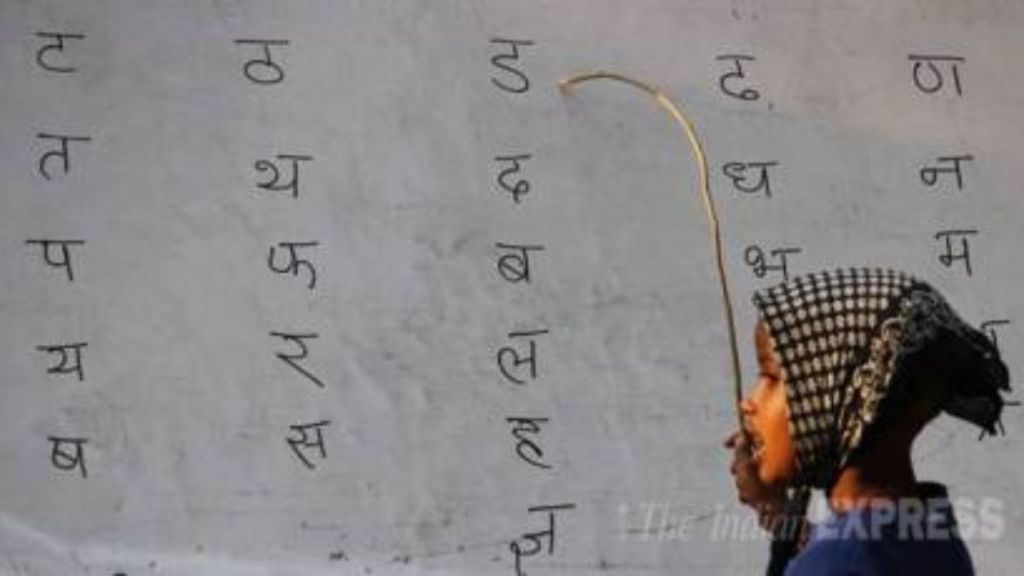 The assertion that missionaries “created” Hindi obscures the much more complex and troubling reality of how language became communalised in colonial India. (Express file photo)


 Share


