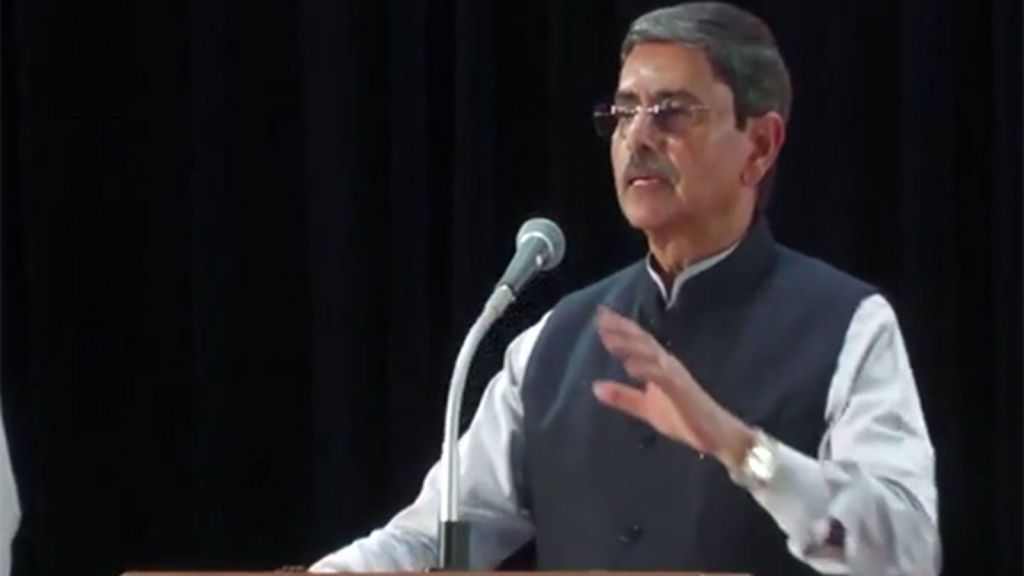
On January 20, two Governors, R N Ravi from Tamil Nadu and Rajendra Arlekar from Kerala, acted quite unceremoniously during their customary Legislative Assembly address. Ravi preferred not to read any part of the speech — his office alleged that the speech carried numerous “unsubstantiated claims and misleading statements” — and walked out, for the fourth time in a row. Arlekar, on the other hand, while reading, omitted parts of the speech, which he thought were harsh on the central government. These gubernatorial actions, to a large extent, are acts of misfeasance, not adhering to the age-old constitutional convention of reading the exact text. They worked more like a “political agent” of the Centre and less like a constitutional functionary who is supposed to strengthen the principles of federalism, constitutional law and democracy.
Article 176(1) of the Constitution makes for a provision of “special address” by the governor, and it mandatorily obligates him, by the sheer use of the word shall, to read the policy speech handed to him by the government. The constitutional convention of addressing the first session of each year and at the commencement of the first session after each general election, both by the President and the governor, is a colonial hangover. It is analogous to the speech from the throne in Great Britain, where, since 1841, the King’s speech is taken as the ministerial statement for which the sovereign accepts no personal responsibility. In fact, Lord Spencer and Sir William Harcourt had exclaimed that the “speech from the throne was in no sense an expression of Her Majesty’s individual sentiments, but a declaration of policy made on the responsibility of her ministers”. It is a settled question in England that the King cannot alter the speech prepared by the Council of Ministers.

We do not find anywhere in the Indian Constitution or in any interpretation that the governor has the right to omit or express his mind on the opening day. On behalf of the people of the state, the state government expresses through the governor, who needs to act as the mouthpiece of the programmes, policies, and prevailing conditions of governance. In a parliamentary democracy, the real repository of power is the Council of Ministers headed by the Chief Minster and they are collectively accountable to the people. The tinkering of the speech by the governor is akin to the misuse of his discretionary powers and erosion of the principles of cabinet government. If the Governor is unable to pull on with the ministry, he, at best, must resign gracefully for the smooth functioning of the real executive.
Kerala has repeatedly objected to the pressure tactics employed by the Centre in the areas of tax devolution and Finance Commission grants (it was part of the governor’s speech that he objected to). People of Kerala have the right to know about the gridlocks of federal processes, particularly of fiscal federalism, and any deliberate attempt to conceal such information is a breach of constitutional morality.
On the other hand, Tamil Nadu’s Chief Minister M K Stalin has often demanded steps for securing greater autonomy for the states to achieve true federalism. His high-level committee on Centre-state relations, mandated to look into aspects of “cooperative federalism,” including the role of the governor, is to unpack the debate on federalism and democracy. For Stalin, it is the governor who behaves more like a political gatekeeper rather than a constitutional facilitator.
By digressing from the speech or walking out of the Assembly during the special address protocols, both the governors have shown disregard for the constitutional provisions and allegiance to the Centre. It is high time we do away with this colonial act of reading a special address by the nominal head, called the governor.
The writer teaches at Ramjas College, University of Delhi



 Share


