Written by: P John J Kennedy
6 min readApr 23, 2025 10:24 PM IST
First published on: Apr 23, 2025 at 06:17 PM IST
Recently, the Central Consumer Protection Authority (CCPA) issued a stern warning to coaching centres across India, cautioning them against misleading advertisements, particularly following the announcement of results for competitive examinations like IIT-JEE, NEET, and UPSC. For those concerned with the welfare of students and the emotional and financial investments made by their families, this is a welcome move. However, one cannot help but question whether such warnings, though well-intentioned, will bring about any real change in a system that thrives on ambition, anxiety, and an obsession with marks.
India’s coaching industry has grown into a parallel education economy fuelled by middle-class insecurities and aspirations. A 2021 CRISIL report pegged the industry’s worth at over Rs 58,000 crore, with an expected annual growth rate of over 13 per cent. Cities like Delhi, Bengaluru, and Hyderabad are filled with centres offering coaching for everything from JEE to RBI exams.

Kota, the unofficial “coaching capital,” attracts over 1.5 lakh students each year, with hundreds of hostels and PG accommodations built solely to support this influx. The grim underside of this booming enterprise is visible in the rising number of student suicides — at least 30 in Kota in 2023 alone, an indication of how high-pressure environments, misleading assurances, and dehumanising expectations take a toll on young minds.
This is an industry that runs on an obsession with marks and ranks, converting education into a high-stakes numbers game. Advertisements scream out promises of “100 per cent success guaranteed,” or “IAS in one year with no prelims stress.” Some even go as far as promising “NEET rank in 30 days, or your money back.” These tall claims are not just misleading; they are ethically indefensible, designed to exploit the vulnerabilities of parents desperate for their children’s success and students battling enormous pressure.
The CCPA’s actions — issuing 49 notices, penalising 24 coaching centres, and collecting a total of Rs 77.6 lakh — reflect an effort to curb the excesses. However, the number, when viewed in context, barely scratches the surface of the problem. In a country with thousands of coaching centres, this is a drop in the ocean. Every day, new advertisements appear across billboards, digital media, and television, often violating the very guidelines the CCPA has laid down. Who is watching them all? If the government argues it lacks the resources for continuous monitoring, one must ask what alternative accountability systems are in place. Are students and parents aware of where to report violations? Do they trust the grievance mechanisms to respond effectively? More importantly, has the government taken sufficient steps to educate the public about their rights?
The broader question is about the very culture that sustains these coaching centres. In a country where success in a handful of entrance exams is considered the only ticket to a secure future, people are willing to put up with anything, from inflated fees and gruelling schedules to emotional neglect and misleading information. Schools are seen as inadequate to prepare students for competitive exams, and coaching institutes have filled the gap. However, the methods many employ — intense pressure, fear-based motivation, and promises of miraculous results — have created a toxic learning environment.
We cannot wish away coaching centres. But this does not mean they should be allowed to operate without checks. The solution must involve a concerted effort from multiple stakeholders. Government regulators must go beyond issuing guidelines. They must actively audit coaching centres for their claims, enforce compliance with transparency norms, and penalise not just monetary fraud but also psychological harm. There is a pressing need for anonymous, student-friendly reporting mechanisms where complaints about unethical behaviour or misleading promotions can be heard without fear of retaliation.
At the same time, coaching centres should be made to disclose accurate data about their students: How many students enrolled, what kind of courses they took, and how many achieved the ranks being advertised. The misleading tactic of parading a topper who only took a test series without revealing this fact should be treated as a serious violation. All disclaimers should be printed in the same font size as the rest of the advertisement. This is not a minor design change — it is a demand for ethical communication. But regulations alone won’t solve the problem. Public awareness campaigns must be launched to inform students and parents of their consumer rights. Schools and colleges should also shoulder the responsibility of preparing students for competitive exams more effectively, reducing the need for external coaching. Crucially, mental health support must become mandatory in all large coaching institutions, with on-site counsellors and routine well-being check-ins. Beyond institutional reform, there must be a cultural shift. Parents and educators need to engage in serious conversations about what success means and how best to achieve it. The idea that only one path — clearing a national-level exam — leads to a meaningful life must be challenged. Students deserve to know that failing a test is not the same as failing in life. They need to feel supported, not sold to.
Ultimately, this is not just about false advertisements; it is about false hopes. When a coaching centre promises “IAS in one year” or “JEE Rank 1 guaranteed,” it does more than violate consumer rights; it is playing with lives. The CCPA’s warning is a necessary first step. However, the journey toward a just and humane coaching culture will require regulation, reform, and, above all, empathy. In a country where money and lives are at stake, the question is not whether we can afford to act but whether we can afford not to.
The writer is former Professor and Dean, Christ University, Bengaluru

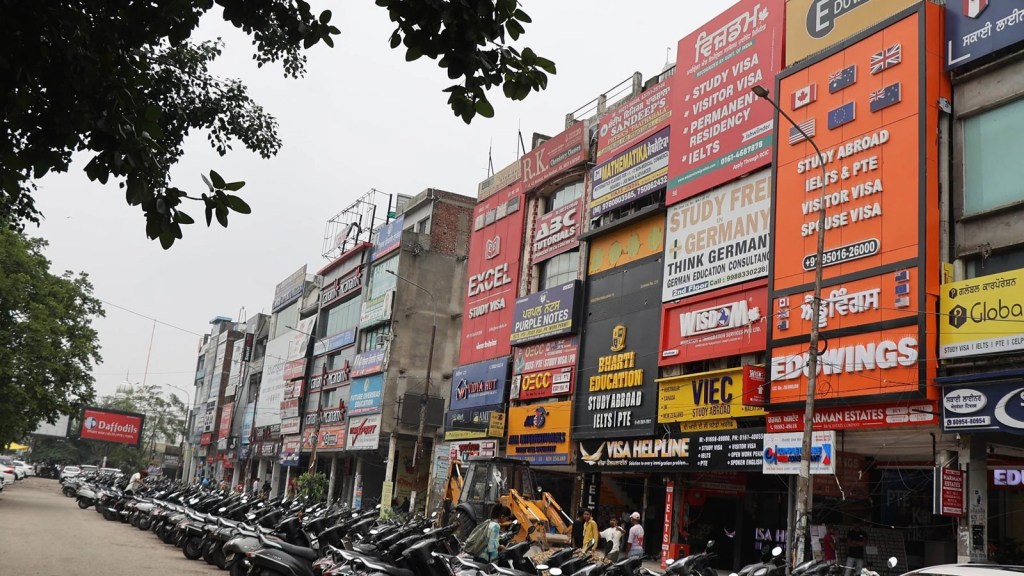 India’s coaching industry has grown into a parallel education economy fuelled by middle-class insecurities and aspirations. (Express File Photo)


 Share


