On June 3, South Korea elected Lee Jae-Myung as their new president, ending months of political instability following Yoon Seok Yeol’s declaration of martial law and impeachment.
Lee now faces the daunting task of healing a deeply divided nation. Divisions extend beyond ideological lines, increasingly shaped by gender-based polarisation. Young women predominantly support progressive parties like Lee’s Democratic Party (DP), while young men seem to back conservative forces like the People Power Party (PPP) and New Reform Party (NRP).

Gender polarisation in South Korea
While older generations often lean towards conservatives, what stands out in South Korea is the rising conservatism among Gen Z men, who now form the base of conservative/right-wing support. Young women, on the other hand, form the core of the progressive support base.
Exit polls reflected a stark gender divide among Korean young voters. Only 24 per cent of men in their 20s supported Lee (DP), while a combined 74.1 per cent backed conservatives. In contrast, 58.1 per cent of women in the same age group voted for Lee. A similar pattern was also noticed among voters in their 30s.
Gender division was also evident during the impeachment protests. Young men in their 20s and 30s largely joined pro-Yoon rallies, while young women dominated anti-Yoon demonstrations.
Why the divide?
South Korea performs poorly on most gender equality metrics. In 2025, the gender pay gap remained the highest in the OECD at 31.2 per cent.
Despite these disparities, many young South Korean men (especially in their 20s) are turning conservative. Academics attribute this shift to socio-economic anxieties, including unemployment, military service, perceived loss of male privileges, and feelings of marginalisation and reverse discrimination, as women gain ground in traditionally male-dominated fields like education and employment.
Online platforms, particularly male-dominated communities like Ilbe, have also become echo chambers for anti-feminist narratives and resentment-driven identity politics. Moreover, nationwide feminist movements like 4B, MeToo, Escape the Corset, and the Hyewha station protests against spy-camera voyeurism (molka) gained traction. These, however, also deepened gender divides. “Feminism” became a slur, with many young men perceiving it as a threat rather than a push for equality.
Why do men vote for conservatives?
Political analysts Robert E Kelly and Jaekwon Suh note that many South Korean voters support one party mainly out of opposition to the other, with partisan divides increasingly driven by emotion rather than clear policy-based ideological distinctions.
Parties like DP and PPP have tapped into emotional divides, especially around gender. Many young men feel alienated by the DP and support the PPP, which they see as defending their interests, reflected in Yoon’s 2022 pledge to abolish the Gender Equality Ministry and blaming feminism for the country’s low birth rate.
In 2025, the conservative vote was split. Lee, known for his anti-feminist stance, tried to rally disaffected young men using Yoon’s anti-women and pro-men playbook. PPP’s leader Kim Moon-soo, also alienated women by remarking that “women would rather raise dogs than have children”.
Global Political Division between young men and women
South Korea is not the only country experiencing political polarisation along gender lines. In many democracies, young men are increasingly gravitating toward conservatism, though the underlying causes vary.
In the 2024 US presidential election, as per the AP VoteCast survey, Kamala Harris maintained an advantage among women, winning 53 per cent of their votes compared to Trump’s 46 per cent. In contrast, Trump gained ground among men (including Black and Latino men), securing 54 per cent of their support.
After the overturning of Roe v Wade in 2022, reproductive rights became a central issue for women. However, Trump’s rhetoric dismissed women’s concerns and appealed to male grievances about gender equality. Trump and Harris also strategically targeted gendered audiences. For instance, Trump appeared on The Joe Rogan Experience podcast, popular among young men, while Harris joined the Call Her Daddy podcast, which appeals to women under 35.
In Germany’s 2025 election, about 35 per cent of women between the ages of 18 and 24 voted for the far-left Die Linke Party, while 27 per cent of young men voted for the far-right Alternative for Germany (AFD party).
What lies ahead?
Gender-based polarisation is making democratic consensus harder to achieve. Instead of supporting a party’s vision, voters increasingly vote against perceived threats to their identity.
This weakens democracies, making politics more personal, polarised, and confrontational.
Across the globe, young men and women are growing further apart in their worldviews. This growing gender divide is particularly concerning, as it may even affect Gen Z’s ability to form relationships and start families — an alarming trend for countries like South Korea that are already facing declining birthrates.
The writer is a Research Assistant at the Council for Strategic and Defence Research (CSDR) and a PhD Scholar in Korean Studies at Jawaharlal Nehru University (JNU), New Delhi

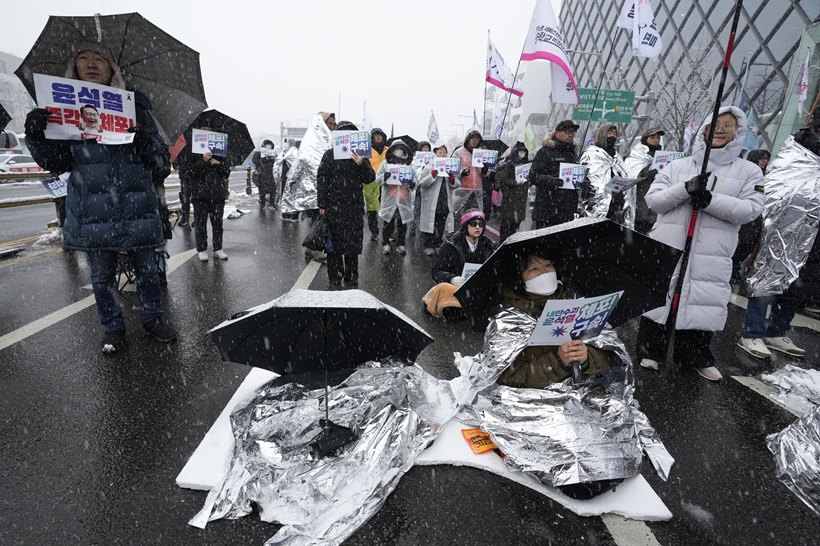 While older generations often lean towards conservatives, what stands out in South Korea is the rising conservatism among Gen Z men, who now form the base of conservative/right-wing support. Young women, on the other hand, form the core of the progressive support base.


 Share


