
High costs, meagre gains
Far from curbing black money and corruption, demonetisation has disrupted the economy.
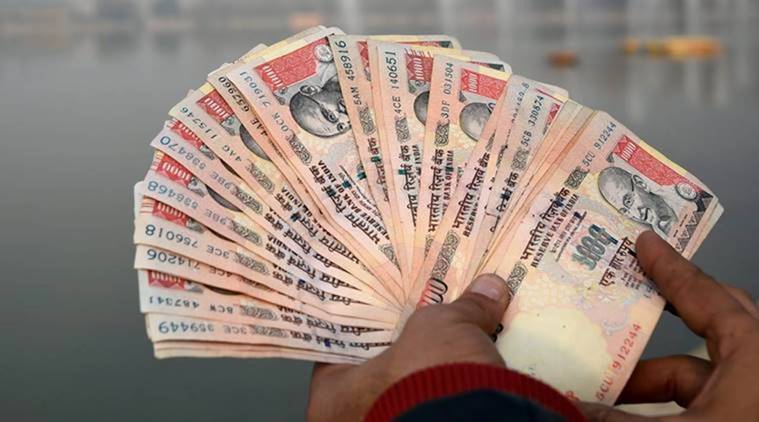 In terms of effectiveness, the move undoubtedly prevents further circulation of existing counterfeit currency in the two demonetised denominations (Rs 500 and Rs 1,000). (Representational image)
On November 8, Prime Minister Narendra Modi announced his ambitious demonetisation policy initiative to attack the scourges of corruption, black money and fake currency. He also spoke eloquently in his December 31 address about the need for purifying the nation of these scourges. The desirability of this policy goal is well-understood and incontrovertible. How effective has demonetisation, as a policy, been in achieving its stated goals? How efficiently has it been implemented?
In terms of effectiveness, the move undoubtedly prevents further circulation of existing counterfeit currency in the two demonetised denominations (Rs 500 and Rs 1,000). However, it doesn’t necessarily eradicate the problem since counterfeiters will be hard at work trying to replicate the new notes, which, by all existing reports, are no less prone to counterfeiting. More importantly, the size of this problem was small to start with (around 0.025 per cent of all notes in circulation, according to recent Indian Statistical Institute estimates).

The move also doesn’t do anything to punish the originators of fake money. How effective has demonetisation been in dealing with black money and corruption? As pointed out by many, both black money and corruption are flow concepts. The move does nothing directly to the flow creation of black money and corruption, other than through its signaling of possible future moves.
Black wealth is a stock that reflects all past creation of black money, cash being just one of several ways of holding it. If 90 per cent of the demonetised cash is returned to banks, back-of-the-envelope calculations suggest that the demonetisation will likely net about two per cent of the black wealth stock or one per cent of GDP in government revenues. The revenue gain could be a bit higher if the
income tax department successfully performs the Herculean task of levying penalties on those who laundered their black wealth held in cash by depositing it in banks. The Central Board of Direct Taxes, with its chronic staff shortage, must now examine all cash deposits in excess of Rs 250,000 as well as examine cases with no returns filed. The reported depositing of large cash holdings in many separate small parcels through paid intermediaries and the use of tax-sheltered agricultural workers to launder undeclared cash makes matters more difficult.
On the cost side, anecdotal evidence suggests that the biggest negative output and employment effects have been on the heavily cash-dependent informal sector which accounts for 80 per cent of employment and 45 per cent of GDP. Studies have shown this sector’s strong linkages with the formal sector, which often outsources its tasks to the former to reduce costs. According to a recent Washington Post article, the demonetisation exercise has negatively impacted various small and medium-size industrial clusters, which, in total, employ 80 million workers. For example, the cellphone manufacturing hub of Noida has experienced a halving of output, with a quarter of employees sent back to their villages.
On balance, the costs (which the PM in his speech called “sacrifices” for a noble cause) are very high in terms of output, employment and the disruption caused in the lives of law-abiding citizens, especially when compared to the rather meagre gains. With the costs already being felt and benefits predicted for the future, there is much greater uncertainty about the latter than the former.
Probably the biggest negative of demonetisation has been its implementation, as manifested in the chronic shortages of new notes, their flawed composition with an under-supply of Rs 500 notes, the repeated changes in regulation on withdrawals and deposits, etc.
In our opinion, the best way to summarise the demonetisation move is through the insights from the path-breaking work of Jagdish Bhagwati. In a piece on trade distortions Bhagwati co-authored with V.K. Ramaswami (1963), he made the trenchant point that the optimal intervention instrument attacks the source of the distortion directly. In the case of black money, demonetisation attacks one of the many ways of storing it rather than attacking the problem directly. At the same time, it creates other distortions in the form of costs mentioned above. Consequently, it fails the Bhagwati test. Other policies, such as income tax audits based on computerised algorithms, slashing stamp duty rates on real estate transactions and raids based on information generated by suspicious transactions, are more direct policies (closer to the targeted distortion) which don’t create by-product distortions. These policies would rank much higher than demonetisation by the direct application of the Bhagwati criterion.
In the days since the demonetisation announcement, the narrative has subtly changed; the goal is now to turn India into a cashless economy. Even here, demonetisation fails the Bhagwati test of targeting the source of the problem directly. The low
usage of digital payment methods in India is largely because of widespread financial exclusion and the absence of reliable digital infrastructure. An optimal approach to encouraging digital payment methods would be to correct these issues directly.
The Nobel laureate Jan Tinbergen demonstrated that policy success requires that policy instruments are not outnumbered by targets. In trying to attack so many targets at once, demonetisation fails the Tinbergen principle, also emphasised in the work of Bhagwati and Ramaswami.
Last, but not the least, the increase in invasive “babu” power (for example, bank officials interviewing depositors) will lead to serious inefficiencies, a prediction based on a straightforward application of Bhagwati’s seminal work on directly unproductive activities.
 Share


