
Of iconoclasts, autocrats, dictators
Fakir Syed Aijazuddin’s memoirs speak to modern-day Pakistan.
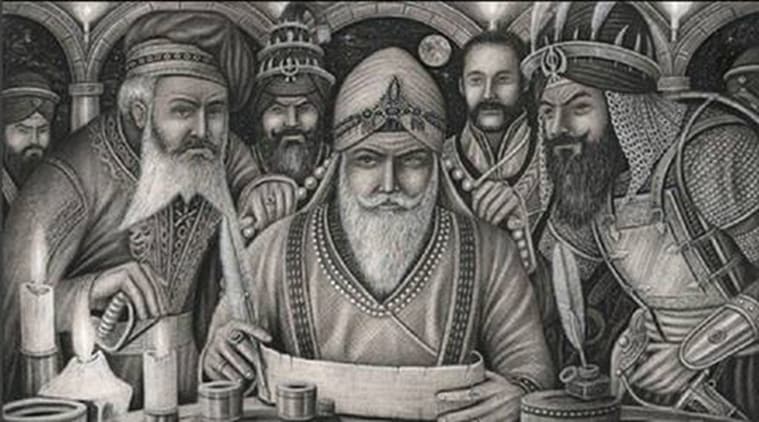 Fakir Syed Aijazuddi ancestor Fakir Nuruddin was the governor of Lahore under the great Sikh ruler Ranjit Singh ( who ruled between 1792 and 1839). (Representational image)
It was some time in 1969-70 that I first met him during the rehearsals of a play we were doing in Lahore. Fakir Syed Aijazuddin, a bachelor chartered accountant fresh from the UK, stunned with his sharp wit, faultless articulation and a connection with the legend of Ranjit Singh’s Lahore. He would duck out and dissolve into the dungeons of Lahore Museum to sate his manic interest in Sikh portraits. Teaching at the Government College Lahore at a monthly salary of Rs 250, I was clueless about his passion but alive to his unusual persona.
His ancestor Fakir Nuruddin was the governor of Lahore under the great Sikh ruler Ranjit Singh ( who ruled between 1792 and 1839). Nuruddin was the youngest of three brothers associated with the Sikh darbar as senior courtiers, proud to proclaim themselves “fakir” out of pious humility. (Coming after over a dozen books, Aijazuddin’s The resourceful fakirs (2014) didn’t fail to rivet me.) His first book, Pahari paintings and Sikh portraits in the Lahore Museum (1977), explained why Aijazudin was always going off to the museum.

His latest book, The fickle 70s: Memoirs 1972-79, updates me on what happened to him and Pakistan after the country’s breakup in 1971. Out this year, it is a sequel to his moving account, The counterfoils of my years 1942-1971, reading which I realised that we were born the same year.
I can’t figure out why I was strangely moved after reading his accountant’s tale unless his lonely days in London — uncared for by his father but looked after by a Jain family from India — has something to do with it. I can say I am sentimental about the way he compensates by adoring his children and his pretty wife. He challenges the calcified upper crust of Pakistan but dotes on the deserted artist — Baudelaire’s albatross — going to great lengths to show that he cares. His affection for Shakir Ali, the great Pakistani painter, makes that clear.
I met Ved Mehta of The New Yorker in 1978, thanks to him. Ved was born in 1934 in Lahore and went blind at the age of four. I can understand now why he was obsessive about visiting places he could recall seeing. Aijaz and Shahnaz took him around, first to 11 Temple Road, Lahore, where his well-to-do physician father Amolak Ram had built his house. He records how Ved could walk around in the old home freely, despite his blindness, purely on visual memory. He was taken to Emerson School for the Blind at Sheranwala Gate, “where we unearthed his enrollment record”, and met his old teacher. Ved had been sent by his father to Bombay where he learned “braille and arithmetic”.
Thanks to Aijaz, I had met this extraordinary man who aroused strange emotions as he talked dispassionately about his life (Face to Face, 1957) and politics (Portrait of India, 1970, and Mahatama Gandhi and his apostles, 1977). I had read only Portrait of India and tormented myself with the longing to write like him. What fascinates me while reading the account in Aijaz’s The Fickle 70s is Ved’s determination to revisit his early “seeing” life of just four years.
Aijaz got his first job making tractors in Sindh, an industry which was soon nationalised by the post-breakup elected regime of Zulfiqar Ali Bhutto. From tractors, he moved to nationalised fertilisers and couldn’t be stopped from rising to the top on a paltry salary except that industry was now run by bureaucrats deadened by the routine of pushing files and engaging in petty spats. Aijaz’s cutting wit and brazen defiance of the dull didn’t endear him, but his story is riveting.
Bhutto was dangerous, “enigmatic, charismatic, complex, paradoxical, eventually suicidal”, carried by the miasma of populism that can kill most economies today. Soon things started going wrong and insolvency — rather than the utopia of roti, kapra and makan — overtook Pakistan.
Bhutto lost his cool and reverted to the security of feudal despotism, wreaking his bile on rivals till he ran out of them. He then turned on his partymen.
Jalaluddin Akbar Rahim was the ideologue who authored the manifesto of his party, saying, “The ultimate objective of the party’s policy is the attainment of a classless society which is only possible through socialism in our times”. The ideologue soon attracted the supreme leader’s wrath. The police was sent to Rahim’s home where he was beaten up after he pulled out a gun and started firing. The book recounts: “When the doctor arrived, all Rahim could mutter through swollen bleeding lips was: ‘They beat me up. They beat me up’.” Later on when General Zia-ul-Haq had overthrown Bhutto, Rahim was heard saying on TV that he was tortured by the policemen and that they had put “red chili in my anus”.
In 1979, it was Bhutto’s turn to die. General Zia presided over the country where the Supreme Court was determined to hang Bhutto in a case of murder carried out by his death squad optimistically named National Security Force. He was hanged in a Rawalpindi jail and then surreptitiously taken to Sindh at night for burial. Aijaz’s diary recalled: “BBC reported last night that Bhutto’s last words were: Allah, forgive me. I am innocent!” Another version by an eyewitness had him saying just two words in English: “Do it.”
 Share


