Television, with its analog technology of the cathode ray tube and relative catholicity, had space for the liberality of ideas. However, over the years, the digital revolution has impacted this space, which I would like to imagine as “democracy”. This was a space which long resisted the dilution of liberalism and centralisation of power through the all-pervasive electronic media.

As words, both “Akashvani” and “Doordarshan” sound mystical or even mythical but they are part of our national consciousness. In fact, in 1938, at the inauguration of Calcutta All India Radio’s shortwave transmission services, Rabindranath Tagore dedicated a special poem called ‘Akashvani’: “Hark to Akashvani upsurging / From here below / The earth is bathed in Heaven’s glory / Its purple glow…” Incidentally, in the same year, the historic Haripura Congress session was held near Surat (in Gujarat) which was filmed by J B H Wadia of Wadia Movietone. This session was a stepping stone towards India’s independence movement. In the West, the first public demonstration of an all-electronic television system, using a live camera, had already happened in 1934. By the 1950s, television had become the primary medium for influencing public opinion. And it is precisely this factor that has been motivating ruling parties, especially in post-colonial South Asian countries such as India, to control and exploit the potential of as many media units as possible. In a parliamentary democracy, what is, however, of significance is the manner in and moment at which a ruling political party chooses to strike. In the games of majoritarianism, agencies of “money” and “media” play a crucial role. Ultimately, the onus of keeping democratic spaces free of influences falls on an alert and vigilant citizenry.
Although at the time of drafting independent India’s Constitution, its architects had not seen the power and spread of television, they were wise to visualise the areas of conflict between the government at the apex and its federal components. The Seventh Schedule of the Constitution provides three lists — Union List, State List and the Concurrent List — which specify the divisions of power between the Union and states. The Concurrent List includes areas over which both the Union and state governments may exercise power. The Union government retains power over broadcasting and other like forms of communication (including radio and television) as well as the sanctioning of cinematograph films for exhibition — in other words, censorship.
Despite such constitutional care taken regarding the devolution of power, there have been numerous occasions of conflict between the arms of the executive at the Centre and State levels. The evolution of the medium mixes technology with political economy and puts the Seventh Schedule to the test. This test has been recurring as we can see from the appointments of several committees by governments over time to recommend the ideal manner in which Doordarshan could be made autonomous. Following the White Paper on the Misuse of Mass Media in 1977 which concentrated on the role of the broadcast media during the 1975 National Emergency, Parliament constituted the B G Verghese Committee which submitted its Report of the Working Group on Autonomy for Akashvani and Doordarshan in 1978. The Committee reaffirmed the opinion that broadcast media is part and parcel of the larger process of national planning and development. It specified some of the areas of concern that needed to be addressed if Doordarshan was to truly work for the “public” at large, in its all-inclusive sense of the term. This Committee recommended the setting up of an independent, impartial and autonomous organisation established by law to act as a trustee in national interest. To that end, the Prasar Bharati Bill was introduced in the Lok Sabha in 1979. Prasar Bharati, the Public Service Broadcaster, comprising both All India Radio and Doordarshan, came into being in 1997. Its archive offers glimpses into the past of both these media units. Whether it matches with the Verghese Committee’s original vision or not is a matter of scrutiny.
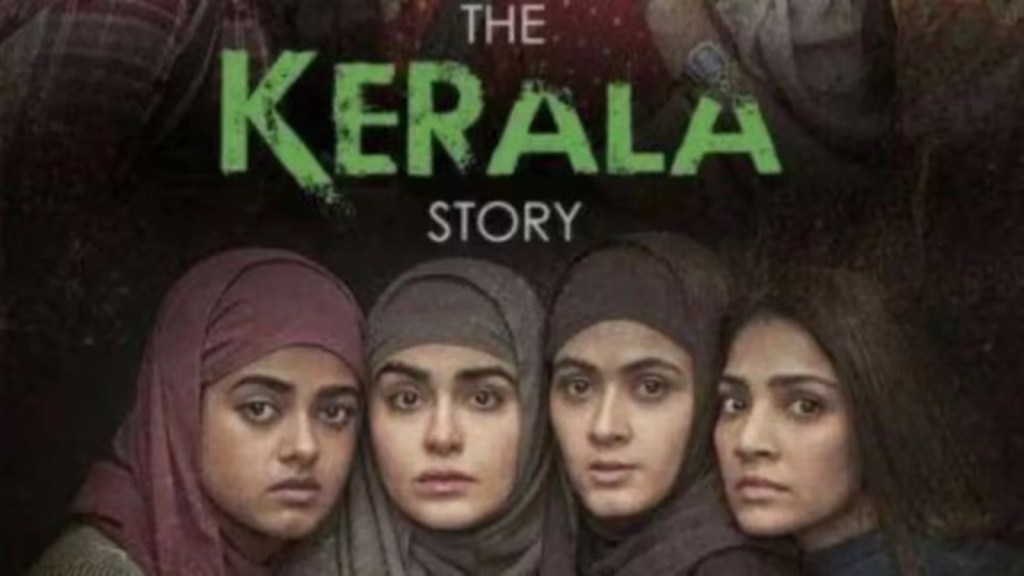
Nevertheless, history marches on. The constitutional devolution of power is still governed by the executive arm, always in search of a caveat and an opportune time to beam or broadcast propaganda, from the disappearance of the film Kissa Kursi Ka back then to the appearance of The Kerala Story now on Doordarshan. The tyranny of the tube never lies dormant, its tremors are felt on the political Richter scale. It is transparent and opaque at the same time; its fakery is couched in “fact-ry”. To decipher the dance of democracy, we need a new Nataraj who will use his third eye.
The unique Doordarshan logo has an all-watching, rotating eye and the triad of the words from our ancient scriptures: Satyam, Shivam, Sundaram. Truth, godliness, beauty are an eternality that human history will hold high, bearing a Distant Vision. Gurudev would conclude his Akashvani with this poetic prophesy: The mind of man reaches heaven’s confines / Its freedom won.
The writer is a Mumbai-based film theorist, curator and historian



 Share


