6 min readNov 26, 2021 08:12 AM IST
First published on: Nov 25, 2021 at 03:30 AM IST
Unfortunately, but as usual, it seems it took a voice from without — an article published in National Geographic on August 9 — for us and our media, to acknowledge that the camel population in India is in mortal decline.
This decline was, and is, inevitable with the replacement of the nomadic-pastoral way of life by agriculture. Grazing grounds shrank, and individually owned, often fenced, farmlands restricted the free movement of grazing animals and their keepers. This change was sharp and rapid in Rajasthan because of the Rajasthan/Indira Gandhi Canal. Between 1957 and 1987, net sown area in Rajasthan grew by almost 25 per cent. For centuries, Raikas (also called the Rebari, especially when rearing sheep) moved freely across the huge tracts of the desert districts of Rajasthan and adjoining districts of Gujarat. However, by the 1970s, Raika-farmer conflicts, almost always violent, had become common. Managing this conflict was our routine duty as young sub-divisional and district magistrates in the early 1980s.

What added to the shortage of fodder was our inexplicable “afforestation” with prosopis juliflora (disparagingly called vilayati babool by desert district dwellers), a nearly impossible weed to remove, rather than the khejri (prosopis cineraria), which is a great source of fodder, reportedly a favourite of camels. The trees grow tall, and above a certain height, there is no competition for their green leaves and tasty pods. It is while protecting this tree that Amrita Devi and 363 Bishnoi women died on September 11, 1730 (now celebrated as the National Forest Martyrs Day). It is also the tree that provides the sangri in Rajasthan’s signature dish kair-sangri.
The economic benefits of rearing a camel have all but disappeared. Rarely used for ploughing, as a draught animal, the camel was largely a means of transportation for goods and people. The road network in Rajasthan has grown by almost 30 times since 1951, slowly but surely eliminating the need for the “ship of the desert”. Camels, or camel carts carrying people or goods — so common even a few decades ago — can rarely be seen now. Till the 1960s, IAS/IPS officers routinely toured their districts on camels; today, not one is likely to be able to ride a camel even across a parade ground. Raikas do not eat camel meat (they believe they were born of Lord Siva’s skin to protect camels), and do not sell dead animals for their skin or bones — dead camels are simply left at a lonely spot, a few miles from the village. Thus, there is no economic case for owning a camel now.
Just as vehicles and roads ended the age of horses and horse carts in the rest of the world, they will surely end the age of camels and camel carts in the deserts. It is the inevitable obverse side of “progress” as we know it. Camels will meet the same fate as horses: They will be kept for sport (including camel safaris), or as a hobby or source of milk of the uber rich, or for ceremonial occasions.
This reality needs, and has, to be accepted. Crying hoarse about the declining camel population and expecting that any government can turn the clock back is sheer pretentiousness or simple-mindedness. In fact, the effort made by the Government of Rajasthan — enacting The Rajasthan Camel (Prohibition of Slaughter and Regulation of Temporary Migration or Export) Act, 2015 — has had just the opposite effect. Forced by economic reality, the Raika sold their camels to any buyer, including those who they suspected of buying it for meat, in great demand in the Middle East. The ban on camel slaughter, or sale of camels for slaughter, did what such bans usually do: They simply drove the sale-purchase to the grey market, driving down camel prices. Camels that should normally command a price of Rs 40,000 plus, reportedly sell in this grey market for less than Rs 5,000. The ban has benefitted only the meat traders and corrupt officials.
Camels are unlikely to survive as just milch animals either, despite the many demonstrated benefits of camel milk, for several reasons: Long gestation period (15 months); limited saleable yield (less than 5 kg a day), high cost of maintenance (at least Rs 500 a day, assuming part free fodder and no labour cost); the subsequent high cost of milk, and the rather strong flavour of camel milk, anathema to our processed milk palate. Neither production nor demand could possibly sustain an economically successful dairy model. Similarly misconceived is the suggestion that the government open “oonthshalas”. Even the richest nations on earth did not resort to “horse sanctuaries” as cars replaced horses and horse carts.
What calls for greater attention is the plight of the half-million Raikas. Often illiterate because of their nomadism, and unskilled otherwise, they are being reduced to manual labour: A cruel and undeserved fate for a proud and fiercely self-reliant people. The state needs to worry about their education, their skilling in different trades, and protecting both their self-worth and their unique music and culture. The Raika and their camels talk to each other; this language/conversation is called akal-dhakaal. The akal-dhakaal that this country needs to have is on the future of the Raika, and of not disturbing activities where camel-rearing still makes economic sense. We need to keep hearing the Bhopas sing stories of the camel and the revered Pabuji.
This column first appeared in the print edition on November 25, 2021 under the title ‘The camel in the room’. The writer is a former civil servant, Rajasthan cadre

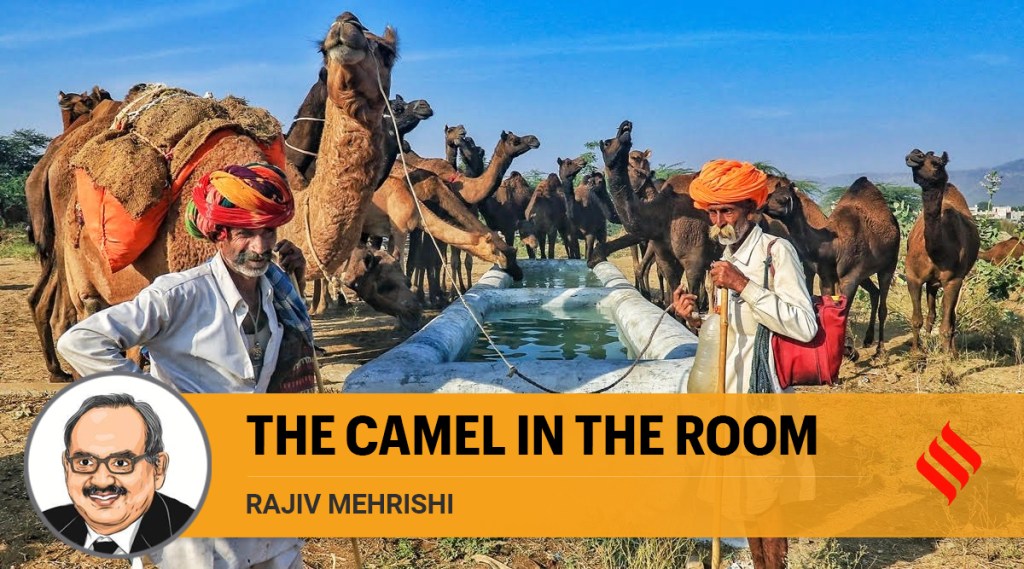 Camel herders at the annual Pushkar Fair 2021, in Ajmer (PTI)



 Share


