
A question of power
SC judgment on criminal defamation ignores the fact that the parties involved in defamation complaints are rarely equals.
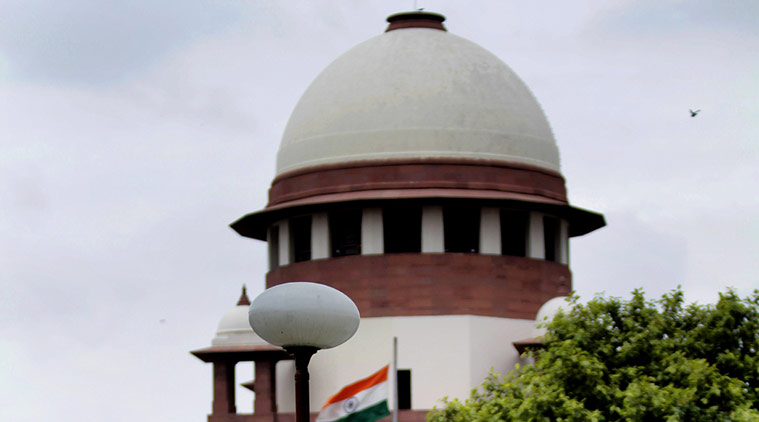 The Supreme Court
Disappointing as the Supreme Court’s judgment on criminal defamation is, it is not a big surprise. It is not hard to imagine that a country that retains and uses anachronistic sedition and contempt of court laws will choose to retain defamation as well. Unlike sedition or contempt of court, which by definition punish speech against powerful state institutions, defamation law is, at least in theory, available to everyone.
The judgment gives rise to a few obvious free speech concerns. One is that it is unnecessary and disproportionate to criminalise defamation when a civil remedy exists for defamation. Another is that criminal defamation law, especially given that it punishes even truth-telling unless it is for the public good, will lead to a chilling effect on speech.

The judgment, however, raises other questions. The first of these is whether the government and the SC will take inconsistent stands about the right to reputation in the context of defamation and privacy. The second is whether it is possible to have any worthwhile conversation about defamation without taking into account questions of power: Can we treat the defamation of and by prominent politicians, big media houses and enormously rich companies exactly the same way as we treat the defamation of and by individual journalists, penniless activists or young students?
On the question of the right to reputation — the SC judgment insists that the right to reputation is so deeply embedded within the right to life, that criminal action by the state is necessary to protect individuals’ reputation. It is only recently that we have taken to describing certain kinds of invasiveness as violations of privacy in India. Take the examples used by the court to explain why even truthful statements may be defamatory: imputations of alcoholism, consensual incest, impotence or illegitimacy are seen by the court to be situations in which truth should not apply as a defence to defamation. The court also used the example of rape survivors and people suffering from AIDS to highlight that there are truths about people that they might legitimate wish to keep private. A privacy law would cover all this and would do so more effectively.
A landmark privacy case Mr X v Hospital Z is cited in the judgment in support of the apex court’s reasoning. In Mr X v Hospital Z, the SC recognised the right to privacy as a part of the right to life in the context of an AIDS patient. The use of this case is somewhat at odds with the government and SC’s bizarre choice to re-examine whether a right to privacy is a fundamental right. Imagine if the court’s reasoning about reputation were applied to the right to privacy — it would mean citizens can seek remedies when the state disrespects their right to reputation.
Criminal defamation was the paternalistic remedy offered by the pre-democratic state to protect reputations whenever it saw fit. There has been enough criticism of the criminal justice system for it to be clear that it is difficult for the average citizen to register a criminal complaint and participate in the prosecution process.
This brings us to the second interesting issue — the question of power. Big media regularly attacks powerless people. In 2013, several Andhra Pradesh news channels slut-shamed female law students who had just emerged from a party celebrating their graduation. Most university students do not have the resources to stand their ground and might find such an attack cripples their careers and the rest of their lives. If their right to reputation matters, they need a remedy that they can easily access. The Leveson inquiry in the UK deliberated on questions like this. It is not clear that criminal defamation helps in these cases since it depends on the police choosing to be helpful to the victims. In the context of rape and domestic violence, the system has failed disempowered victims.
These questions of power are important not only to understand the disproportionate impact of defamation. They are also important when considering remedies for defamation. Defamation law is not used exclusively by the disempowered against the powerful. It is used by large companies to silence journalists who speak truth to power. It is used by powerful people to send legal notices to publishing houses, television channels and authors, threatening them with criminal complaints and extortionate amounts in damages. The average citizen has no access to this system and no funds to pay lawyers to harass those who sully her reputation. This begs the question of whose reputation we refer to when we say the right to reputation is a fundamental right. If it really is a fundamental right, its enforcement must be made more accessible to people without resources and it should be available against the government.
It is evident from the narrative above, that the defamation question is complicated. The SC acknowledged correctly that there are at least two sets of rights involved here. It, however, completely ignored the fact that the parties involved in defamation complaint are rarely equals.
The judgment was disappointing not just in the manner in which it was written but in its lack of nuance. The silver lining is that if the court values the right to reputation so much, it may mean that our right to privacy will survive.
 Share


