The first Indian Census in 1872 had a limited ambit. It asked only 17 questions. Among them was a vague and open-ended inquiry into “infirmities”, which lacked any objective criteria. The enumeration yielded results so low that even the colonial officials regarded them as meaningless. Only 67,000 people were recorded as “insane” or “idiotic” out of a population of over 180 million. This was less than one-eighth of what was reported in England and Wales at the time.

The inadequacy of data collection was acknowledged. But it was the prejudiced rationale cited for such an outcome that revealed deeper problems. The 1881 Census, while adopting a more structured format and limiting its scope to four disabilities — unsoundness of mind, deaf-mutism, blindness, and leprosy — resorted to racialised explanations for disability prevalence. It cited the climate, religious austerities, and the burdens of widowhood as major causes, reflecting the colonial gaze more than any epidemiological insight.
This pattern persisted through successive decades. From 1901 to 1931, censuses continued to record disability data, but the limitations were laid bare in their own reports. Enumerators, often poorly educated village officials, lacked training or clear guidance. Disabilities were not well understood. For instance, leprosy was being conflated with other skin conditions. Many families were unwilling to disclose disability within the household due to stigma. In 1911, the census report observed that people living with leprosy were unlikely to self-identify unless begging was their livelihood. Even where attempts were made to improve the process, such as introducing separate slips to record infirmities, they fell short.
There was also confusion around categorisation. Disabilities caused by old age — particularly blindness or mental illness — were not distinguished from congenital or acquired disabilities. The absence of medical or legal definitions further muddled data collection. Census officials themselves conceded the unreliability of the figures. Ernest Muir, who worked on leprosy in colonial India, suggested that the figures for leprosy should be multiplied tenfold for a more realistic estimate.
By 1921, the government began openly questioning the value of collecting disability data. A recommendation was made to remove disability from the census framework and shift it to specialised studies involving medical professionals. The rationale was that since the data was flawed, costly, and globally inconsistent, it made more sense to treat disability measurement as a separate task. Yet, no such specialised exercise was ever initiated. Disability enumeration was finally dropped from the 1941 Census and remained absent for four decades.
The 1981 Census marked a symbolic return to disability enumeration, largely due to international pressure after the UN declared it the International Year of Disabled Persons. But the Census limited itself to only three types: Totally blind, totally dumb, and totally crippled.
The resulting figure of 0.2 per cent of the population was widely criticised for underrepresentation. The 1991 Census once again excluded the disability question altogether.
A new chapter in disability count
India passed its first comprehensive disability law in 1995: The Persons with Disabilities (Equal Opportunities, Protection of Rights and Full Participation) Act. Still, the 2001 Census initially resisted including disability, citing concerns about enumerator capacity, conceptual clarity, and comparability with other surveys. Only after sustained civil society pressure and intervention by the Ministry of Social Justice and Empowerment, five categories — seeing, hearing, speech, movement, and mental disabilities — were included. The count came to roughly 21 million PwDs, or about 2 per cent of the population. This was extended in the 2011 Census to cover eight categories, yielding a population of 26.8 million or 2.2 per cent.
What the census should ensure
India’s forthcoming Census proposes to enumerate 21 types of disabilities as per the Rights of Persons with Disabilities Act, 2016. But if experience is any guide, expanding categories is not enough. Four persistent issues must be addressed to ensure meaningful data collection.
First, definitions and categories must be clearly communicated to enumerators and the public alike. Functional impairments often overlap, and confusion remains over who qualifies. Many believe that only persons with official disability certificates can be counted, which is incorrect. Disability is a self-declared field in the Census, and official certification is not required.
Second, the Census must draw a clear distinction between lifelong disabilities and those associated with ageing. Similarly, it must differentiate between temporary and permanent conditions. If not explained clearly, this leads to inconsistent reporting, especially in cases of mental illness, developmental delay, or multiple disabilities.
Third, stigma continues to prevent open declaration. This is especially true for women, people from Dalit and Adivasi communities, and those with psychosocial or intellectual disabilities. Enumerator training must therefore emphasise respectful, stigma-free communication. Instruction manuals should include examples of culturally sensitive phrasing to help households answer honestly.
Fourth, the absence of medical verification means that under-reporting and over-reporting are both possibilities. While this cannot be eliminated entirely, it can be mitigated through rigorous training, pilot testing, and continuous supervision during the enumeration process.
The Census is more than a statistical exercise; it is a statement of visibility. When people with disabilities are excluded or miscounted, the policies meant to support them lose
credibility. Budget allocations, welfare benefits, and access to education and employment all
hinge on these numbers.
History shows that the problem has never been just technical. Often, it has been about attitudes, priorities, and the willingness to listen. In 1931, a census enumerator in the Lucknow Cantonment area visited a woman in the household who had a fight with her husband, who was absent. Fed up with his behaviour, she marked all four categories of disability for him, i.e, blind, deaf, leperous, and insane. One can only hope that in 2027, we get the numbers right for the right reasons and not just because someone had a quarrel the night before.
The writer is a lawyer based in Lucknow and founder of Politics and Disability Forum

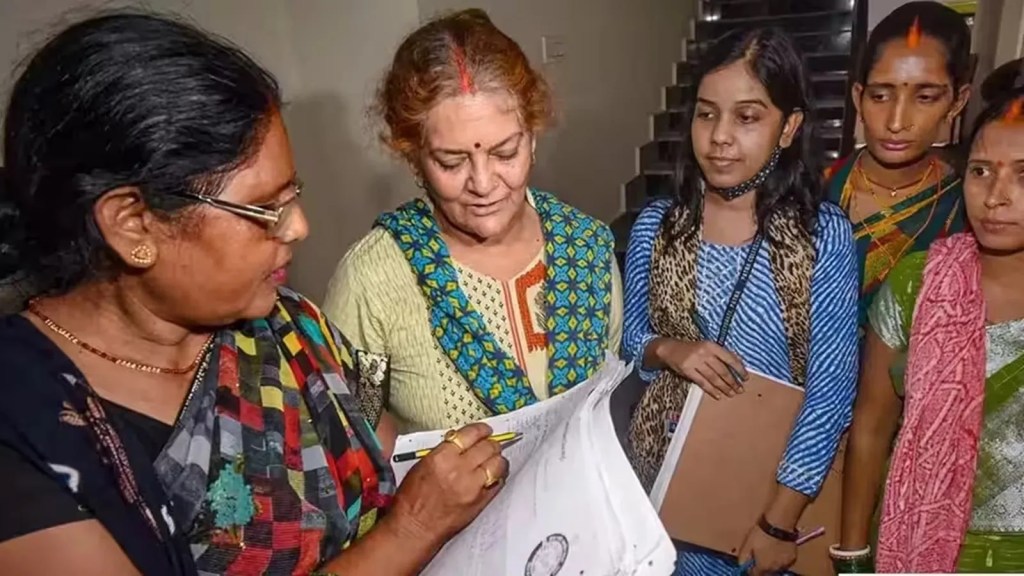 Historically, Persons With Disabilities are among the most undercounted in the Indian Census. (Express photo)


 Share


