4 min readFeb 24, 2026 07:33 AM IST
First published on: Feb 24, 2026 at 07:00 AM IST
The US Supreme Court has ruled that the International Emergency Economic Powers Act (IEEPA) does not authorise the President to impose tariffs. This decision eliminates the reciprocal tariffs imposed so far, but it would be a mistake to read it as a reversal of US trade policy.
Within hours of the judgment, Donald Trump announced a uniform 10 per cent global tariff and then raised it to 15 per cent under Section 122. Paradoxically, the three primary targets of tariff action to date — Brazil, China, and India — have seen the largest reductions in their tariffs, while some that had struck deals appear to face higher barriers. This relief, however, is likely to be temporary. The direction remains toward higher and more coercive trade barriers; what has changed is the instrument — and the speed.

The ruling narrows one pathway for executive tariff action; it does not eliminate tariff authority. Tariffs imposed under Section 232 on steel and aluminium and under Section 301 for unfair trade practices are unaffected. It also leaves open a Pandora’s box of non-tariff tools — embargoes, licensing requirements, and transaction bans — that can be used to curtail trade.
One constant of this administration is the President’s proclivity to use tariffs as a first-response policy tool. The ruling constrains speed, not ambition, and should not be mistaken for the end of a high-tariff regime. The administration has made this clear. Trump has referred to other “methods, practices, and statutes” that could be used to impose tariffs “higher than before”. Executive orders signed that night directed the Office of the US Trade Representative to initiate investigations into “unreasonable” and “discriminatory” trade practices under Section 301. This route is likely to become the vehicle for resurrecting tariffs that have been struck down.
What the ruling has unambiguously done is deepen uncertainty. The Section 122 tariff can be imposed for 150 days and extended further only with congressional approval, creating a rolling cliff edge. Other authorities will be invoked in sequence, challenged in court, and either upheld or struck down. Trade policy risk has not disappeared; it has become episodic, legalistic, and harder to price. Restrictions may reappear in different forms.
How should India read this? Its recent trade deals have become more valuable. A bilateral agreement anchored in treaty law cannot be undone by a single ruling or executive order. In a world of shifting tools and legal contestation, durability is a source of comparative advantage. Even the Trump administration has stated that the US will continue to honour its legally binding trade agreements.
These agreements also reflect a broader shift in India’s policy stance. In recent trade deals, India has reduced tariffs across a wide range of products. This signals a recognition that imports are necessary for exports and that exports remain central to growth and job creation. This change in mindset is welcome and should be reinforced.
The agreement with the EU is the more consequential one, not only because of market size but also because of the stability and discipline it provides. The US framework matters for a similar reason. As Washington experiments with post-IEEPA alternatives, exporters and investors need a floor for the bilateral relationship. Even a broad framework agreement and an implicit tariff ceiling provide predictability.
In a world of persistent uncertainty — one this ruling has only reinforced — India’s strategy is openness and predictability. That is essential to leverage the China-plus-one opportunity. India should stay the course.
The writer is assistant professor at Johns Hopkins University and affiliated with ICRIER and the Carnegie Endowment

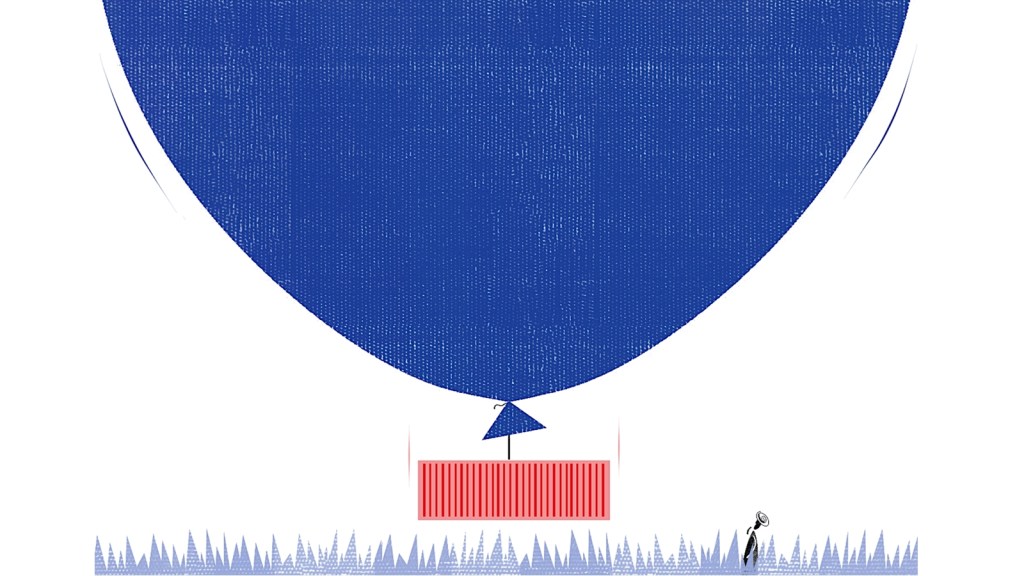 In a world of persistent uncertainty — one this ruling has only reinforced — India’s strategy is openness and predictability. (Illustration: C R Sasikumar)


 Share


