
The design and development of modern commercial passenger aircraft is possibly the most conservative process in technology product development. Any significant departure from an existing design requires years of testing by the original equipment manufacturer (OEM), mandated by stringent regulatory airworthiness and fault tolerance requirements. There are usually multiple redundancies built into the system to prevent single-point or related failures in critical systems. All this has made modern commercial aviation probably the safest way to travel by most metrics and also the most fuel efficient in terms of passenger kilometres, that is, the number of passengers times the distance travelled.
New or “clean sheet” designs of commercial passenger aircraft are extremely rare, given the large lead time and high costs involved in the aircraft design and development process. Aircraft OEMs generally rely on re-engineering their existing products for more contemporary usage — for example, by stretching the fuselage or installing new, more efficient engines to an existing legacy airframe. These changes can sometimes have unanticipated repercussions, as in the case of Boeing 737 MAX crashes and the recent grounding of various Airbus passenger jet aircraft due to engine-related issues.
However, the march of technology, the quest for higher performance and efficiency, new emission regulatory norms brought about by environmental concerns and ever-present economic considerations imply that design and related changes in civil passenger aircraft are inevitable. The familiar shape of a commercial passenger aircraft, the conventional “tube-wing” architecture, has largely remained unchanged for almost a century. The popular consensus is that this tube-wing architecture has almost reached its limits in terms of the size of the engine it can be integrated with, with adequate ground clearance.
Efficiency and, to an extent, emissions in high-speed passenger jet aircraft have traditionally been addressed by increasing the fan diameter, or the so-called by-pass ratio, in modern turbofan engines to reduce fuel burn. However, there will soon be no room left between the ground and the wing to accommodate further increases in fan diameter within such an architecture. An obvious way to reduce flight-related emissions is to move to electric propulsion with an “all-electric aircraft”. But current battery technology is adequate only for small aircraft, and all-electric aircraft for large-scale commercial aviation is unlikely in the near future. OEMs like Boeing and Airbus, meanwhile, are also betting on the “more electric aircraft” concept.
The more electric aircraft still use a conventional internal combustion (IC) engine. However, secondary on-board power —such as that needed for the cabin environment, anti-icing, and other systems — no longer comes from compressed air bled from the main engine, as is traditionally done. Instead, it is supplied entirely by electricity generated through on-board generators connected to the engines.
The Boeing 787 was the forerunner in this technology with radically different onboard electricity generation and distribution compared to its peers. With communication and computing technology progressing at a tremendous pace and at reduced costs, modern aircraft avionics is likely to embrace more of what is referred to as commercial, off-the-shelf technology or COTS products as opposed to being custom-built. COTS usage in aircraft safety-critical applications brings in fresh safety challenges. All this implies that changes — even radical in nature—in civil passenger aircraft technology are inevitable. But as OEMs and regulators have learnt, often the hard way, the safety aspects of these changes are paramount.
Commercial passenger aircraft design, development, and manufacture have always been a hugely capital-intensive exercise with uncertain returns, factors responsible for the handful of OEMs in this segment. Given the capital costs and financial risks associated with large aircraft projects, a natural way out was the formation of consortiums like Airbus and Eurofighter. Consortium partners share risks and rewards, as seen in the successful Airbus model.
The modern manufacturing system, followed by OEMs like Boeing, relies on outsourcing almost 60–70 per cent of the value of the manufacture to a select sub-group of suppliers, in what is popularly known as the Tier 1 supply chain model. This can further lead to a potential lack of oversight and safety issues.
Modern commercial passenger aircraft is an incredibly complex system, but it is a part of civil aviation — a system-of-systems, which includes multiple stakeholders like passengers, ATC, flight crew, maintenance, operations, etc. This system-of-systems usually operates with rare precision to transport billions of passengers per year safely to their destinations. However, despite multiple built-in redundancies for safety purposes, accidents do happen. It is imperative that, through a thorough accident investigation, causality is established in such eventualities, leading to OEMs, regulators, and airline operators making necessary design and/or policy changes in the interest of the safety of passengers, crew, and denizens of communities in risk-prone airport communities.
The writer is professor, Department of Aerospace Engineering, IIT-Bombay

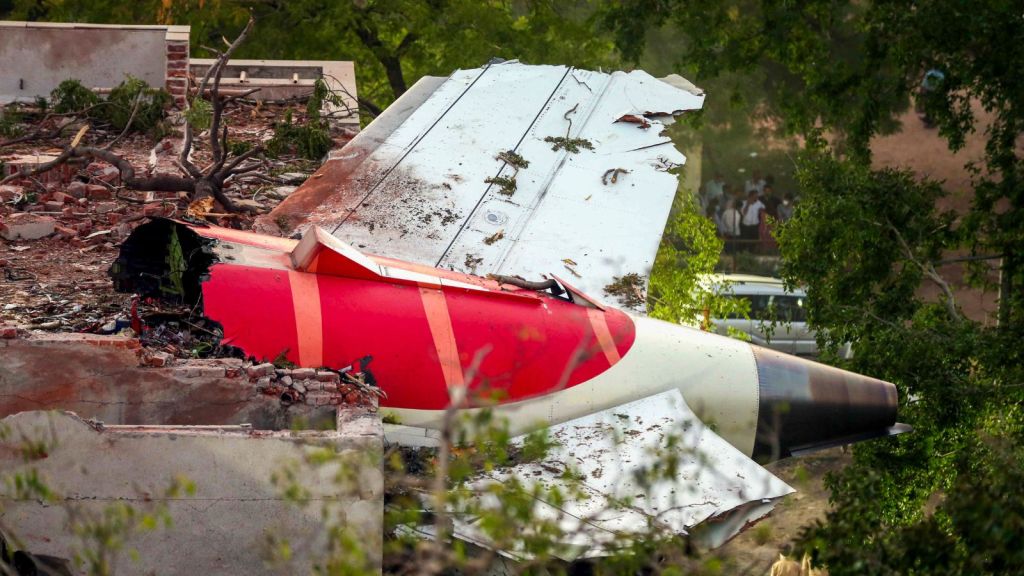 The preliminary accident report for the Air India 171 Boeing 787 crash indicates dual engine shutdown, resulting from a complete fuel supply switch-off during the initial climb phase of the flight following take-off (PTI Photo)


 Share


