
A sickly pallor
Healthcare delivery and medical education need an overhaul
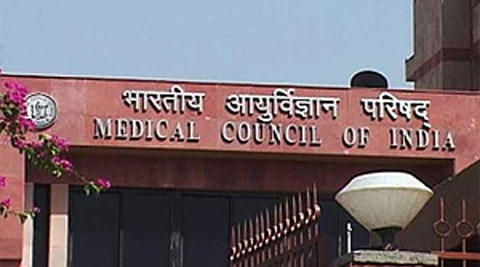 An expert group was set up by the Medical Council of India (MCI) to prepare a new curriculum for undergraduate students.
The declining standards of medical education coupled with poor health service delivery continue to be major national concerns. The conditions of primary health centres (PHCs), community health centres (CHCs) and district hospitals, is dismal. About 30 per cent of PHCs are without doctors and nearly 70 per cent of specialist positions in CHCs are vacant. Though India has experts, most of them choose not to work in government hospitals. This results in a highly skewed distribution of healthcare services in favour of a small and relatively affluent segment of the population.
India stands, I believe, at a crossroad insofar as its medical education and healthcare system are concerned, and we must take diffiuclt decisions if things are to improve. A mere increase in the number of medical professionals without maintaining, if not improving, quality is a waste of resources. It is often said that having a bad doctor is worse than having no doctor. The quality of medical professionals has declined for various reasons, including the increasing disinterest of our brightest to opt for the profession and the lack of adequate and modern facilities. Other factors also contribute, such as the flawed admission process that is followed in most private medical colleges, where merit is no longer the criterion for admission. Private colleges have other shortcomings such as a shortage of clinical material. Teaching faculty is also in short supply.

What is the way forward? A multi-pronged strategy would have to be adopted. A common entrance test to ensure admission on the basis of merit will help attract meritorious students and avoid unfair admission practices. The National Eligibility and Entrance Test (NEET) was initiated with this objective. While the decision of the apex court to reject it was a setback, the court has subsequently agreed to review its decision.
We also need to consider alternatives to compensate for the lack of adequate teaching faculty. Strengthening telemedicine facilities and using tele-education for training programmes will help. The National Knowledge Network being established by the principal scientific advisor’s office has linked many colleges. This will help in spreading higher education and address the paucity of good teachers. We should also consider appointing adjunct faculty in colleges.
The adoption of a new and updated curriculum of education is also the need of the hour. At present, undergraduate medical education focuses more on theoretical aspects rather than imparting practical skills. An expert group was set up by the Medical Council of India (MCI) to prepare a new curriculum for undergraduate students. This group has already submitted a fully revised curriculum which focuses on integrating clinical and basic training. This should be adopted.
Postgraduate education calls for other steps. The MD/ MS degree is the minimum requirement for professional recognition for a doctor. Though PG seats have increased significantly in the last few years (from 12,000 to 26,000), and there are over 3,000 PG seats for the diplomate courses conducted by the National Board of Examinations (NBE), there is still a gap between UG and PG seats. There is a critical need to reduce this gap so that every medical graduate can be confident of getting a PG seat. In the US, the number of PG seats is actually more than the number of UG seats. That is a goal we must also strive to achieve.
At present, we have two PG streams — MCI regulated MD/ MS and super-speciality degrees (DM/ MCh) on the one hand, and Diplomate National Board (DNB) in specialities and super specialities under the NBE on the other. Though the NBE was started by the government in order to initiate PG programmes in private hospitals, the DNB qualification was earlier considered inadequate for teaching positions in colleges. As both degrees are almost equivalent, it would only be fair to move towards merging the PG training programmes under one regulatory body. This would also help avoid confusion at the international level. Further, the diploma courses being run in medical colleges must also be upgraded and converted into the PG degree pool.
Many private hospitals, academies and national societies have initiated various fellowship programmes in different specialities and super specialities. But in the absence of any regulatory control, there is no check on admissions and the quality of the programmes. These courses also need to brought within the regulatory umbrella to ensure uniformity and maintain high standards of training. This will also ensure recognition and acceptance of these programmes internationally
A compulsory rural posting after graduation will ensure the availability of trained doctors in PHCs. This practice is already being followed in some states. With approximately 40,000 students graduating each year, each PHC shall have one or two doctors in addition to the regular staff. The MCI did recommend this to the government, which had also granted its approval to the scheme. However, implementation of this programme was deferred, possibly on account of pressure from students. It is necessary to address the legitimate concerns of students and to implement compulsory rural postings as expeditiously as possible. Such a scheme is essential in the larger interest of the country and is no different from, say, compulsory military or national service. If students are provided proper facilities and adequate remuneration, as they undoubtedly should be, I am certain they will have no hesitation in accepting the programme.
By undertaking the required reforms, and with the wealth of clinical material available, India can well become the destination of choice for medical education and medical care, for people from other countries too.
The writer, a former director of PGI, Chandigarh, is advisor, health and medical education, to the government of Punjab
express@expressindia.com
 Share


