
A law for the CBI
It must have statutory powers over central employees to avoid hurdles, controversy.
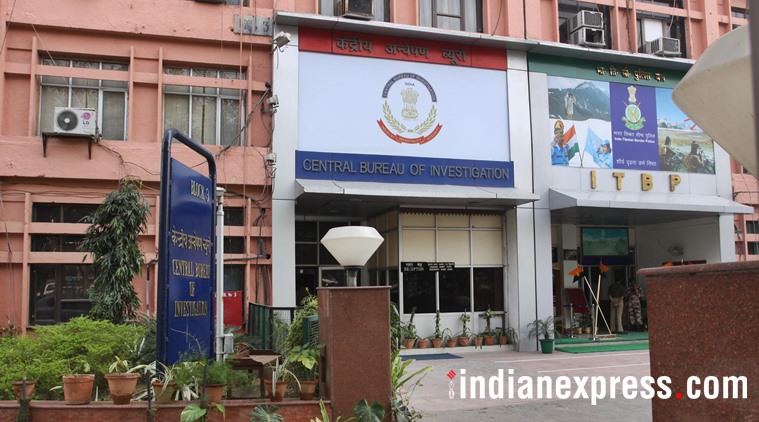 The CBI, legally known as Delhi Special Police Establishment, cannot function in a state unless the matter is referred to it by a high court or the Supreme Court or by the consent of the state government concerned.
The Central Bureau of Investigation (CBI) is often in the news for its own doings, or due to the doings of others and sometimes because of the intent of the accused to evade the law. The CBI, legally known as Delhi Special Police Establishment, cannot function in a state unless the matter is referred to it by a high court or the Supreme Court or by the consent of the state government concerned. Even the central government employees posted in states are not within its jurisdiction as per anti-corruption and other laws.
There was always a demand for an all-India legislation to give the CBI statutory powers over central government employees posted anywhere in the country. But no such legislation has been passed. State governments have resisted such a law on the plea that a central agency would take away the powers of policing vested in them. The ruling party in a state, sometimes genuinely and many times on flimsy grounds, has denied permission to the CBI to investigate matters. Recently, Andhra Pradesh and West Bengal, and earlier Karnataka, Nagaland and Sikkim had withdrawn consent to the CBI to operate.

While witnessing the recent turmoil in Kolkata, when the CBI team tried to enter the residence of the Kolkata police commissioner, either to interrogate him or to intimidate him, I recall a similar incident which happened at a much higher level in Patna. A CBI team had tried to enter the residence of the then chief minister, Lalu Prasad, following a non-bailable warrant issued by a Patna court. I was privy to the drama that night between Patna and the Delhi CBI headquarters.
The then joint director, U N Biswas, wanted to arrest Lalu Prasad and produce him in court the next day. However, the CBI director was of the view that the arrest should be averted as the CM had offered to surrender before the CBI special court the next morning. But Biswas wanted to arrest him and he had the backing of the judges of Patna High Court as investigations of fodder scam cases were monitored by the high court and the judges had allowed him to report directly to the court without reporting to the director of the CBI.
Despite the denial of permission by the director, the CBI team went to arrest Lalu Prasad at his residence where the latter had already posted about 2,000 policemen to prevent the CBI from arresting him. The CBI team was not allowed to enter the premises by the Bihar police. Biswas, who later became a minister in the Trinamool Congress government in West Bengal, was not in a mood to relent.
For the first time in independent India, a CBI official went to the then corps commander, Patna and asked for an army unit to arrest a CM. Luckily, the corps commander did not oblige and contacted the army chief in Delhi, who in turn contacted the then CBI Director R C Sharma. The army chief directed the corps commander not to give any army support to the CBI and a constitutional crisis was averted. Lalu Prasad resigned the next day and surrendered before the court.
There have been other instances when the CBI faced off with other law enforcement agencies like the Intelligence Bureau (IB), Income Tax Authorities (ITA), Directorate of Enforcement and police forces of different states. These were also due to the CBI lacking legal powers to operate on an all-India basis. Such instances do not sit well with a system where rule of law is paramount. There is an urgent need to giving statutory backing to the CBI on an all India basis with a constitutional amendment, with the consent of at least half of the state legislatures. Otherwise, such conflict will recur and eventually give rise to unnecessary controversies.
 Share


