It is a fact that citizens find it very difficult to access the criminal justice system in India. Police stations, busy in public order and VIP duties, are generally unapproachable. Court procedures and the long delays in trials are backbreaking. Overworked and underpaid prosecutors are pitched against well-paid defence lawyers. Forensic laboratories are replete with out-dated equipment. Because of these factors, we have less than a 60 per cent conviction rate in the country. And if the prisons are overcrowded, it is because the slow speed of trials ensures that those with cases pending against them continue to be incarcerated. Where does a victim of crime stand in this highly convoluted justice system? And does the gender of the complainant matter?
There have been some concerns about women as victims, and occasionally as perpetrators of crime. Women’s representation in the police and different wings of the justice system has therefore been encouraged. We see more women in uniform today, although they form only around 12 per cent of the police force. Their presence as prosecutors, forensic scientists, prison and judicial officers is increasing gradually.

In this scenario, a recent study ‘Does Victim Gender Matter for Justice Delivery? Police and Judicial Responses to Women’s Cases in India’ by Nirvikar Jassal, published by Cambridge University Press on behalf of the American Political Science Association, has identified “multi-dimensional discrimination” of women. It concludes that women are treated differently from men at all levels of the justice system and every stage of the legal process.
Police stations, in general, have not been citizen-friendly and women in particular hesitate to “cross the threshold” of a “chowkie”. These very strong sentiments had led to the creation of All-Women Police Stations (AWPS) a few decades ago. As the reporting of crimes against women increased, the presence of more women in each police station became the accepted norm, rather than the AWPS. Nearly all states have resorted to reservation for them. Special courts, too, have been created for the speedy trial of crimes against women.
And yet, the above study, with the state of Haryana as its sample, has concluded that women get a raw treatment at different stages of investigation and trials. That when they approach police stations, women are made to wait longer to register cases than men. And, if accompanied by a male person, the process is faster. That crimes where women are complainants have delayed investigation and fewer cases registered by women are sent to courts by police. Further, the study found more court dismissals and delays in trials and more acquittals and lower conviction rate in cases where women are complainants. The research deals with two types of complaints — those dealing with violence against women (VAW) and others about general crime. It concluded that “indeed, women complainants seeking justice from the state have a lower chance of a suspect that wronged them being sent to prison for either type of complaint, VAW or not.” Having a very limited sample of one state, it cannot speak for the rest of the country, though it claims to. States like Kerala may show a very different trend; but the issues flagged are serious indeed.
It could be true that women complainants are not viewed seriously by male police officers and made to wait. Therefore, there is a need for special recruitment drives by states to employ more women in police stations who would hopefully be more sensitive. As per the current recruitment policies, it will take another decade to reach the 33 per cent reservation target.
The surmise that investigation of cases where women are complainants takes more time could be because women-related crimes are tried at sessions courts. Being serious, their investigation and trials are definitely more time-consuming. However, the above research has pointed out that in similar types of cases, acquittal is more likely if the complainant is a woman. It points out that women are “less likely to afford lawyers or cope with in-person follow-ups necessary for trial… travelling long distances repeatedly to a district court for multiple hearings may pose distinct challenges…” Due to various factors, including domestic responsibilities, women definitely lose out on effective follow-up of their cases with police and courts. This is where the state can step in by creating effective monitoring systems so that a complainant’s repeated presence and follow-up is not required. It can help women secure justice at par with male complainants.
While flagging very important issues, the above study did not get its data corroborated or validated by interviewing either police or judicial officers of Haryana. If the researcher had approached police or judicial officers, some of the issues raised in the study could have easily been explained — for example, the incorrect observation that “women’s cases are infrequently assigned to junior officers, for example, constables.” I contacted two senior IPS officers in Haryana and both confirmed that constables are not allocated to crime investigation. Culling out data through machine learning or computer-based matching can thus have serious limitations.
At the same, policy makers must understand that their task does not end with giving access to women in the criminal justice system. We need to ensure that having lodged an FIR, a woman’s case is investigated promptly and in all seriousness. That at the trial stage, it receives the same attention that a case registered by a male complainant does. Serving of summons, production of witnesses, submission of medical and forensic evidence, presence of investigation officers and competent prosecutors need to be pursued. While I have some reservations about the validity of conclusions drawn by research based totally on secondary sources, the step-motherly treatment meted out to women at various levels of the criminal justice system cannot be ignored. Close monitoring to ensure that all genders, including LGBTQ community, receive the same treatment is essential.
We do not need new codes and procedures with novel titles; what we require is more police officers, prosecutors, forensic experts, prison and judicial officers with adequate resources at their disposal. We need a system that is accessible, efficient and does not discriminate on the basis of caste, creed, gender or religion. And we need rigorous research capabilities to correct us when we go wrong, causing “multi- dimensional discrimination” to our very own.
The writer is a retired IPS officer. Her latest book is titled Madam Commissioner

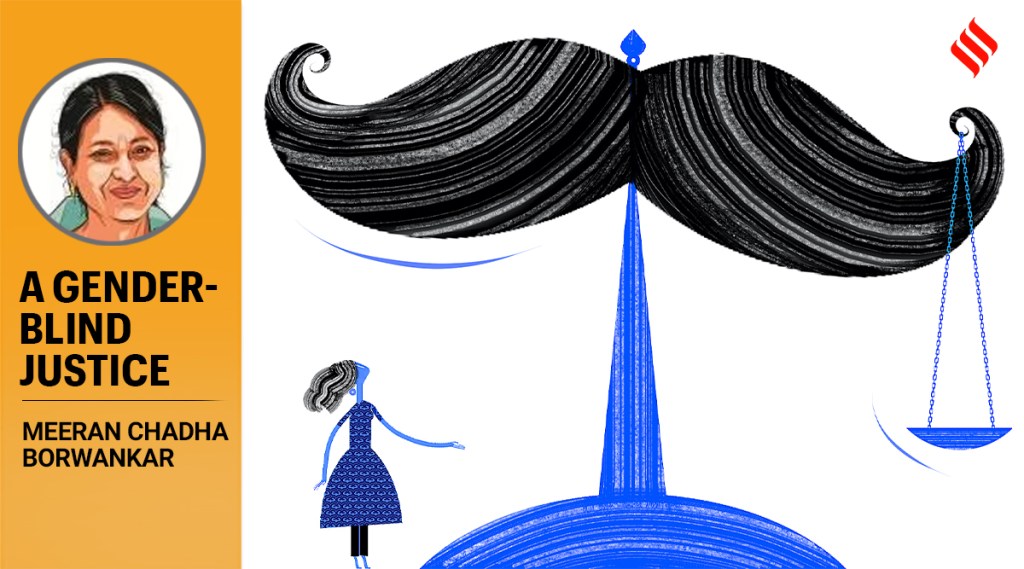 We need to ensure that having lodged an FIR, a woman’s case is investigated promptly and in all seriousness. (Illustration by C R Sasikumar)


 Share


