
The state’s social policy on economic disadvantage is simply inconsistent
The skewed definition of inequality in quota for economically weak makes it constitutionally suspect.
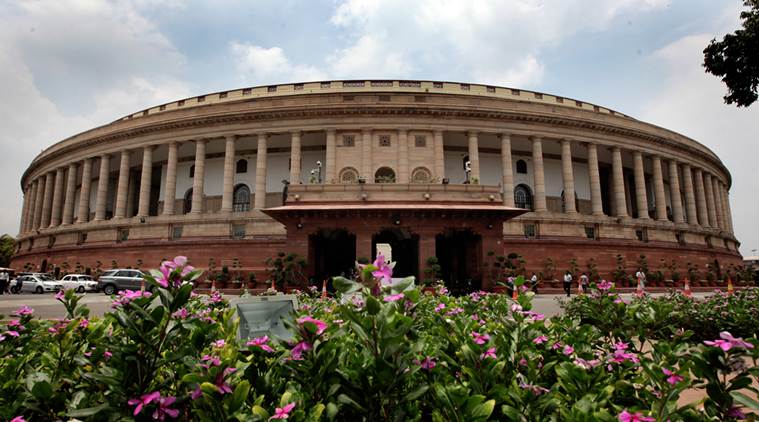 Parliament has enacted economic disadvantage as a ground for reservation into the Constitution.
A welfarist measure always seems utopian, but the devil lies in the details. Parliament’s decision to approve the 124th Constitutional amendment treads tenuously on this predicament. On the one hand, Parliament has enacted economic disadvantage as a ground for reservation into the Constitution; on the other hand, the sword of legal propriety hangs on the amendment. Succinctly put, the 124th Amendment Bill seeks to provide reservation in the matters of education (Article 15) and public employment (Article 16) to economically disadvantaged sections of the society.
In modern societies, economic debilitation impairs access to educational opportunities, which in turns mars the capability to realise human potential. Therefore, it becomes the state’s responsibility, more so for a socialist-democratic welfare state, that access to educational institutions and public employment is opened up. The Economically Weaker Section (EWS) carved out by the 124th Amendment, cuts across erstwhile limitations of caste and religion, enabling a policy that serves a larger segment of beneficiaries. However, the Bill has the potential to run afoul of constitutional propriety.

First, it is not clear in the Bill if the proposed reservation will apply vertically or horizontally. While vertical categories run exclusive to each other (SC, ST, and OBC), horizontal categories can overlap (women, persons with disabilities). If run vertically, as is being contended by the government, the policy would breach the 50 per cent cap on reservation espoused by the Supreme Court in Indra Sawhney (1992).
Second, running the policy vertically would also jeopardise the Right to Equality under Article 14 of the Constitution. An SC/ST/OBC poor would be restricted from claiming reservation under the EWS quota despite being both economically disadvantaged and socio-educationally backward.
Third, creating reservation at private-unaided educational institutions would eschew the freedoms under Article 19(1)(g). Curbing fundamental rights for facilitating professional and degree education is an overstretch from Article 21A’s mandate of literacy and primary schooling.
Fourth, running the policy on a Rs 8 lakh-per-annum threshold (government proposed) would mean that there would be little to distinguish between an OBC creamy layer, for which it is at Rs 12 lakh-an-annum, and an EWS. Estimates suggest that the policy would open up 10 per cent seats to a staggering 98 per cent of the population, and the impact of any policy would be lost to the crowd. Rather, the poverty-line offers a better threshold, adequate to target the most economically disadvantaged, whilst offering numbers upon which benefits are not lost.
Fifth, the policy bypasses the constitutional qualifiers for reservation. As envisaged under Article 16 (4), reservation operates on demonstrating both “backwardness” and “inadequacy of representation”. Although the qualifier of “backwardness” has been ostensibly addressed by the insertion of Article 16 (6), “inadequacy of representation” has not been substantiated. This nuance is the crux that distinguished reservation in educational institutions (Article 15) from reservation in public employment (Article 16).
Whilst the cry for economic deprivation justifies educational reservation, there is still a need to show by way of demographic data that the EWS are not adequately represented in the services of the state. This would defy the enunciation of the Supreme Court in M Nagaraj (2006).
One might argue that “backwardness”, under Articles 15 and 16, is still largely governed by Article 340, which restricts it to social and educational disadvantage. This was also the reason that the Supreme Court in Indra Sawhney (1992) had struck down the 10 per cent EWS quota, holding that there was no constitutional guidance under Article 340 for the same. Considering the political-legal history of the EWS quota, Parliament certainly has done a shoddy job of not addressing Article 340 in the 124th Constitutional Amendment Bill.
However, the biggest impediment to the Bill arises from the Right to Equality under Article 14 of the Constitution. The Supreme Court’s latest enunciation in Jarnail Singh (2018) unequivocally defines equality as: “Persons situated similarly must be treated at par, and persons situated dissimilarly must be treated distinctly”. This was also the raison d’être for carving out the “creamy layer” in SC/STs by holding that the “forwards” among them could not claim reservation, which was a right of the “backwards”. The Rs 8 lakh-an-annum threshold is casting too wide a net, in a country where the per capita income is not even Rs 10,000-a-month (nominal). The net effect of the policy would be to constitutionally equate a rural BPL-family barely rummaging two-square meals-a-day, with a semi-urban middle-class family earning Rs 66,000 per month.
The Parliament has recognised economic “disadvantage” as a ground for claiming reservation benefits. However, its corollary has been completely ignored — the economically “advantaged” (creamy layer) must simultaneously move out. Needless to say, neither the Parliament nor the government has effected either a Bill or a notification to give effect to Jarnail Singh (2018), where the Supreme Court had called upon the state to cast out the “creamy layer” in SC/STs.
Political courage is a blessing greater than judicial wisdom; however, dewy-eyed populism must not enrapture the sensibilities of state policy. As of today, the state’s social policy on economic disadvantage is simply inconsistent.
This article first appeared in the January 12, 2019, print edition under the title ‘Spot the disadvantaged’
 Share


