
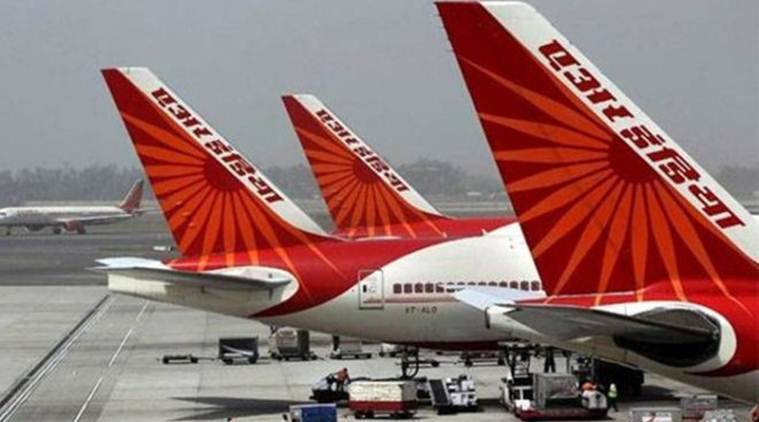
The world’s largest-ever aircraft order by Air India is significant in more ways than one. It highlights the huge untapped potential of the Indian aviation industry, proclaims India’s arrival on the global stage, and is a harbinger of good things to come. It also busts various myths prevailing in India’s, at times immature, political discourse.
The first is that it is politically risky to engage with industry. Prime Minister Narendra Modi is perhaps the first leader to bust the political hypocrisy around collaboration between government and industry for the common good. “Shame the business community during the day and cut deals with them during the night”, used to be the unwritten dictum earlier. The economic strength of a nation is built by its industry with the government as a facilitator.

The celebration of the Air India order by heads of state or governments of the US, France, and the UK did not make them “agents” of their aircraft suppliers. We need to learn from them and celebrate Air India’s success as the nation’s success. Let’s not forget that while Air India may be owned by the Tatas, it is the Indian taxpayer that picked up the tab of Air India’s massive past liabilities, to make the company saleable.
It is heartening to note that the culture of open and transparent engagement with industry, started by PM Modi during his Vibrant Gujarat days is now being emulated by most chief ministers in India, cutting across party lines. But care needs to be exercised so that the engagement with industry is broad-based and not for a select few.
The second myth that has been busted is that aviation is for the rich. The aviation industry doesn’t just transport people and cargo — it is a foundational pillar of the global economy. One would struggle to name a country or city that has become a commercial, industrial, or tourist hub without robust aviation infrastructure. Surprisingly, the aviation industry in India was portrayed as a rich man’s mode of transport and hence, politically risky to support. The aviation ministry was generally handled by coalition partners who often used it as a milch cow.
The Indian middle-income segment comprises around 350 million people. If each person buys a return ticket just once a year, the number of air trips will be 700 million per annum. In stark contrast, in the pre-Covid year 2019, India’s airlines sold just 144 million domestic tickets. That is the scale of growth opportunity staring at us. It was PM Modi who accorded aviation the importance it deserves. He introduced the pathbreaking UDAN (Ude Desh ka Aam Nagarik) scheme to take flying to the interiors of India. The number of airports has increased from 74 in 2014 to 147 by 2022 and domestic traffic more than doubled from 66 million in 2014 to 143 million in 2019. The success of the UDAN scheme at places like Belagavi, Darbhanga, Dimapur, and Jharsuguda is an eye-opener.
Thanks to the UDAN scheme, privatisation of Air India, and massive expansion of airport infrastructure, Indian aviation is on a high growth path. India is leading the recovery in global aviation despite being one of the very leading economies that did not give any financial bailout to its airlines.
The third myth that has been busted is that “Air India was family silver sold for a song”. In the past, bilateral rights were liberally granted to foreign airlines. Air India was run by government officials with limited aviation or commercial knowledge. A botched merger with Indian Airlines, poorly negotiated supplier contracts with crony capitalists, unprofessional fleet and route selection, high employee cost, business class upgrades to influential travellers, etc, ruined our national carrier.
PM Modi took a bold political call to privatise Air India, despite the predictable rants of “selling family silver for a song”. Prior to privatisation, Air India was bleeding, with losses of around Rs 5,000 crore annually, which could have been exacerbated due to Covid-19, the Ukraine conflict, and the global fuel crisis. Air India’s privatisation has saved thousands of crores of taxpayers’ money, which can be utilised for infrastructure development and social upliftment. It has given us a good template to follow for the privatisation of other non-strategic government-owned companies.
Finally, there is the notion that India will gain little from importing foreign aircraft. The mammoth aircraft order will create job opportunities in India across the value chain — airports, air navigation, aircraft maintenance, ground handling, catering, security, training, etc. It will boost the growth of allied sectors like tourism, hospitality, healthcare, exports, real estate, banks, and IT, to name a few. With a bigger fleet, Air India may offer international connectivity from several state capitals and important tourist destinations. The long-haul international traffic lost to foreign airlines over the decades will gradually shift back to Indian carriers.
The aircraft deal marks India’s growing stature on the global stage and will help in ongoing trade negotiations. It will lead to greater sourcing of aircraft components and services from India culminating in the establishment of aircraft assembly lines here. The economic cooperation with leading powers despite minor geopolitical differences augurs well, especially in the year of India’s G20 presidency.
India’s time has come. The Air India aircraft order is a significant milestone in our Amrit Kaal. Let us celebrate it wholeheartedly.
The writer heads BJP’s IT department and is Sah Prabhari of West Bengal
 Share


