BMC’s 3-month drive to demolish 39,000 ‘illegal’ homes begins October 1

Three-month crackdown follows Kurla landslide and Mankhurd house collapse; civic body targets structures taller than 14 feet

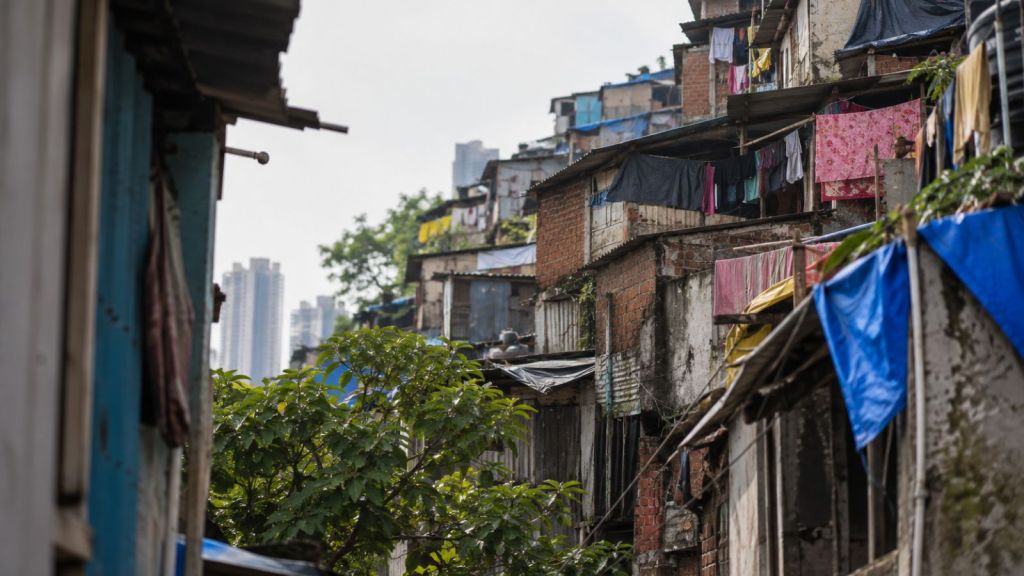
According to BMC data, Mumbai has 2.23 lakh slum structures, of which 39,111 are either 14 feet or taller. (AI Generated Image)According to BMC data, Mumbai has 2.23 lakh slum structures, of which 39,111 are either 14 feet or taller. (AI Generated Image)

For the first time, the Brihanmumbai Municipal Corporation (BMC) has announced an intensive three-month drive against unauthorised housing structures in the slums of Mumbai. The civic authorities on September 19 (Saturday) said that the drive will begin from October 1 onwards, and any unauthorised structure that is 14 feet or taller will be demolished.

The BMC’s announcement comes after eight persons lost their lives following a landslide reported in August this year at Mumbai’s Kurla crushed housing settlements located at the edge of a hill. A month earlier six children lost their lives after a house collapsed in Mumbai’s Mankhurd area following heavy rainfall. In both these cases the residents were living in illegal structures.

“The drive will start from October 1 and will continue till December 31. We (BMC) have now appealed to residents living in such structures to voluntarily remove the unauthorised portions before the drive begins. We have also warned them that failure to do so will invite demolition action,” a civic official told The Indian Express.

A day after the Kurla landslide incident, the Indian Express reported how the BMC was urged by the Geological Survey of India (GSI) to stop all kinds of housing construction activities that were taking place at the slope of the hill. In its report, the GSI had also given a word by word prediction of how the landslide may take place. In another report published on August 24, Express had reported how despite warnings there was no land use policy of the eviction plan in place for Mumbai.

According to BMC data, Mumbai has 2.23 lakh slum structures, of which 39,111 are either 14 feet or taller. The civic body’s rule states that any informal housing structure that is taller than 14 feet is to be classified illegally automatically. Of these, 39,000 structures, 31,227 are located in the eastern suburbs while 4,536 structures are located in the western suburbs. The remaining 3,348 structures are in the island city.

Most of these housing settlements are located on land owned by the state government or union ministry.

Speaking to the Express, officials maintained that notices have been served to 611 such structures in the first phase.

Story continues below this ad

“Most of the people residing in these housing units are encroaching the land illegally. Earlier this week, there was a meeting where officials of BMC, state government and collector’s department were present. We have decided to take coordinated action going forward to prevent any further loss of lives in such kinds of incidents,” an official said.

The sources in Mumbai’s Collector’s office are expected to begin the eviction process immediately after the monsoon.

“There is a court order that prevents eviction drives during the monsoon. There is also a set of SOPs that need to be followed in the process of encroachment removal. As a first step, we are issuing them notices asking them to leave the premises voluntarily. If they fail to do so, the administration will carry out a drive following the government’s prescribed rules,” the official said.

Pratip Acharya is a seasoned journalist based in Mumbai reporting for The Indian Express. With a career spanning over a decade, his work demonstrates strong Expertise and Authority in critical urban issues, civic affairs, and electoral politics across Eastern and Western India. Expertise & Authority Current Role: Journalist, The Indian Express (IE), reporting from Mumbai. Core Authority: Pratip's reporting focuses sharply on local democracy and development, specializing in: Urban Governance and Civic Affairs: Providing in-depth analysis of municipal decision-making, city planning, and local infrastructure, essential for informed urban reporting. City Politics and Environment: Covering the political dynamics of Mumbai and surrounding areas, alongside critical environmental challenges impacting the metro region. Electoral Coverage (High-Stakes Experience): He has extensive experience in high-stakes political reporting, having covered major elections, establishing his Trustworthiness in political analysis: National: Lok Sabha elections in 2014 and 2019. State: West Bengal Assembly elections in 2016 and Maharashtra Assembly elections in 2019. Major Assignments (Ground Reporting): Pratip demonstrated commitment during crises by conducting ground reporting throughout the Covid-19 pandemic since its breakout in 2020, offering first-hand accounts and analysis of the public health crisis. Experience Extensive Experience: Starting his career in 2014, Pratip has built his foundation across multiple prominent English dailies: Started at The Times of India in Kolkata (2014). Relocated to Mumbai (2016) and worked with The Free Press Journal and Hindustan Times before joining The Indian Express. Pratip Acharya's diverse experience across major publications, coupled with his specialized focus on the intricate details of urban governance and a track record of covering major electoral and health crises, establishes him as a trusted and authoritative source for news from India's critical metropolitan centres. ... Read More


Advertisement
Loading Recommendations...
Advertisement
Advertisement
Latest Comment
Post Comment
Read Comments