They filed “20-25 RTI applications a day”, says Wahid Shaikh, seeking information on “logbooks of police stations to location of vehicles cited in the probe, to hospital records, to service records of investigators”.
On Monday, as the Bombay High Court acquitted all 12 accused in the July 11, 2006, Mumbai serial train blasts, these RTIs played a big part in the collapse of the prosecution case. It’s not clear how many RTIs were filed by the accused in all, but their lawyers put it at “hundreds”, pointing out that most of the defence documents were, in fact, RTI responses.

Shaikh, who was acquitted in 2015 in the case (the only one cleared by the trial court), says that soon after they were chargesheeted in 2007, they decided to go over the police document carefully, divide it topic-wise, and then go about filing RTIs to try and find holes in the prosecution evidence.
Wahid Shaikh, who was acquitted in 2015 in the Mumbai train blasts case of 2006, says they filed “20-25 RTI applications a day”. Express File
Perhaps the most prolific in terms of RTI applications was Ehtesham Siddique, once a printer and publisher of Islamic books, who was among those sentenced to death by the trial court.
Part of the evidence that the Bombay High Court held unreliable on Monday was the testimony of a prosecution witness (PW-74) that he saw two men with a black rexine bag at Churchgate Station, boarding a train towards Virar on the evening of July 11, 2006. He identified one of the two men as Ehtesham.
It was on the basis of this testimony that police identified Ehtesham as the planter of one of the train bombs, and that the trial court sentenced him to death.
The witness told the trial court that he had come to the Churchgate Station after meeting a person at the ENT Hospital at Hutatma Chowk in Fort, and had then taken a train to Dadar, to meet a person working with a bank.
The High Court held that RTI replies obtained by Ehtesham showed that the witness’s testimony didn’t hold up. For instance, the witness identified the man he went to meet at the ENT Hospital on July 11, 2006, as ‘Baban Rankhambe’. An RTI application filed by Ehtesham showed there was no such person at the hospital by that name then. The prosecution then argued that a person named ‘Baban Rongya Kamble’ worked at the hospital, and the name could have been mistyped. But the RTI response showed that Kamble was supposed to be on the night shift that day, but had remained absent.
“Thus, it creates doubt about the veracity of the evidence of PW-74,” the High Court said.
The court also noted that, as per police, PW-74 had approached them over 100 days after the blast to identify Ehtesham, and questioned how anyone could recollect the face of a person after such a long gap.
Another RTI by Ehtesham showed that there was no one by the name that the same witness claimed to have met at a bank the evening of the blasts – a fact that was also noted by the High Court on Monday.
Another RTI response referred to by the court was that the same witness, PW-74, had appeared in four other cases for police. The defence claimed that this showed he was a ‘stock’ witness of police and could not be considered “independent”.
Wahid Shaikh, who credits a fellow undertrial with giving them the idea of using RTIs to prepare their defence, says that they stepped up the filing of applications after the trial against them began in 2010.
The same year, on an appeal filed by Ehtesham, an Additional Principal Judge of the City Civil Court in Mumbai held that since he was an undertrial since 2006 with no income, he should be treated as below poverty line – under the RTI Act, it exempted him from paying fees for his applications.
The accused also filed RTI pleas to seek Call Data Records, as they were not made part of the evidence, taking the route after a court plea failed. Their advocate Yug Mohit Chaudhari argued that the accused’s right to a fair trial was severely compromised due to it.
Chaudhari also submitted that the Maharashtra Anti-Terrorism Squad had tried to stop the accused from accessing the CDRs via RTI, by instructing the telecom company concerned MTNL not to provide the details. The RTI response denying the CDR information was part of the defence’s court submissions.
In its order, the High Court said: “It is to be noted that the prosecution has failed to bring any satisfactory evidence on record to corroborate the above facts. Therefore, in absence of such satisfactory evidence, the prosecution ought to have brought the CDRs of the accused on record, which would have clearly established their locations at the relevant time. It is to be noted that the prosecution had obtained the CDRs but not relied upon (them) or filed along with the chargesheet.”
Ehtesham also filed RTIs with other departments, and filed court appeals when he was denied information. Many of these too were denied.
His RTI on the IPS officers who supervised the blasts probe was denied by the Delhi High Court in 2024, which upheld the Central Information Commissioner’s decision that the information was personal and not in public interest.
Another of Ehtesham’s RTIs that was unsuccessful was an application seeking an investigation report which showed that another terror group was behind the blasts – and not he or the other co-accused with him.

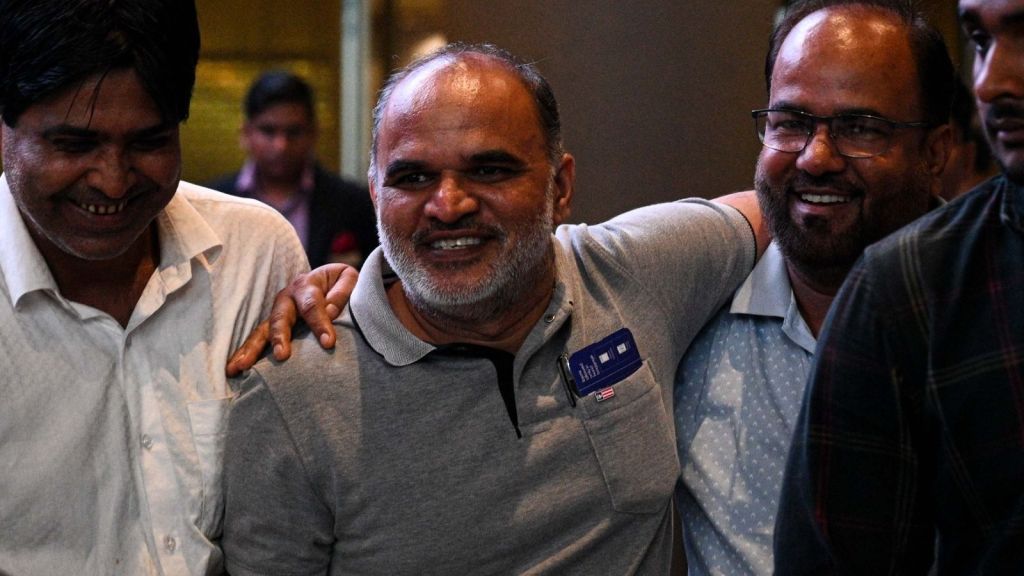 Ehtesham Siddique after the High Court verdict. He filed a number of RTI applications to find holes in the prosecution evidence. (Express photo by Sankhadeep Banerjee)

 Wahid Shaikh, who was acquitted in 2015 in the Mumbai train blasts case of 2006, says they filed “20-25 RTI applications a day”. Express File


 Share


