


Journalism of Courage
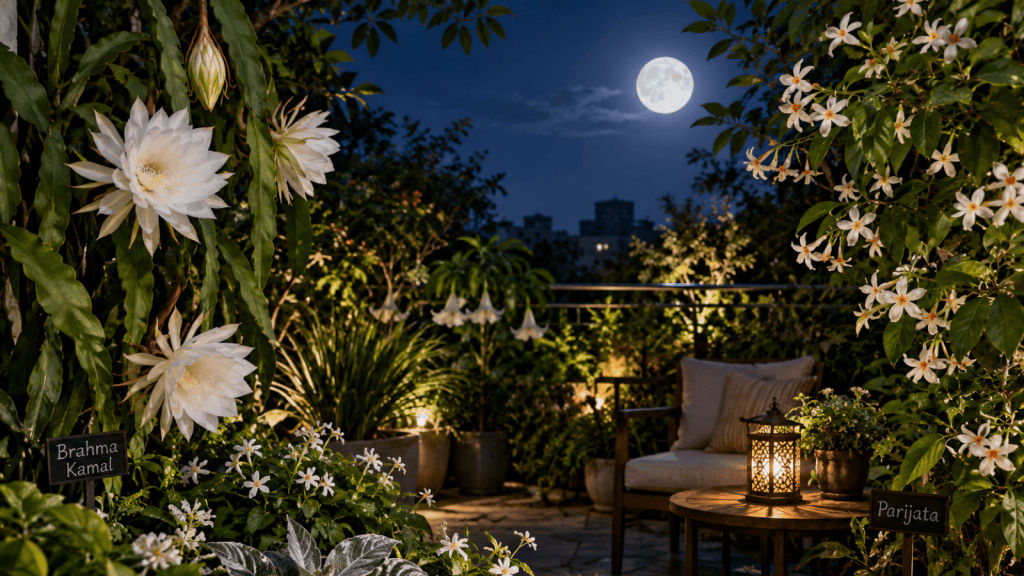 A moon garden featuring white, fragrant flowers such as Brahma Kamal and parijata that glow softly under moonlight (AI generated image)
Moon gardens are having a moment, as more people reimagine their outdoor spaces as places to unwind after dark. But before we explore how to create one, let’s first understand what exactly a moon garden is.
In simple terms, a moon garden is designed to come alive after dusk. It celebrates light, fragrance and texture, allowing the subtle beauty of the night to take centre stage. The setup typically features plants that bloom at night, have a strong fragrance, or produce white or other light-coloured flowers that stand out in the moonlight. According to Giulia Baima Bollone, director, Embassy Interiors, it is “a space that trades the drama of sunlight for the softer, more understated charm of moonlight.”
DISCLAIMER: This article is based on information from the public domain and/or the experts we spoke to.
The palette typically features white and silver-toned blooms such as moonflowers, white jasmine, dusty miller and evening primrose, as their pale petals catch and reflect even the faintest light, creating a soft, luminous effect after sunset. Fragrance is equally important, as many night-blooming flowers release their strongest scents in the evening, making the garden an experience that engages more than just the eyes.
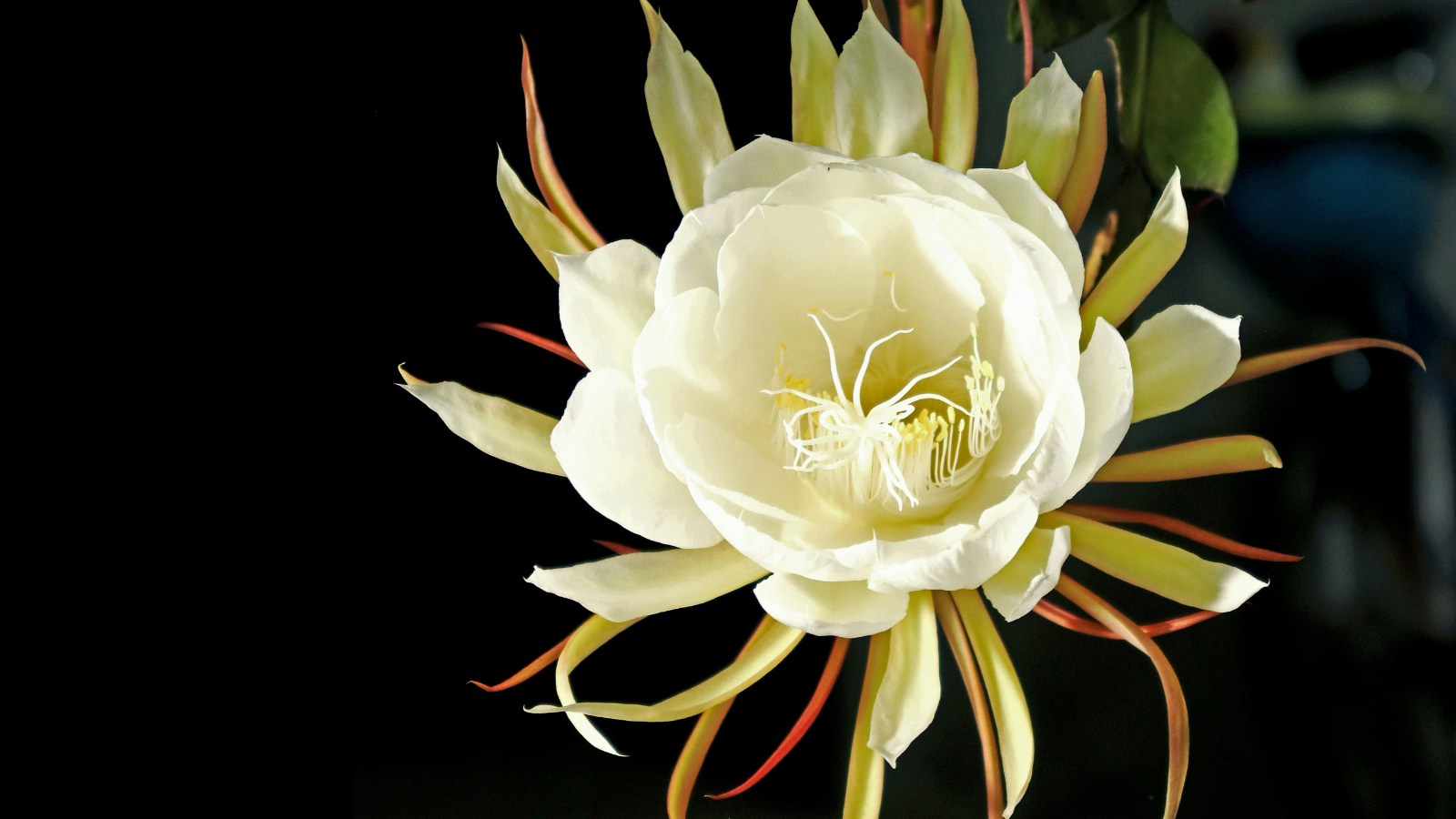 Include a Brahma Kamal flower in your moon garden (Image Source: Unsplash)
Mrunmayee Pande, landscape architect and proprietor at Mskapesstudio says, “There are also some unique species, including Brahma Kamal, which bloom only after sunset or parijata, which have a strong fragrance, especially during the night,” as she suggests the following plant species for moon gardens that can be grown in containers:
For shaded balconies –
For sunny balconies (with a minimum 6 hours of sunlight available) –
A moon garden is not just something you plant, it is a space to experience and unwind in. Creating a moon garden at home can be simple, and here’s how you can do it, as suggested by Giulia Baima:
Stressing that there are no space constraints when it comes to moon gardens as one can grow these flowers inside small pots in balconies or even on terraces, Mrunmayee, however, highlights climate consideration to be an important factor. “One has to check the amount of sunlight entering their balconies or terraces and at what time, based on which the type of plants should be considered.”
DISCLAIMER: This article is based on information from the public domain and/or the experts we spoke to.


