
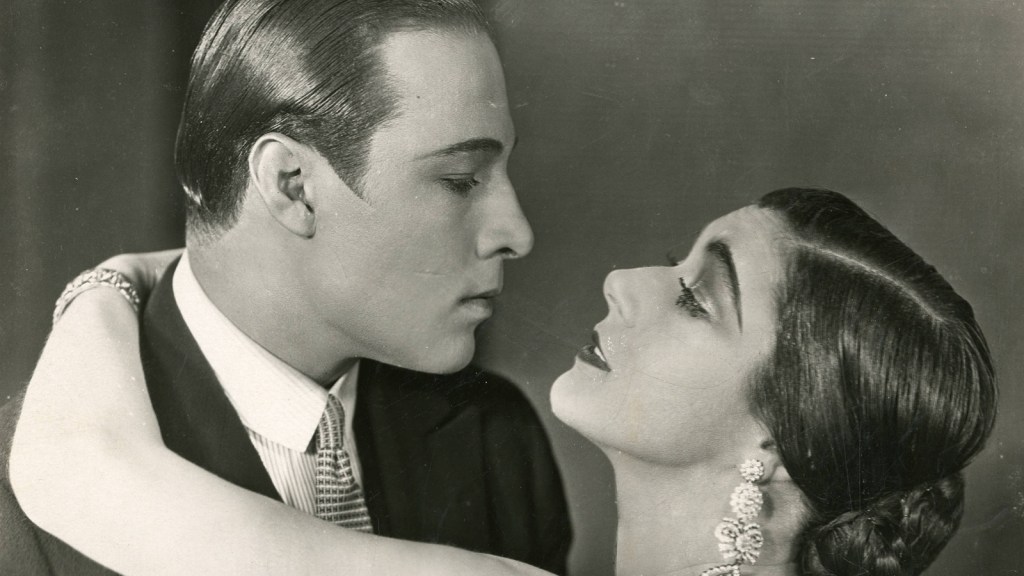
Sideburns, the soft curls that once flirted with a woman’s cheek, have now become something many are desperate to magic away –by razor, wax, bleach, or laser, in that order.
In 18th-century Europe, women styled these facial hair on purpose. Dainty ringlets near the ear, called lovelocks – yes, like something out of a Regency romance – is an example. In Mughal-era paintings, too, women wore their facial hair like it was no big deal — because it wasn’t.

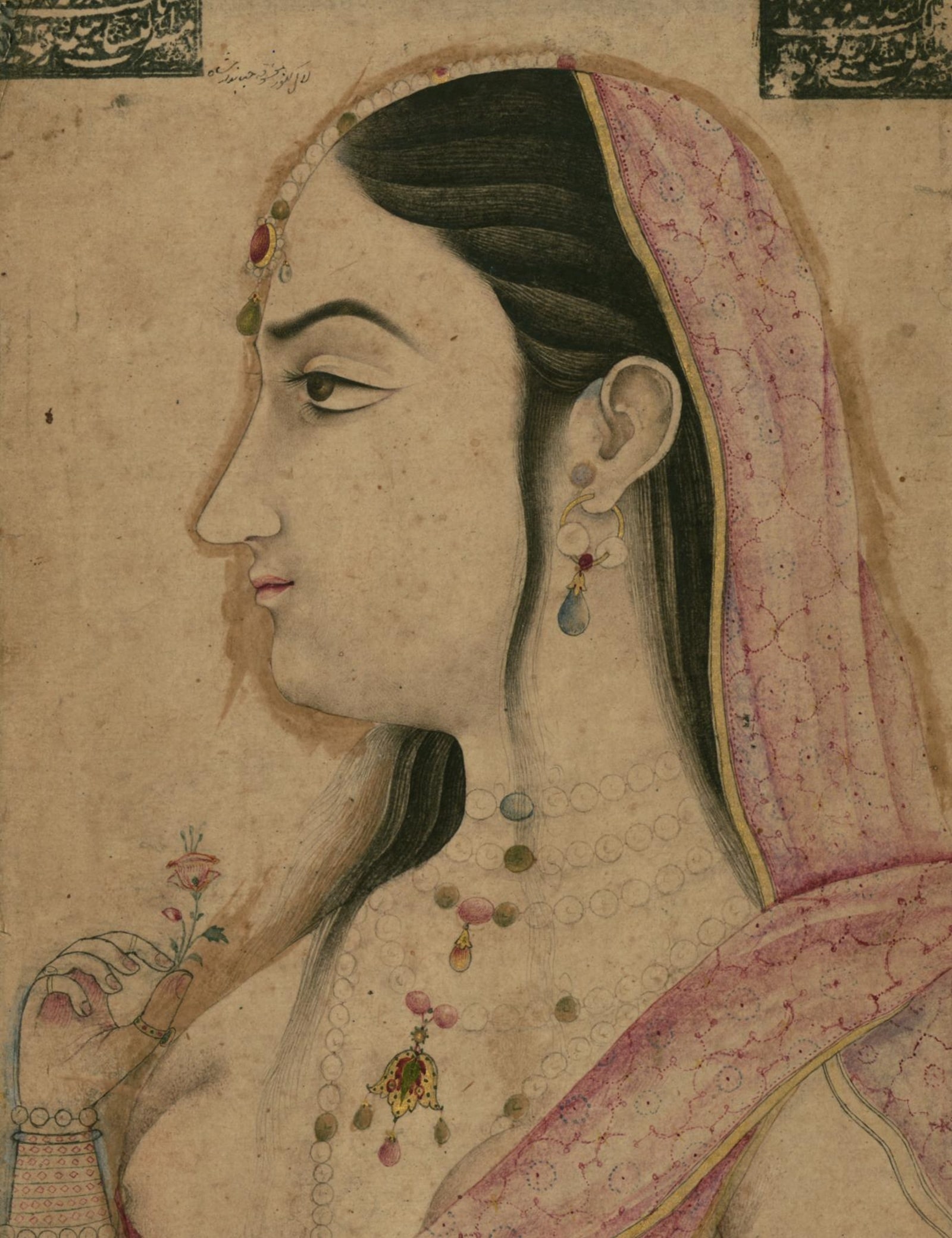 This is Lal Kunwar, the beloved of the 8th Mughal emperor Jahandar Shah. Note the length of her sideburns. (Source: Wikimedia Commons)
But today, these same strands are treated as a flaw. For something so small, sideburns take up far more emotional and cultural space than they do physical space on the face. They’re often brushed off as negligible or irrelevant, but talk to enough women, and a pattern begins to emerge.
Caught in the crossfire between “natural beauty” and “clean girl aesthetic,” sideburns are now something many women routinely do away with. And the messaging starts early. A glance here, a comment there, the women you see on the likes of Instagram and such, a parlour-vali aunty who says “Inhe bhi hata dun kya?” (Should I just get rid of these too?)
But why are young women still being told that their natural hair is unnatural? And what happens when they stop listening?
From Instagram to insecurity
“I think I did it for the first time when I was 21,” said Lovika Tyagi, 23, about shaving her sideburns. “Everyone on Instagram was doing it, saying it helps with exfoliation. I tried it, but I’m always scared my skin will react.”
That anxiety is telling: even as grooming becomes widespread, it still feels fraught. The image of smooth, hairless skin isn’t just about beauty — it signals femininity, acceptability, desirability.
Sohini Sengupta, 26, has avoided removing her sideburns, but she has seen how shame operates. “I saw so many women and femmes – queer women who present as feminine – ashamed of facial hair. What’s wild is that sideburns used to be a masculine style symbol, and now even men are shaving them off. I don’t know what we’re trying to signal anymore.”
Is anyone shaving their (female) sideburns? :(
byu/WorriedZone3078 inHairRemoval
When shame starts young
The discomfort, too, starts early. Prakriti Gugliani, 25, said, “I’ve always been a hairy child. Beauticians and even friends would say, ‘Tere face pe kaafi baal hai’,” (There’s a lot of hair on your face). Internalised by adolescence, those offhand comments become truths in the minds of young, impressionable girls – your face is wrong unless it’s smooth and devoid of every single strand of hair..
By college, Gugliani had tried bleaching (which she hated) and moved to face razors. “Even when I looked in the mirror, they bothered me. Shaving made me feel a lot more confident.”
Arshia Shaikh, 27, waxed her sideburns for the first time at 17, secretly. “My mom didn’t allow grooming before 18, but I went with my aunt. I was bullied a lot in school—people said I had more hair than the boys. I avoided photos because I was so insecure.”
Counselling psychologist Srishti Vatsa called this a form of survival strategy. Grooming becomes less about choice and more about fitting in. “We pick up cues early. A beautician’s suggestion, a peer’s look, over time, these become silent rules,” she said.
Girls aren’t born hating their hair. They’re taught to.
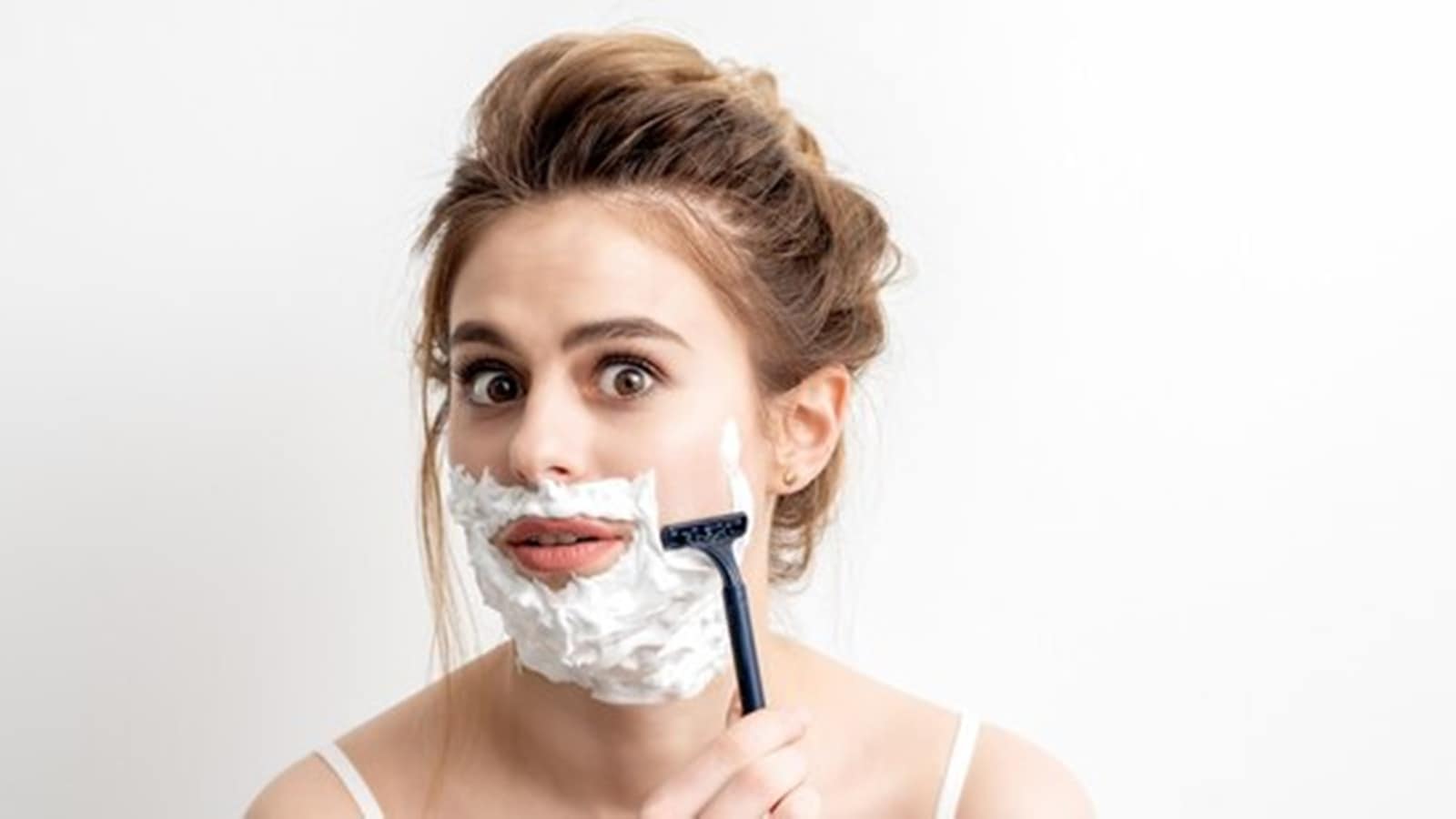 Grooming becomes less about preference and more about trying to belong. (Source: Freepik)
Hair, hormones, and history
Medical factors complicate the picture. Dr Niti Gaur, dermatologist, founder of Citrine Clinic, Gurugram, noted an increase in younger women seeking laser removal of sideburns. “In women aged 20 to 35, lasering them off is most common, especially among those with conditions like PCOS or hypothyroidism. Even teenagers are coming in due to hirsutism (growth of male-pattern hair in women post puberty) from lifestyle issues,” Dr Gaur said.
Srishti, 34, who has thick facial hair due to genetics, traces her journey to college. “In 2013, my roommate had a face razor from the US. I was terrified I’d look like my dad. But once I shaved, I looked in the mirror and thought: I’m a goddess,” she said.
Later attempts at waxing didn’t stick. Now, she balances laser sessions with a more relaxed approach. “I leave the top couple of centimetres. It works for me. If I didn’t have heavy growth, I wouldn’t bother,” she said.
Still, her experience isn’t isolated: “We were 100 girls in the hostel. Only one or two ever waxed their sideburns. But even then, everyone had an opinion.”
But the laser, wax, or razor doesn’t erase the root issue: why do we feel discomfort in the first place?
Is it really your choice?
It should be a woman’s choice what she does with her hair. But the more pressing question isn’t what we choose—it’s why. Why is it that femininity is attached to having hair in one place and the lack of it in others?
Vatsa said the discomfort “isn’t about the hair—it’s about the belief that having it makes us undesirable. Grooming becomes about fear of judgment.”
She also said that we often mistake conditioning for personal preference. “That’s the tricky part—it feels like choice. But the pressure shows up in the relief after a waxing session or the panic when growth returns,” she said.
To unlearn that, she advised building pauses into grooming rituals. “Notice your feelings when you skip a session. Is it really your preference—or are you afraid of being judged?”
Ultimately, separating choice from conditioning is messy but necessary.
What do we teach the next generation?
Vatsa warned that the messaging we send to children matters more than we realise. “Children don’t just listen to what we say—they absorb how we feel about our bodies. If we obsess over grooming, they’ll learn that bodies always need correction. The goal isn’t to avoid grooming, but to disconnect it from self-worth,” she said.
For many women, sideburns are not a grooming inconvenience, they’re a flashpoint for body image, social pressure, hormonal health, and emotional survival. Whether left alone or lasered off, they sit at the intersection of personal choice and societal scrutiny.
So, the next time you glance at a mirror or an Instagram reel that tells you to “fix” your face, maybe ask: Who taught me that this needs fixing in the first place?
Because in the end, it’s never just about the hair—it’s about what we’ve been taught to see when we look in the mirror.

 Share


