


Journalism of Courage
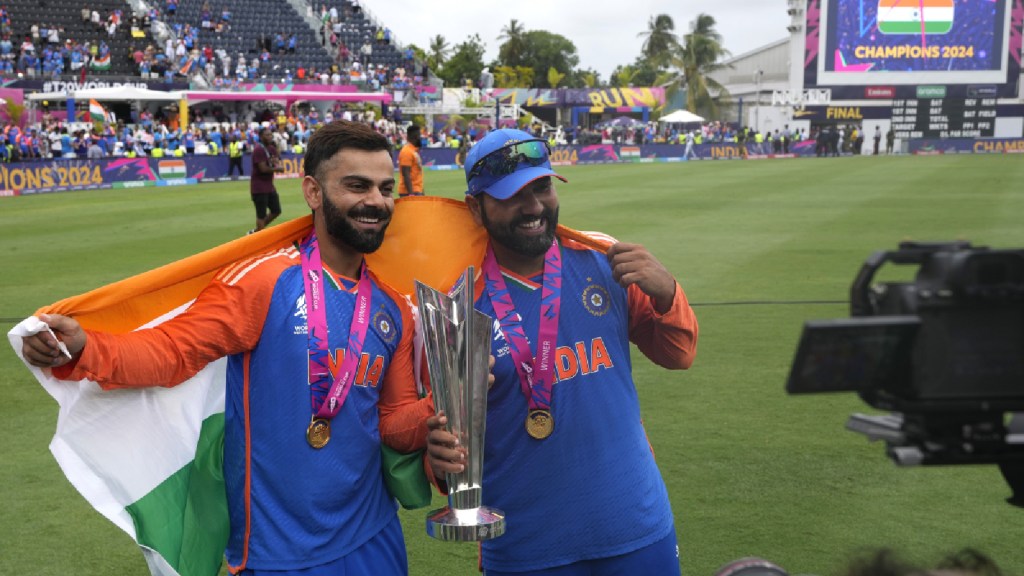 Virat Kohli and captain Rohit Sharma pose with the winners trophy after defeating South Africa in the ICC Men's T20 World Cup final cricket match at Kensington Oval in Bridgetown, Barbados. (AP | PTI)
During Team India’s felicitation ceremony at the fully-packed Wankhede Stadium on Thursday, cricketer Virat Kohli revealed a rare glimpse of vulnerability in his long-time teammate and captain, Rohit Sharma, following India’s T20 World Cup victory last week.
“This is the first time in 15 years that I have seen Rohit show so much emotion. When we were climbing those steps (at Kensington Oval) he was crying, and I was crying,” Kohli said during the ceremony after a memorable open bus victory parade, according to PTI .
Kohli reflected on a statement he made after Team India’s World Cup victory in 2011, when he was just 21 years old. He said at the time, “It was only fair to carry the maestro Sachin Tendulkar on their shoulders after he carried the burden of Indian cricket for 21 years.”
He found himself standing in the same stadium at the age of 35, having announced his retirement from the T20I format. “I hope we (Rohit and I) have carried the burden and no better to bring it (trophy) back here (Wankhede).”
Kohli’s observation of Sharma’s emotional embrace, with welled-up eyes, not only highlights the intensity of their shared triumph but also opens a broader discussion on leadership and emotion in high-pressure environments – where the balance between stoicism and emotional intelligence is increasingly recognised as crucial.
Neha Cadabam, senior psychologist and executive director at Cadabams Hospitals and Mindtalk, says, “A leader’s willingness to show vulnerability and emotion can profoundly impact team dynamics and performance. When a leader openly expresses emotions like joy, sadness, or frustration, it humanises them, making them more relatable and approachable to their team members. This fosters a sense of trust and psychological safety, where team members feel comfortable sharing their own emotions and concerns.”
She states, “Research suggests that emotional openness in leadership can enhance team cohesion and collaboration. When team members feel safe to express their emotions, it leads to open communication, better problem-solving, and increased creativity.”
 Expressing strong emotions in high-pressure situations can be a double-edged sword for leaders. (Source: Freepik)
Expressing strong emotions in high-pressure situations can be a double-edged sword for leaders. On the positive side, Cadabam mentions that it can be a powerful tool for “rallying and motivating a team.” Emotions like passion, determination, and even anger (when channeled appropriately) can ignite a team’s energy and drive. It can also signal authenticity and transparency, which are valued traits in modern leadership.
However, there are risks associated with unrestrained emotional displays, reveals Cadabam. “Excessive anger or frustration can create a hostile environment, eroding trust and damaging relationships. Uncontrolled emotions can also cloud judgement and lead to rash decisions, which can be detrimental in high-stakes situations.”
The key for leaders lies in striking a balance between maintaining composure and authentically expressing their emotions. Cadabam shares, “This involves being mindful of the context and understanding the impact of their emotions on others.”
Leaders can practice emotional regulation techniques, she continues, such as deep breathing or mindfulness, to manage their emotions in the heat of the moment. They can also seek feedback from trusted colleagues or mentors to gain insights into how their emotional expressions are perceived by others.
It’s also crucial for leaders to develop emotional intelligence, the ability to recognise, understand, and manage their own emotions as well as the emotions of others. This allows them to express their emotions in a way that is constructive and motivating, rather than destructive or overwhelming.
Cultural expectations and stereotypes about leadership play a significant role in how emotions are perceived and expressed in different contexts. In some cultures, emotional restraint and stoicism are valued leadership traits. In others, expressing emotions openly is seen as a sign of strength and authenticity.
For example, Cadabam says that in Western cultures, there has been a recent shift towards valuing vulnerability in leadership. “Leaders are increasingly encouraged to show their human side and express their emotions authentically. However, in some Eastern cultures, emotional restraint is still the norm, and overt displays of emotion might be viewed as unprofessional or weak.”
It’s important for leaders to be aware of these cultural nuances and adapt their communication style accordingly. While authenticity is important, it’s equally crucial to be mindful of cultural sensitivities and ensure that emotional expressions are appropriate for the context, she stresses.


