This is an archive article published on February 18, 2020

A symposium in Delhi addressed the highs and lows of failure

The symposium also saw a video recording of a reading by American writer Lydia Davis of her new short story, Learning to Sing, while actor Dhritiman Chaterji read out Portuguese poet Fernando Pessoa’s Tobacco Shop.

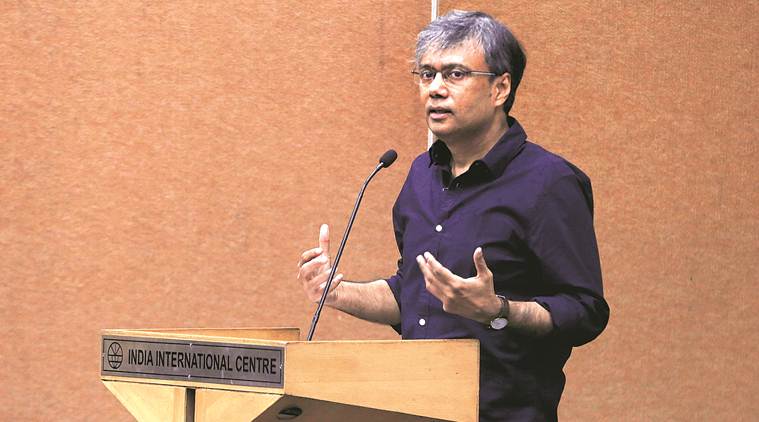
University of East Anglia symposium, literary activism, Ashoka University, India International Centre, indian express news Amit Chaudhuri at the event. (Photo: Amit Mehra)

In how many ways can one consider failure and in what way does it come to us all? At the two-day University of East Anglia symposium in the ‘literary activism’ series, organised in association with Ashoka University and India International Centre (IIC), academics, film directors, poets, critics and actors came together at IIC’s Kamladevi Complex, to deliberate on the unique nature of failure and the many ways it affects our private, political and community lives.

“The free market, in the last 25 years, may have exhibited to us the importance of success — that success is not good fortune or a reward for accomplishment, but basic survival — and we might conspire to succeed only to a degree that’s necessary for us to fail: because we know that it’s only by failing that we can produce viable work, and only by succeeding, to some extent, that we can have the freedom to be non-viable,” wrote writer and academic Amit Chaudhuri in the introductory note to this year’s theme — ‘On Failing’. In his opening remarks, Chaudhuri mentioned how the symposium, now in its fifth year, was conceived as an “in-between space” that was removed both from the “tyranny” of the celebratory nature of literature festivals and the serious tenor of academic conferences. Later, in his talk on the closing day of the festival, Chaudhuri spoke of “the intimacy of failing” through the story of his maternal uncle, Radhesh, whose idiosyncrasies were shielded by his gentle, successful father and how it had compelled him to grapple with a contemporary understanding of success and failure in an “age of survival”.

While poet, essayist and novelist Sumana Roy spoke of the retrospective awareness of failure — almost “like success, like love” — in the course of her paper, “Failing Light” that explored the “aesthetic of provisionality” in the work of filmmaker Satyajit Ray, in his talk titled “Failure, self-worth and agency in modern liberalism”, Pratap Bhanu Mehta, writer and faculty at Ashoka University, threw up an interesting counterpoint to the neo-liberal reading of success and failure. He asserted that “our angst about failure is very, very deeply tied to our sense of agency” — agency that is both “effect and power” and requires validation from others in order to acknowledge itself as an agent. “If we want a source of resistance to the market, we have to see the democratic potential of liberating potential… The market does not speak of justice. The market immobilises the language of justice,” he said, speaking on the philosophical and cultural dilemma inherent in the conception of failure.

In what was one of the most candid sessions of the symposium, filmmaker Anurag Kashyap spoke of spiralling into depression following the ban on his first couple of films, Paanch (2003) and Black Friday (2007), before learning to pick up the pieces and start afresh. “Success comes when you are not working for it… (and yet) your learning stops with your next success,” he said. Kashyap, who is now working on Suketu Mehta’s Maximum City (2004), spoke of his struggle with fame, of the echo chamber that becomes an accessory to success, the falling apart of his company, Phantom Films, his silence, and, by extension, his complicity in the #MeToo scandal that hit one of its partners. “I have failed in my personal relationships, as a friend, as a partner, as a father,” he said, mentioning that it took him a good five years to learn to be objective about his failures.

The symposium also saw a video recording of a reading by American writer Lydia Davis of her new short story, Learning to Sing, while actor Dhritiman Chaterji read out Portuguese poet Fernando Pessoa’s Tobacco Shop.

Paromita Chakrabarti is Senior Associate Editor at the  The Indian Express. She is a key member of the National Editorial and Opinion desk and writes on books and literature, gender discourse, workplace policies and contemporary socio-cultural trends. Professional Profile With a career spanning over 20 years, her work is characterized by a "deep culture" approach—examining how literature, gender, and social policy intersect with contemporary life. Specialization: Books and publishing, gender discourse (specifically workplace dynamics), and modern socio-cultural trends. Editorial Role: She curates the literary coverage for the paper, overseeing reviews, author profiles, and long-form features on global literary awards. Recent Notable Articles (Late 2025) Her recent writing highlights a blend of literary expertise and sharp social commentary: 1. Literary Coverage & Nobel/Booker Awards "2025 Nobel Prize in Literature | Hungarian master of apocalypse" (Oct 10, 2025): An in-depth analysis of László Krasznahorkai’s win, exploring his themes of despair and grace. "Everything you need to know about the Booker Prize 2025" (Nov 10, 2025): A comprehensive guide to the history and top contenders of the year. "Katie Kitamura's Audition turns life into a stage" (Nov 8, 2025): A review of the novel’s exploration of self-recognition and performance. 2. Gender & Workplace Policy "Karnataka’s menstrual leave policy: The problem isn’t periods. It’s that workplaces are built for men" (Oct 13, 2025): A viral opinion piece arguing that modern workplace patterns are calibrated to male biology, making women's rights feel like "concessions." "Best of Both Sides: For women’s cricket, it’s 1978, not 1983" (Nov 7, 2025): A piece on how the yardstick of men's cricket cannot accurately measure the revolution in the women's game. 3. Social Trends & Childhood Crisis "The kids are not alright: An unprecedented crisis is brewing in schools and homes" (Nov 23, 2025): Writing as the Opinions Editor, she analyzed how rising competition and digital overload are overwhelming children. 4. Author Interviews & Profiles "Fame is another kind of loneliness: Kiran Desai on her Booker-shortlisted novel" (Sept 23, 2025): An interview regarding The Loneliness of Sonia and Sunny. "Once you’ve had a rocky and unsafe childhood, you can’t trust safety: Arundhati Roy" (Aug 30, 2025): A profile on Roy’s recent reflections on personal and political violence. Signature Beats Gender Lens: She frequently critiques the "borrowed terms" on which women navigate pregnancy, menstruation, and caregiving in the corporate world. Book Reviews: Her reviews often draw parallels between literature and other media, such as comparing Richard Osman’s The Impossible Fortune to the series Only Murders in the Building (Oct 25, 2025). ... Read More


📣 For more lifestyle news, click here to join our WhatsApp Channel and also follow us on Instagram

Advertisement
Loading Recommendations...
Advertisement
Advertisement
Latest Comment
Post Comment
Read Comments