


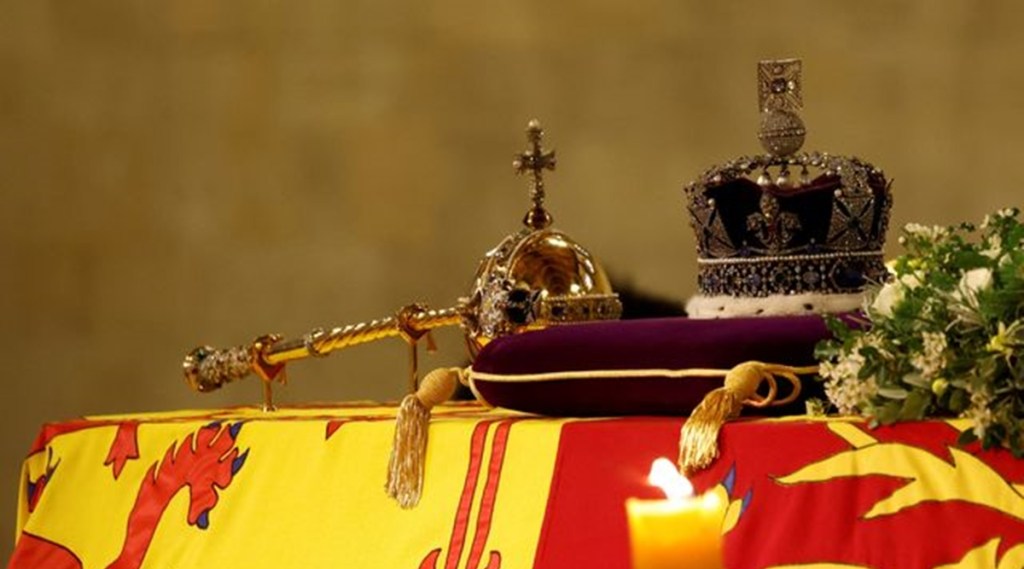


In the wake of Queen Elizabeth II’s death, several questions have been raised about the return of diamonds that were seized during the colonisation of countries such as India and Africa, among others. Apart from the Kohinoor, social media has become abuzz with demands for the Cullinan diamond which was mined in South Africa in 1905. Known as the largest gem-quality uncut diamond ever found and weighing 3,106.75 carats, it was named after the mine owner, Thomas Cullinan.
Buy Now | Our best subscription plan now has a special price

A couple of years after it was found, the Cullinan diamond was presented to King Edward VII in 107 by the Government of the Transvaal, according to the Royal Collection Trust (RCT). “It was a symbolic gesture intended to heal the rift between Britain and South Africa following the Boer War. After initial hesitation, the King accepted the gift on the recommendation of the British Government. The stone was taken under heavy police escort to Sandringham, and formally presented on the King’s 66th birthday,” it reads.
 The nine numbered stones cut from the Cullinan Diamond (Source: Royal Collection Trust)
It was subsequently cut into stones of different cuts and sizes which posed a considerable challenge, according to RCT. “The stone was dispatched to the leading diamond cutters of the day, Asschers of Amsterdam, where experts spent weeks considering the best method for splitting it. It took four days to prepare the groove for the cleaving knife, and the very first blow broke the knife rather than the diamond.”
Over the next eight months, the diamond was split into nine large stones, the largest of which came to be known as the Great Star of Africa or Cullinan I. Weighing 530.4 carats, it is the largest clear-cut diamond in the world and is mounted to the Sovereign’s Sceptre with Cross.
 The Sovereign’s Sceptre with Cross (Source: Royal Collection Trust)
The second-largest stone cut from the Cullinan diamond is Cullinan II which is set in the Imperial State Crown, made during the coronation of King George VI in 1937. The 317-carat cushion-shaped diamond is the most valuable stone in the crown which is currently mounted on Queen Elizabeth’s coffin as she lies in state at Westminster Hall until her funeral on Monday, September 19.
 The Imperial State Crown (Source: Royal Collection Trust)
While the Cullinan I and II formed part of the Crown jewels, stones III-IX today are part of The Queen’s personal jewellery. According to the website, 97 small brilliant and some unpolished fragments were also created from the original Cullinan diamond.
📣 For more lifestyle news, follow us on Instagram | Twitter | Facebook and don’t miss out on the latest updates!