Journalism of Courage



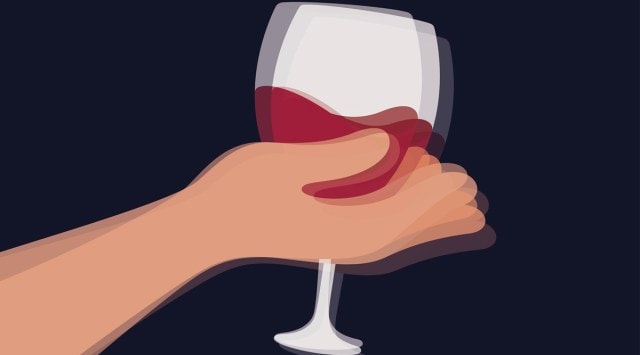 After decades of confusing and sometimes contradictory research, recent evidence is making it clearer than ever that any amount of drinking can have negative health consequences. (Francesco Ciccolella/The New York Times)
 Written by Dana G. Smith
Sorry to be a buzz-kill, but that nightly glass or two of wine is not improving your health.
After decades of confusing and sometimes contradictory research (too much alcohol is bad for you but a little bit is good; some types of alcohol are better for you than others; just kidding, it’s all bad), the picture is becoming clearer: Even small amounts of alcohol can have health consequences.
Research published in November revealed that between 2015 and 2019, excessive alcohol use resulted in roughly 140,000 deaths per year in the United States. About 40% of those deaths had acute causes, such as car crashes, poisonings and homicides. But the majority were caused by chronic conditions attributed to alcohol, such as liver disease, cancer and heart disease.
When experts talk about the dire health consequences linked to excessive alcohol use, people often assume that it’s directed at individuals who have an alcohol use disorder. But the health risks from drinking can come from moderate consumption as well.
“Risk starts to go up well below levels where people would think, ‘Oh, that person has an alcohol problem,’” said Dr. Tim Naimi, director of the University of Victoria’s Canadian Institute for Substance Use Research. “Alcohol is harmful to the health starting at very low levels.”
If you’re wondering whether you should cut back on your drinking, here’s what to know about when and how alcohol impacts your health.
How do I know if I’m drinking too much?
“Excessive alcohol use” technically means anything above the U.S. Dietary Guidelines’ recommended daily limits. That’s more than two drinks a day for men and more than one drink a day for women.
There is also emerging evidence “that there are risks even within these levels, especially for certain types of cancer and some forms of cardiovascular disease,” said Marissa Esser, who leads the alcohol program at the Centers for Disease Control and Prevention.
Why is alcohol so harmful?
Scientists think that the main way alcohol causes health problems is by damaging DNA. When you drink alcohol, your body metabolizes it into acetaldehyde, a chemical toxic to cells. Acetaldehyde both “damages your DNA and prevents your body from repairing the damage,” Esser explained. “Once your DNA is damaged, then a cell can grow out of control and create a cancer tumor.”
Alcohol also creates oxidative stress, another form of DNA damage that can be particularly harmful to the cells that line blood vessels. Oxidative stress can lead to stiffened arteries, resulting in higher blood pressure and coronary artery disease.
“It fundamentally affects DNA, and that’s why it affects so many organ systems,” Naimi said. Over the course of a lifetime, chronic consumption “damages tissues over time.”
Isn’t alcohol supposed to be good for your heart?
Alcohol’s effect on the heart is confusing because some studies have claimed that small amounts of alcohol, particularly red wine, can be beneficial. Past research suggested that alcohol raises HDL, the “good” cholesterol, and that resveratrol, an antioxidant found in grapes (and red wine), has heart-protective properties.
However, said Mariann Piano, a professor of nursing at Vanderbilt University, “There’s been a lot of recent evidence that has really challenged the notion of any kind of what we call a cardio-protective or healthy effect of alcohol.”
What types of cancer does alcohol increase the risk for?
Almost everyone knows about the link between cigarette smoking and cancer, but few people realize that alcohol is also a potent carcinogen. According to research by the American Cancer Society, alcohol contributes to more than 75,000 cases of cancer per year and nearly 19,000 cancer deaths.
Alcohol is known to be a direct cause of seven different cancers: head and neck cancers (oral cavity, pharynx and larynx), esophageal cancer, liver cancer, breast cancer and colorectal cancer. Research suggests there may be a link between alcohol and other cancers as well, including prostate and pancreatic cancer, although the evidence is less clear-cut.
Which condition poses the greatest risk?
The most common individual cause of alcohol-related death in the United States is alcoholic liver disease, killing about 22,000 people a year. While the risk rises as people age and alcohol exposure accumulates, more than 5,000 Americans in their 20s, 30s and 40s die from alcoholic liver disease annually.
Alcoholic liver disease has three stages: alcoholic fatty liver, when fat accumulates in the organ; alcoholic hepatitis, when inflammation starts to occur; and alcoholic cirrhosis, or scarring of the tissue. The first two stages are reversible if you stop drinking entirely; the third stage is not.
Symptoms of alcoholic liver disease include nausea, vomiting, abdominal pain and jaundice — a yellow tinge to the eyes or skin. However, symptoms rarely emerge until the liver has been severely damaged.
The risk of developing alcoholic liver disease is greatest in heavy drinkers, but one report stated that five years of drinking just two alcoholic beverages a day can damage the liver. Ninety percent of people who have four drinks a day show signs of alcoholic fatty liver.
How do I gauge my personal risk for alcohol-related health issues?
Not everyone who drinks will develop these conditions. Lifestyle factors such as diet, exercise and smoking all combine to raise or lower your risk. Also, some of these conditions, such as esophageal cancer, are pretty rare, so increasing your risk slightly won’t have a huge impact.
“Every risk factor matters,” Esser said. “We know in public health that the number of risk factors that one has would go together into an increased risk for a condition.”
A preexisting condition could also interact with alcohol to affect your health. For example, “people who have hypertension probably should not drink or definitely drink at very, very low levels,” Piano said.
So should I cut back — or stop drinking altogether?
You don’t need to go cold turkey to help your health. Even reducing a little bit can be beneficial, especially if you currently drink over the recommended limits. The risk “really accelerates once you’re over a couple of drinks a day,” Naimi said. “So people who are drinking five or six drinks a day, if they can cut back to three or four, they’re going to do themselves a lot of good.”
Light daily drinkers would likely benefit by cutting back a bit, too. Try going a few nights without alcohol: “If you feel better, your body is trying to tell you something,” said George Koob, director of the National Institute on Alcohol Abuse and Alcoholism.
Notably, none of the experts we spoke to called for abstaining completely, unless you have an alcohol use disorder or are pregnant. “I’m not going to advocate that people completely stop drinking,” Koob said. “We did prohibition, it didn’t work.”
Generally, though, their advice is, “Drink less, live longer,” Naimi said. “That’s basically what it boils down to.”
This article originally appeared in The New York Times.
📣 For more lifestyle news, follow us on Instagram | Twitter | Facebook and don’t miss out on the latest updates!

 7 min read