


Journalism of Courage
 As the same suggests, it is an uncommon neurological condition that causes a person's hand to act independently of their cognitive awareness or will (Source: Wikimedia Commons)
Hands play a vital role in our everyday lives, managing a wide array of tasks that structure our daily routines. They serve as versatile tools for fostering connections, communication, and creativity. But, what if we encounter a situation where we lose control over their movements? What if our hands start acting independently of our intentions?
That’s exactly what happens when a person is diagnosed with ‘alien hand syndrome’ (AHS). As the same suggests, it is an uncommon neurological condition that causes a person’s hand to act independently of their cognitive awareness or will.
“The affected hand frequently behaves opposite to the person’s intentions and seems to operate independently. This phenomenon has the potential to cause severe distress and disruption in daily life,” Dr Vipul Gupta, chief of Neurointerventional Surgery and Co-Chief, Stroke Unit, Artemis Hospital, Gurugram, said.
The name “alien hand syndrome” refers to the perception that an outside force is in control of the affected hand’s actions as if the hand had a “mind of its own.” There is a sense of detachment and lack of ownership over the affected limb since it seems as though the affected hand is functioning autonomously.
Before we get to the statistics, it is crucial to understand what causes this extremely rare but dangerous condition. For that, we need to know that there are two parts of our brain — the right side and left side — and these parts are connected via some white matter fibres or white matter gateways.
“Whenever there is damage to these gateways or these pathways, known as the corpus callosum, then both the hands start acting independently in many patients,” Dr Himanshu Champaneri, senior consultant, neurosurgery, Marengo Asia Hospitals, Gurugram said.
The expert said that this can occur because of a variety of conditions. “It can be because of a tumour in such an area or it can be because of stroke or damage to the gateway or the connecting areas or it can be a result of cardioembolic stroke. A patient who has suffered a stroke, especially damage to these areas is more likely to experience alien hand syndrome,” Dr Champaneri added.
 The experts noted that early warning signs and symptoms that people may see include strange and uncontrollable hand movements (Source: Pixabay)
Agreeing, Dr Raghuram G, additional director, neurosurgery, Fortis Hospital, Bannerghatta Road, Bengaluru said that alien hand syndrome arises due to a problem in the brain. “The commonest reason is a stroke of a specific area of the brain. The syndrome can also be caused by tumours of the frontal part of the brain or abnormality of the blood vessels of the brain. It is seen in degenerative conditions of the brain like specific types of Parkinson’s disease,” he told indianexpress.com.
Now, let’s talk numbers! The syndrome is very rare, so much so that a review in 2013 found just 150 cases in the medical journals. The first case of ‘alien hand syndrome’ was identified in 1908 but was not clearly defined until the early 1970s.
Described by Kurt Goldstein, a German neuro-psychiatrist, the paper revealed that a 57-year-old woman, who suffered a stroke, later perceived her left hand as having a will of its own.
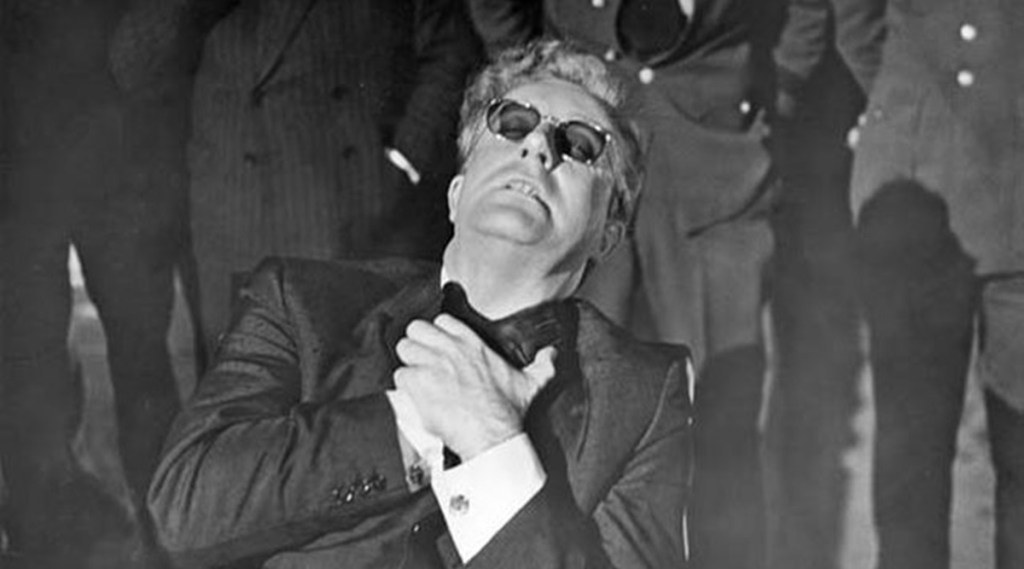
It may be an extremely rare disorder, but its strangeness has also found its way into popular culture. In Dr Strangelove, a 1964 film by Stanley Kubrick, the eponymous character apparently has alien hand syndrome as he can’t stop himself from doing the Nazi salute. Following the movie, this syndrome also came to be unofficially known as ‘Dr Strangelove syndrome’. Several other films and series went on to represent alien hand syndrome in the years following the film.
Since it is a neurological condition, it can affect people of various ages and backgrounds. “Some health issues and risk factors may increase a person’s likelihood of developing AHS such as patients who have had strokes earlier are at a high risk of developing it, or individuals who have undergone a corpus callosotomy, people who have brain tumours, especially those that are close to or in those parts of the brain that control movement, and patients with severe traumatic brain injuries are all at a high risk of developing it,” Dr Gupta said.
He said that since AHS is not a condition that often gets studied or reported, many cases may go undetected or be incorrectly identified as other neurological conditions.
“The total number of cases that have been reported is relatively low. Populations with more cases of diseases including epilepsy, strokes, and brain tumours, which are known to be linked to AHS, are likely to have higher incidences of the syndrome,” Dr Gupta added.
While alien hand syndrome is typically not fatal on its own, it can be a sign of a larger issue at play. “It can be a part of a major stroke, or it can be a minor stroke which is causing damage only to one of the parts of the brain. If that is the case, then strokes are quite likely recurrent in nature and if someone has suffered a minor stroke then it is possible that the person may suffer a major stroke in the near future,” Dr Champaneri said.
Also, despite the fact that AHS is not directly life-threatening, it might raise safety issues because the affected hand may respond involuntarily which could potentially harm the individual, Dr Gupta said.
The experts noted that early warning signs and symptoms that people may see include strange and uncontrollable hand movements that frequently seem deliberate but are not under the conscious control of the person. People may realise that their affected hand is executing actions or duties without their knowledge or consent, sometimes getting in the way of what their other hand is doing.
Dr Gupta said that alien hand syndrome is difficult to prevent as it frequently results from underlying neurological problems, brain injuries, or surgical operations.
“However, an early diagnosis and effective care can lessen its effects and enhance the quality of life for the patient. The main emphasis is on discovering and treating the underlying cause, such as brain tumours, strokes, or other brain injuries, through appropriate medical interventions, surgery, or other treatments,” he said.
In some instances, doctors may recommend medications to treat AHS symptoms, especially those that have an impact on brain function.
“Physical and occupational therapy can be extremely helpful in assisting people to restore coordination and control of their damaged hand and adjust to daily life. Programmes that focus on cognitive function and problem-solving abilities may be helpful as well. Additionally, support groups, counselling, and psychotherapy can offer coping mechanisms and emotional support,” the expert concluded.
📣 For more lifestyle news, follow us on Instagram | Twitter | Facebook and don’t miss out on the latest updates!


