



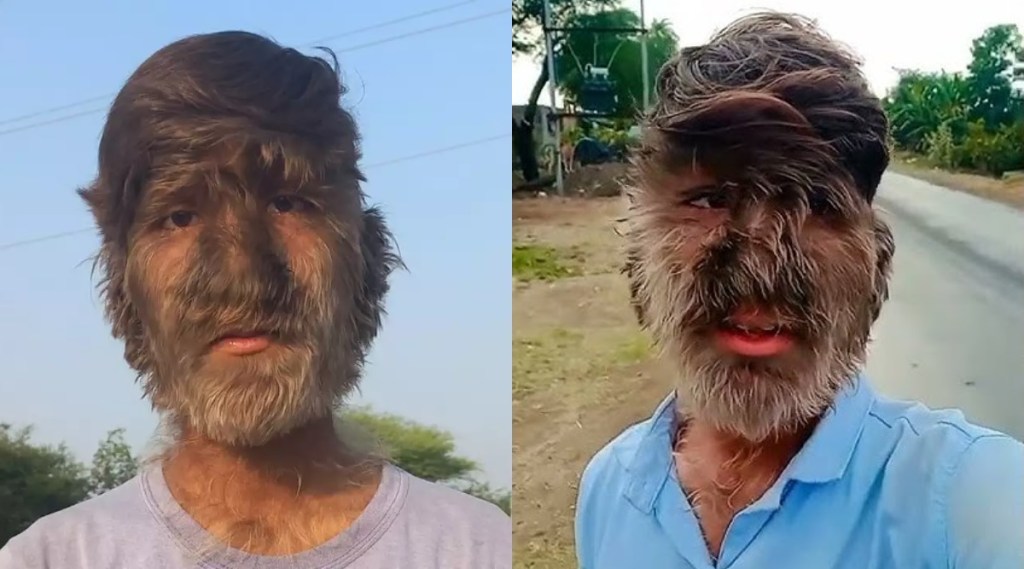


Since the age of six, Lalit Patidar has been bullied as being a “monkey man,” with his hair overgrowing and covering his body like animal fur and which he had to shave periodically to look human. A teenager from Madhya Pradesh’s Nandleta village, Patidar’s rare condition, medically called the “Werewolf syndrome,” was reported by the Daily Mail of UK, where he told his story of struggle of daily living.
Patidar was diagnosed with hypertrichosis, an extremely rare condition thought to have only been found in around 50 people since the Middle Ages. But it does occur? Here are need-to-knows by Dr Oshin Agrawal, Consultant, Dermatologist at Fortis, Noida

What is the Werewolf syndrome?
The Werewolf syndrome is also known as hypertrichosis. It is characterised by an abnormal amount of hair growth all over the body and can affect both males and females. The abnormal hair growth may cover the face and body or occur in small patches. However, it is an extremely rare condition.
What are the various types of hypertrichosis?
The various types of hypertrichosis can be congenital or acquired. Depending on the hair, the congenital type can be Hypertrichosis lanuginosa, Congenital hypertrichosis terminalis (CGHT) and Nevoid hypertrichosis. Hirsutism is also congenital but can be acquired as well and affects women and children, resulting from an excess of androgen-sensitive hair growth.
Meanwhile, the acquired Hypertrichosis can be usually seen after birth. The reasons can include the side effects of drugs like androgenic steroids, malnutrition and eating disorders like anorexia nervosa.
Congenital hypertrichosis can be caused by reactivation of genes that promote hair growth. Usually the genes shut down with growth of the foetus but if mistakenly activated at birth, it continues growing even after birth.
What are symptomatic manifestations?
Not all disorders look the same. Lanugo hair is long, thin and soft. Vellus is short, soft and pigmented. Terminal hairs are thick, coarse and long.
What are the treatments available?
There is no cure available for the syndrome. However, with long term and short treatments, it can be resolved. The short treatments available are shaving, chemical appellation, waxing, plucking. The permanent and long term methods include electrolysis and laser surgeries. Electrolysis leads to destruction of the hair follicles by the use of electric charges and laser emits a light that is absorbed by the pigment (melanin) in the hair. The light energy is converted to heat, which damages the tube-shaped sacs within the skin (hair follicles) that produce hair. This damage inhibits or delays future hair growth.