5 min readNew DelhiApr 29, 2025 11:43 AM IST
First published on: Apr 25, 2025 at 01:28 PM IST
A crisp yet soft maida paratha, almost laccha-esque in its flaky layers, fried in front of you on a giant tawa in copious oil. A beaten egg is cracked and spread on the pan, and the paratha is laid on top to soak up the eggy richness. Once cooked, it’s flipped—egg-side up—and topped with succulent, charcoal-grilled kebabs, seasoned just right. A scatter of sliced onions, green chillies, and a squeeze of lime later, it’s rolled up and wrapped in wax paper. You’re handed the famous Calcutta kathi roll: hot, dripping, and ready to eat without soiling your fingers, just peel the paper as you go. The first fast food of the city. Followed by many pretenders across the country.
Nizam’s, a tiny shop next to Calcutta’s iconic New Market is the birthplace of the kathi roll. The shop was founded by Reza Hassan Saheb in 1932 and named after Sheikh Reza’s son, Nizamuddin, and used to sell kebabs and parathas separately. Kebabs were common in Calcutta at the time, but the Nizam’s kebabs, grilled on iron skewers, were highly popular among locals and British expatriates. The story goes that British officers working nearby in Dalhousie Square would stop by for a quick bite but found it messy to eat kebabs by hand. That is when the roll was born – to make it easier to eat the kebabs.

Bamboo sticks replaced iron skewers in 1964, simply because they were more cost-effective and easier to manage. The Bengali word for stick is “kathi,” and that is how the “kathi roll” got its name.
The kebabs at Nizam are skewered on these bamboo sticks over a charcoal grill and divided neatly into beef, mutton, chicken, and kheeri (udders), a specialty of the house. At one point, Nizam’s stopped selling beef rolls, but they’re back on the menu, the last time I checked. The mutton and beef are usually tenderised with green papaya, and you do get a taste of it, but the secret marinade of the kebabs remains a secret – and is the reason why pretenders outside Calcutta, even the Nizam’s franchisee outlets, can never replicate the taste.
These kebabs are not malai kebabs coated in cream and cheese, or the orange tandoori tikkas. These are dark brown kebabs, untouched by food colouring. And while Nizam’s is the purist roll, flavoured only with some onions, green chilis and lime, other roll shops like Kusum’s on Park Street will add some sauces – the Sing Cheung green or orange chili sauce or even a dash of ketchup to their rolls if you ask them to.
I also want to make a special mention of Nizam’s alu rolls. Nizam’s alu roll—mashed spiced potatoes wrapped in the same flaky paratha, with or without egg—is a hidden gem. It’s so good you might even skip the meat.
I’ve had rolls in other cities as well, like the Frankie in Bombay when I was in college –– a monstrosity I was not prepared for. No one warned me that the paratha was wrapped around chicken or meat in a hot gravy, which spurted out as you bit into the roll. It was terrible. Second only to Lucky’s Biryani, which is all we could afford in the early days of our professional life. The North Indian rumali roti roll isn’t too bad, though, and of course is a far healthier option to the maida paratha of the kathi roll. Chicken tikkas or seekh kebabs are wrapped in rumali roti and served with green coriander and chili chutney. While I quite like these, they aren’t as sturdy as kathi rolls, and the rumali roti starts disintegrating if you leave it for more than a few minutes. But it’s a worthy effort by the North.
Ultimately, despite the cholesterol and heart problems which might result from eating multiple kathi rolls, I would strongly recommend hotfooting it to Calcutta to savour the Real McCoy. If you can’t get to Nizam’s, go to one of the roll shops on Park Street or to Kathi’s in Ballygunge. Ask them to add some extra chilis and a smidgen of chili sauce. And don’t shy away from asking for a single egg, double chicken, or mutton roll. You can always chase this with a Digene or a shot of Carmozyme, both of which are consumed as regularly as kathi rolls are in Calcutta. And thank the jewel of the East for the first true fast food of India.
Next week, I’ll be writing about another wrap – the paan in all its intricacies.

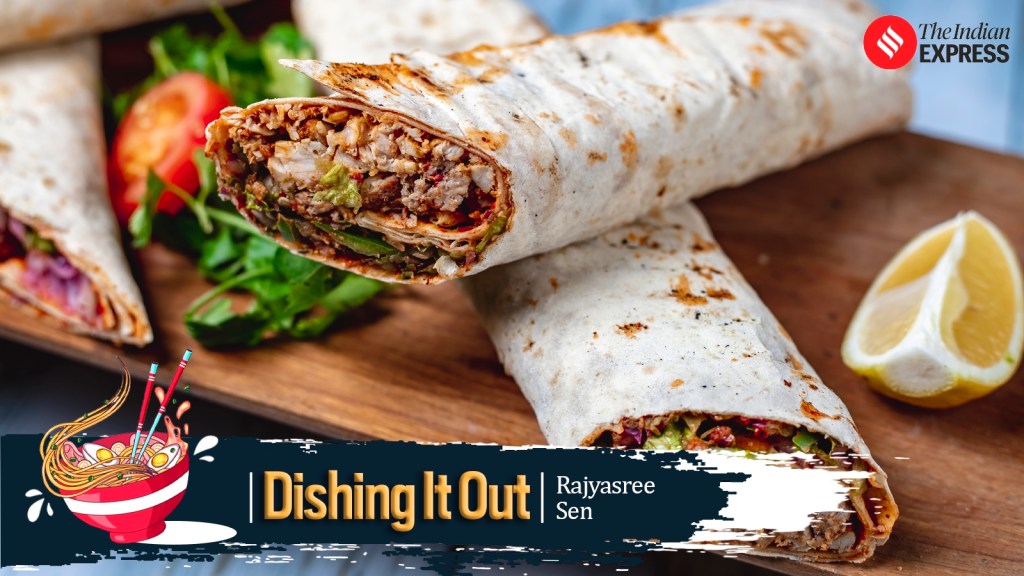 The story goes that British officers working nearby in Dalhousie Square would stop by for a quick bite but found it messy to eat kebabs by hand. That is when the roll was born – to make it easier to eat the kebabs. (Phpto: Pixabay)


 Share


