


Journalism of Courage
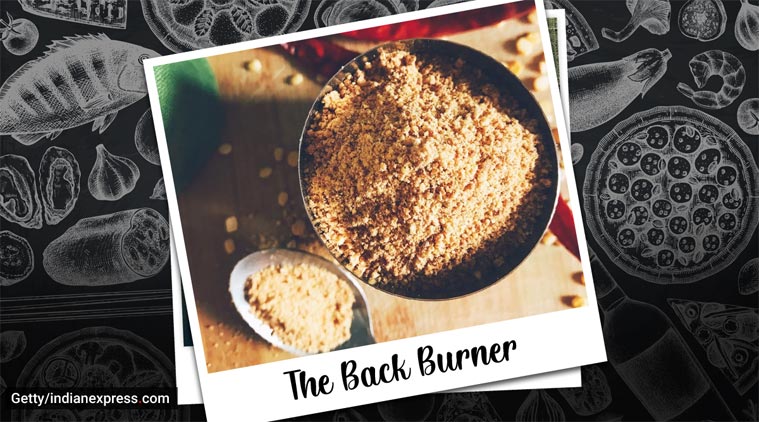 Some people might enjoy having podi dry, but it’s always best when mixed with oil (or ghee), because that helps unlock all the flavours. (Photo: Pooja Pillai)
Most people who are not from South India first encounter the region’s tradition of chutney powders — or podis — via molagapodi. A popular accompaniment to dosas, idlis and uttapams, it is also known as gunpowder, a reference to the explosive heat that supposed to be packed in a teaspoon of this podi, although most commercially-produced podis and those served in restaurants are far milder than what you would find in the average South Indian home.
In fact, I’ve long suspected that the popularity of gunpowder or molagapodi outside South India has little to do with the burst of flavours it serves. Having eaten idli and podi as a school-day breakfast right until I left home for college, my standards for molagapodi are very high and few podis that I’ve had in restaurants or bought from stores have passed muster. They’re usually too mild and almost dusty in texture: dry, they taste of nothing, and when mixed with ghee, as is typically the case in restaurants, all you can taste is the ghee. The overpowering taste of ghee, in my opinion, is what makes molagapodi so popular outside its region of origin, although I’m sure its unusual but pleasing texture helps too.
ALSO READ | The Back Burner: T’s crisp crumb-fried fish will leave you wanting more
Not that this is meant to scare anyone away from attempting to make molagapodi at home, because it’s not at all difficult to get the basic recipe right. All you need to do is dry roast urad dal and chana dal (some households add moong dal or toor dal as well) with dry red chillies, some sesame seeds and asafoetida and then grind everything to a powder.
 Masala paniyarams smeared with molagapodi. (Photo: Pooja Pillai)
Once you’ve mastered the basic podi, it’s fairly easy to add flavours of your choice to take the taste up a notch: curry leaves, desiccated coconut, peanuts, flax seeds, garlic, black peppercorn (all dry roasted), depending on the flavours you want. Some households also add a bit of jaggery, while my mother adds rice (it adds bulk and keeps the powder drier for longer).
Here’s the basic molagapodi recipe as my mother makes it
Ingredients:
1 cup – Chana dal
1 cup – Urad dal
1 cup – Toor dal (optional)
1 cup – Rice (optional)
3 tsp – White sesame seeds (you may use black sesame seeds, if you’re not fussy about the colour of your podi)
7-8 – Dry red chillies (you may increase or decrease the quantity depending on your tolerance and the type of chilli you’re using)
1 tsp – Asafoetida
Salt, to taste
ALSO READ | Try Onion Rava Dosa for a quick breakfast
Method
*In a pan, dry roast all the lentils and the rice (if using) together with the red chillies on a low flame. Make sure not to burn the contents of the pan by constantly stirring.
*When the lentils and rice start to get that beautiful russet colour, quickly add the asafoetida and turn off the flame. The asafoetida will cook in the residual heat, releasing its characteristic pungent aroma.
*Empty the contents onto a plate and let them cool. In the same pan, now dry roast the sesame seeds until they start popping.
 Having eaten idli and podi as a school-day breakfast right until I left home for college, my standards for molagapodi are very high and few podis that I’ve had in restaurants or bought from stores have passed muster (Photo: Pooja Pillai)
*Once all the ingredients have cooled to room temperature, add the salt and grind them to a powder.
*If you want a really fine powder, grind the sesame seeds separately, in a 2-3 pulses, because if ground for too long, they start to release their oil.
Serve, mixed with fat of choice, with idlis, dosas or uthappams.
ALSO READ | The Back Burner: The beautiful, complex flavours of roasted coconut
Additional notes:
Whatever else you choose to add — garlic, curry leaves, flax seeds, peanuts, desiccated coconut, black peppercorn — remember to dry roast it before grinding. However, be careful with peanuts, flax seeds, coconut and other fatty ingredients because if ground for too long, they too will release oil.
Some people might enjoy having podi dry, but it’s always best when mixed with oil (or ghee), because that helps unlock all the flavours. While ghee seems to be the most popular choice, I recommend sesame or coconut oil to truly appreciate molagapodi.
[The Back Burner is a biweekly blog that will talk about all things food (with recipes, of course)]


