


Journalism of Courage
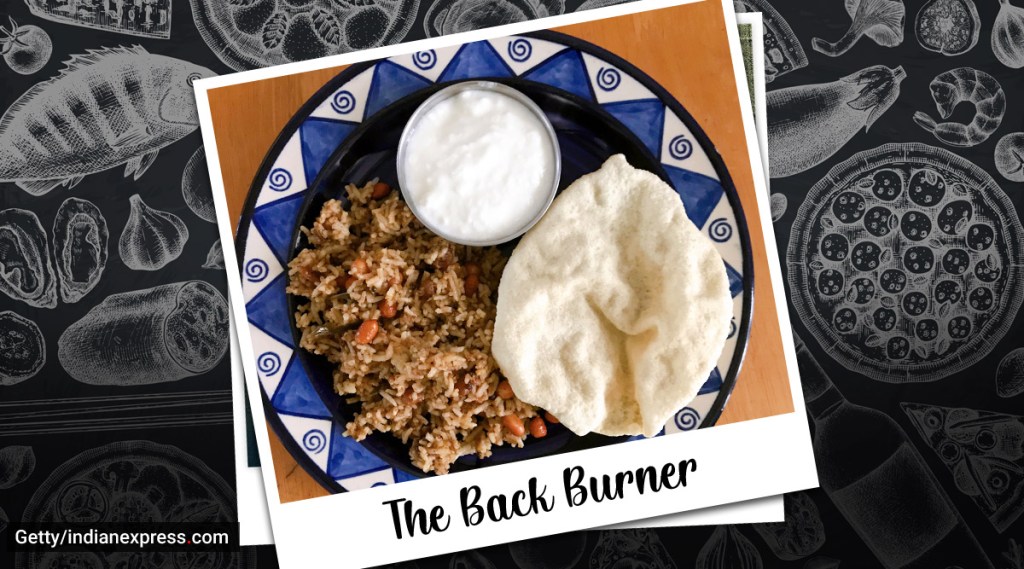 Puliyogare (tamarind rice) with fresh dahi and appalam (Source: Pooja Pillai/Instagram; designed by Gargi Singh)
Puliyogare or tamarind rice is one of my go-to recipes for a quick meal, provided I have a jar of pulikachal (or puliyogare paste) in the fridge. The simplest thing, of course, is to buy this paste from any store that stocks South Indian grocery items (or you can buy the puliyogare mix in powder form which is, frankly, always my last choice because it’s just not that tasty). On the other hand, you could try making the pulikachal at home; the ingredients are easily available and the process itself is quite simple. Of course, including all the prep, roasting, grinding, steeping etc, making pulikachal takes about an hour. If you can spare an hour on the weekend, do try this because then, on days when you’re busy with other things, you can just reach for your jar of pulikachal for a quick meal of tamarind rice.
Recipe
Ingredients:
Tamarind – 2 lime-sized balls
Jaggery powder (or grated jaggery) – 1 &½ tbsp
Sesame seed oil – 3 tbsp
Mustard seeds – 2 tsp
Peanuts (roasted or unroasted) – 1 handful
Curry leaves – 1 sprig
Dried red chillies – 2-3 (depending on how potent they are)
Asafoetida – 1 pinch
Turmeric powder – ½ tsp
Chana dal (optional) – 1 tsp
Urad dal (optional) – 1 tsp
Salt, to taste
ALSO READ | The Back Burner: How to make ulli theeyal, a shallot curry from Kerala
For the lentil and spice powder:
 For the lentil spice powder, dry roast the ingredients till they’re aromatic and the lentils are golden-brown, then allow to cool before powdering. (Source: Pooja Pillai)
Urad dal – 4 tsp
Coriander seeds – 4 tsp
Dried red chillies – 5-6 (increase or decrease, depending on potency)
Curry leaves, crushed (preferably dried) – 1 handful
Fenugreek seeds – 1 tsp
Method:
Steep the tamarind in two cups of hot water, till it comes down to room temperature. Then, make sure to squeeze all the pulp from the tamarind and discard any seeds, pith and other hard bits. The tamarind water should be thick, and not too watery.
While the tamarind is steeping, roast all the ingredients for the lentil and spice powder and, once cool, powder them.
 When the pulikachal starts to come away from the sides of the wok as you stir it, you’ll know it’s done. (Source: Pooja Pillai)
Heat the oil in a wok, and add the mustard seeds. When they start to pop, quickly lower the flame to medium and add the urad and chana dal (if using), along with peanuts.
Fry till golden, then throw in the curry leaves and dried red chillies and fry for a minute more.
Add the asafoetida, followed by turmeric powder and finally, the tamarind water.
Cook on medium flame for 10 minutes, or until you can no longer smell the raw tamarind. You should also be able to see the oil separate around the edges.
Add the lentil spice powder and, on low flame, keep cooking. The mixture will start to thicken almost immediately.
Add the powdered jaggery and the salt and give the mixture a stir or two, so that they’re properly incorporated. Taste it to check if more jaggery and salt are needed. Remember that the sourness of the tamarind needs to be balanced. It should not overwhelm the taste buds, but neither should the tamarind be overwhelmed by the jaggery. Remember, this isn’t supposed to be sour and sweet. It’s supposed to be sour, with just enough sweet to make it not only bearable, but actually tasty.
You need to keep stirring, to keep the mixture from sticking to the bottom. When it starts to come away from the sides of the wok, you’ll know it’s done. Turn off the flame.
Once the pulikachal has cooled, you can either use some of it immediately to make tamarind rice (instructions below), or you can store it in a jar to use later. If you’re storing it, keep the jar in the fridge. It should be fine for two to three weeks, provided your jar was clean and dry to begin with and you always use a clean, dry spoon to scoop out pulikachal.
 You can store pulikachal in a clean, dry jar in the fridge for two to three weeks. (Source: Pooja Pillai)
To make tamarind rice with this paste, fry some peanuts (yes, I know), in about a tablespoon of sesame oil and then quickly add the pulikachal and fry for less than half a minute, before adding the cooked rice and turning off the flame. You’ll need 1 tbsp of pulikachal for every cup of cooked rice that you’re planning to use, but play it by ear. Mix a little bit of rice with a little bit of pulikachal to figure out your tolerance and go from there.
Mix thoroughly to make sure every grain of rice is nicely coated.
Serve the puliyogare (tamarind rice) with a drizzle of ghee and, maybe, some fresh dahi on the side. But definitely have it with some kind of papad.
Note: For making the pulikachal itself, sesame seed oil is absolutely essential, especially if you’re planning to store it for later use. This is because sesame oil is a very stable pickling agent, and it doesn’t go rancid quickly, unlike a lot of other oil.
When you’re frying peanuts and pulikachal to make the puliyogare, you can use sesame or any neutral-tasting oil.
[The Back Burner is a weekly blog that will talk about all things food (with recipes, of course)]


