Tikkad, a dense, thick, unleavened flatbread made from a mix of whole wheat flour, gram flour (besan), and spices, was a staple in Sindhi homes, he shares. “Its simplicity and nourishment made it a go-to food item, particularly for labourers, farmers, and anyone who needed a hearty meal to sustain them through their day.”
Historically, he adds that Sindhi Tikkad was prepared using basic ingredients that were easily available in most Sindhi kitchens. The dough would be prepared by combining whole wheat flour with gram flour and then spiced up with ingredients like crushed black pepper, cumin seeds, and occasionally some coriander powder.
 The pairing of the crispy Pakwan with the comforting lentil stew or dal is what makes Dal Pakwan so delicious (Source: Freepik)
Rout says, “The use of ghee or oil added richness to the bread, making it more filling and giving it a longer shelf life, an essential quality in pre-refrigeration days. The dough was kneaded to a firm consistency, patted down into a thick round, and then roasted on a tawa (griddle) over medium heat until it developed a slightly crisp exterior. The Tikkad’s dense texture made it a perfect companion for simple yet flavourful accompaniments like onions, green chilies, or even a side of yoghurt.”
The Tikkad was not just a food item; it was an embodiment of the Sindhi spirit — a community known for its resilience, simplicity, and an ability to thrive with minimal resources. “Its preparation was often a communal activity, especially among women, who would gather around to prepare large batches, ensuring everyone in the family, especially the men who worked in the fields, had a wholesome meal to return to,” mentions Rout.
Influences and factors leading to the transformation into Dal Pakwan
The transformation of Sindhi Tikkad into the beloved Dal Pakwan we know today is a story shaped by cultural evolution, migration, and the innovative spirit of the Sindhi community, reveals Rout. “After the partition of India in 1947, many Sindhi families were uprooted from their homes in Sindh and settled in different parts of India. This migration played a significant role in influencing and evolving Sindhi cuisine.”
One of the key factors in the transformation was the availability and variety of ingredients, he discloses. Unlike the simple, earthy Tikkad, the Pakwan — a crispy, deep-fried bread made from all-purpose flour — introduced a new texture and flavour profile.
“The Sindhi community, known for its resourcefulness, started experimenting with available ingredients. Instead of the whole wheat and gram flour combination used in Tikkad, they began to use refined flour to create a lighter, more versatile flatbread that could be fried to a crispy perfection. This new bread — Pakwan — retained some of the spices of Tikkad but offered a contrast with its crisp, flaky texture,” he says.
Rout adds that the pairing of this crispy Pakwan with the comforting lentil stew or dal, “is where the magic happened.” Dal Pakwan, as a dish, represents a perfect blend of textures and flavours — the crunch of the Pakwan balancing the softness of the mildly spiced Chana Dal (split chickpeas). This dish emerged as a beloved breakfast staple, especially in Sindhi families, becoming synonymous with festive mornings and special occasions.

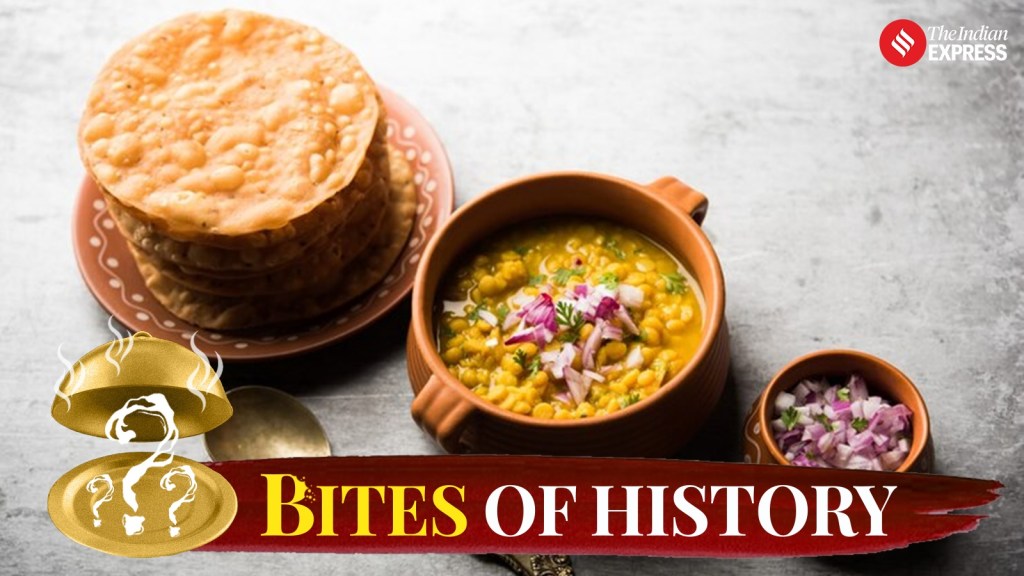

 The pairing of the crispy Pakwan with the comforting lentil stew or dal is what makes Dal Pakwan so delicious (Source: Freepik)


 Share


