At the age of 12, my father was transferred to what was then Bangalore. To us, this was as modern a city as possible three decades ago. It was clean, green, safe, cool throughout the year, and so “modern” it had stores selling marinated roast chicken, ready to pop into the oven.

Among the many things Bengaluru had to offer was the food prepared by my father’s cook, Prema. We relished everything she made — except the dosa. We were unacquainted with what she served, the benne dosa –– “benne” meaning butter. Unlike the thin, crisp dosas we were used to, these were smaller, thick yet crispy outside, soft inside, and always served with two or three coconut chutneys. We thought Prema didn’t know how to make dosas; she thought she was feeding a family of heathens. However, over time, we grew to love these. But soon, we moved back to Calcutta and its crisp paper dosas.
Who would have thought that benne dose, or dosa, as most people call it, would make such a comeback outside Bengaluru in the 21st century? Today, it’s all the rage, thanks to a small eatery in Bandra that reintroduced it to a new generation of food lovers. Back then, I had no idea how different the preparation of benne dosa was from that of paper dosa.
Benne dosa has a distinct recipe that is said to have originated in Davanagere, Karnataka. Unlike other dosas, its batter includes puffed rice in addition to rice and urad dal, giving it its signature softness. Some variations use poha or flattened rice instead of puffed rice and chana dal instead of urad. The dosa is always finished with a generous dollop of butter and usually served with a spiced potato dish. Standard dosa batter follows a 3:1 rice-to-urad dal ratio, sometimes with fenugreek seeds. In contrast, benne dosa batter follows a 3:2:1 ratio of rice, puffed rice, and urad dal.
I would love to share a recipe, but while I can master intricate desserts, roasts, and biryanis, dosas remain my Achilles’ heel. A close friend, who rarely cooks, can whip up flawless, crisp paper dosas effortlessly. I have tried and failed countless times—experimenting with homemade and store-bought batter, investing in the best dosa pan, preheating it perfectly, and discarding the first few dosas. Yet, all I manage to produce are dosas that look like they survived a car crash.
So my suggestion would be to trot over to your neighbourhood dosa restaurant and ask for a benne dosa. And don’t forget the extra butter on the top.
Next week, I’ll be writing about the different types of jaggery you can find in India and sharing my favourite recipe using jaggery.

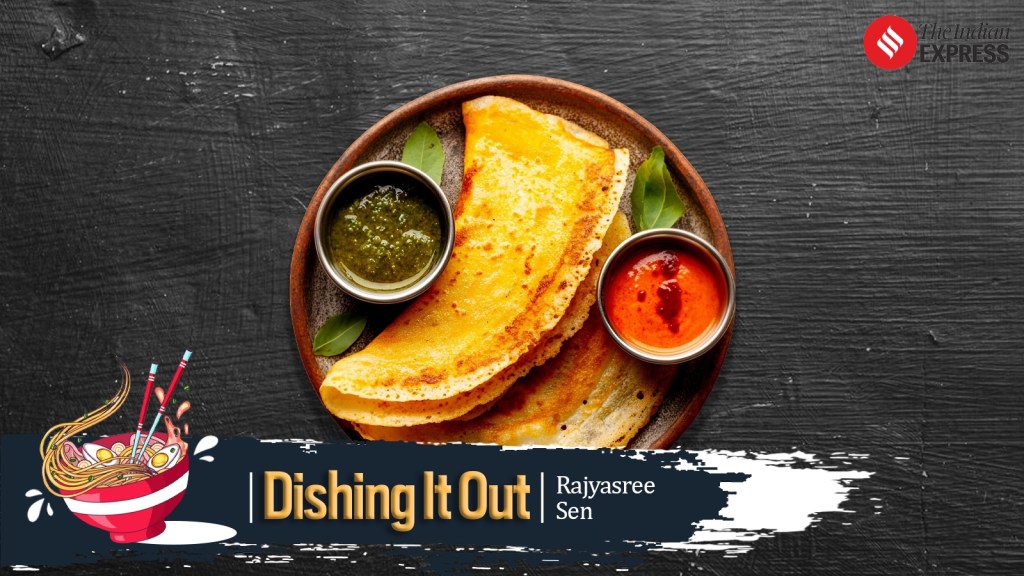 Benne dosa has a distinct recipe, said to have originated in Davanagere, Karnataka. (Photo: Freepik)


 Share


