


Journalism of Courage
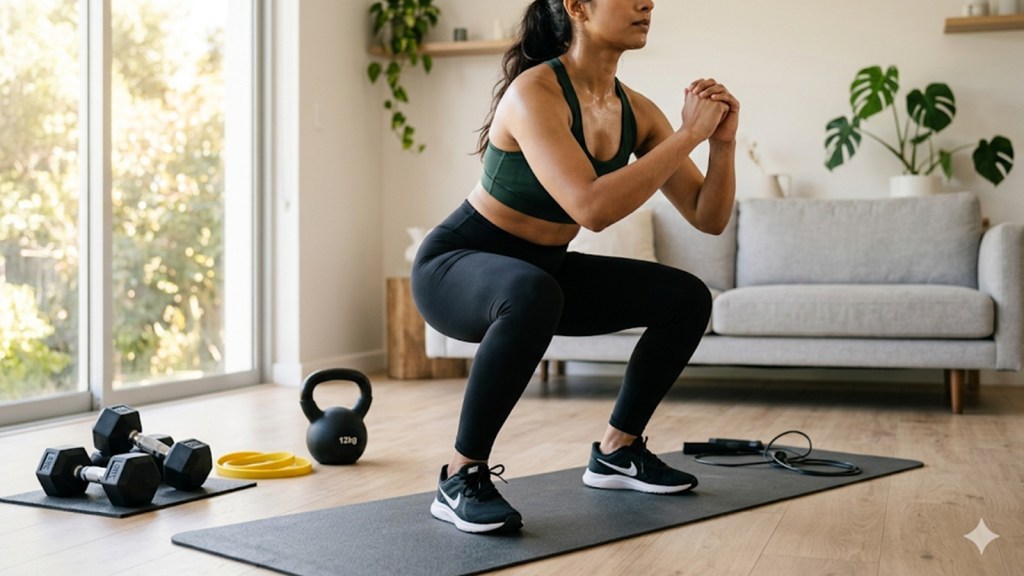 Can home workouts truly replace the gym? (Source: AI Generated)
As more people choose to work out at home, building an effective fitness routine without stepping into a gym has become increasingly appealing. From saving time on commutes to having the flexibility to train at one’s own pace, home workouts are now a practical option for many. At the same time, questions often arise about whether one can truly achieve a full-body workout without access to large machines or professional gym setups.
While such recommendations can make fitness feel more accessible, they also raise important considerations about choosing the right equipment, using it correctly, and tailoring workouts to individual needs and fitness levels. In this context, a fitness coach’s guidance on essential equipment can help simplify things.
DISCLAIMER: This article is based on information from the public domain and/or the experts we spoke to. Always consult your health practitioner before starting any routine.
Sadhna Singh, senior fitness and lifestyle consultant at HereNow Official, tells indianexpress.com, “Home workouts can be equally effective for long-term fitness if they are structured with intent and consistency. The effectiveness depends on factors such as progressive overload, exercise selection, and adherence to a routine.”
She adds that while gyms offer a wider range of machines and heavier loads, most strength and conditioning goals can be achieved at home with the right combination of equipment and programming. “Consistency, proper recovery, and nutrition ultimately play a far greater role than the training environment itself.”
A balanced home workout setup should allow you to train strength, mobility, and endurance without overcomplicating the space. The most essential equipment, according to Singh, includes:
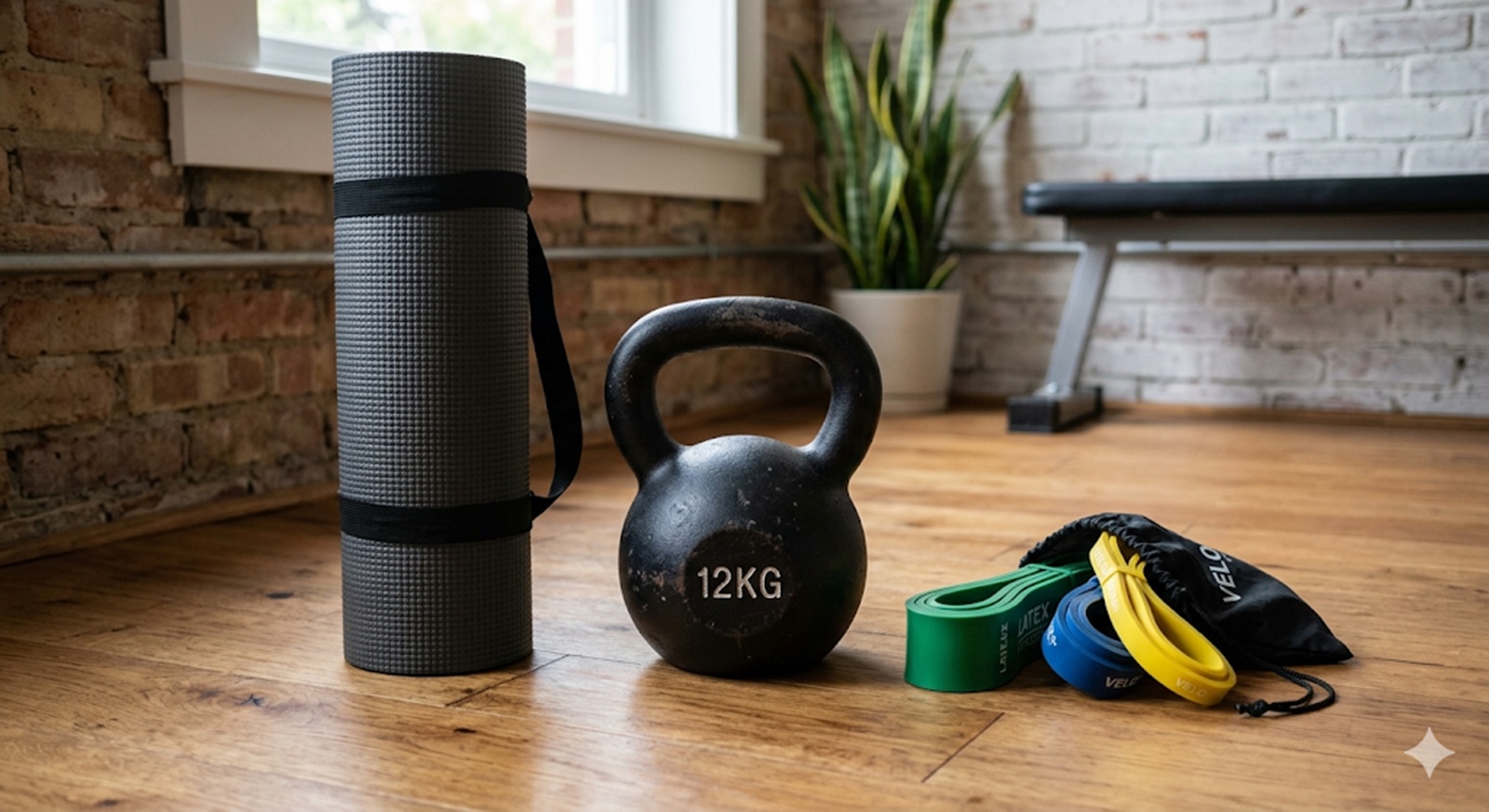 Building an effective home workout routine is incredibly important (Source: AI Generated)
“Together, these tools enable compound movements, isolation exercises, core training, and recovery, covering all major muscle groups effectively,” notes Singh.
Singh suggests that beginners should “prioritise technique over intensity,” especially when training without supervision. Starting with lighter resistance and focusing on controlled movements helps build neuromuscular coordination and reduces injury risk. It is also important to follow structured progressions rather than random workouts, ensuring that load and volume increase gradually.
“Warming up before sessions and incorporating mobility work can significantly improve movement quality. Most importantly, listening to the body and avoiding the tendency to push through pain is key to sustaining long-term progress,” concludes Singh.
DISCLAIMER: This article is based on information from the public domain and/or the experts we spoke to. Always consult your health practitioner before starting any routine.


