


Journalism of Courage
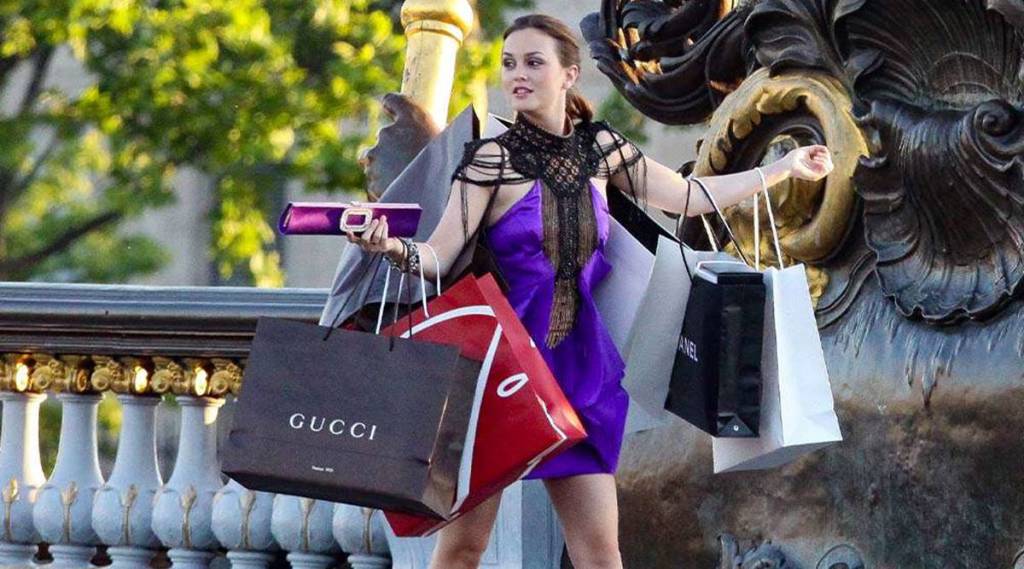 "fashion is a form of generational wealth-signaling anyone can access," Raul Lopez (Gossip Girl show still)
Written by Vanessa Friedman
Ten o’clock in the morning in the middle of New York Fashion Week, and assorted ladies in cocktail finery and well-heeled pumps were filing politely into a ballroom in the Plaza Hotel. Overhead, the crystal chandeliers twinkled; underfoot the carpet was plush. It was Carolina Herrera time, and they were the Herrera crowd, poised to applaud the garden-party brocade ballgown from designer Wes Gordon: the bell-shaped frocks in ice cream-social stripes; the Empress Sisi gold-embroidered tastefulness of it all.
The gowns swished by in silk crepe de Chine and double-faced duchesse satin — fabrics that were once de rigueur among the fundraiser set when the Plaza was primarily a local haunt rather than a tourist destination but that had become, Gordon said backstage, almost an “endangered species.”
He wasn’t wrong.
The final show of the fashion season — the marquee slot, because it’s also the last word — once went to such establishment names as Marc Jacobs and Tom Ford, who would close the week out in the grand environs of the Park Avenue Armory or Lincoln Center. This time around, it went to Luar, among the more celebrated of the city’s emerging names, and was held in Greenpoint, Brooklyn.
Raul Lopez, the Dominican American designer, called his collection “Calle Pero Elegante.” Translation: “street, but elegant.”
That meant camel coatdresses with linebacker shoulders. Leather motorcycle jackets with jutting feathers and a fox fur (the real kind) that looped up into a Magdalene-like hood. It meant silver sequins and gangster pinstripes; puffers and bustles and white shirts; the elements of the imagined big time jumbled together and set to the tune of Foxy Brown’s “B.K. Anthem.”
The point, Lopez said after his show, is that fashion is a form of generational wealth-signaling anyone can access.
“For some white families,” he said, “that means a pearl necklace. For people from the hood, it’s fur. It’s a sneaker. It’s a chain.” He’s looking to create the uniform of a new high society. The realization isn’t quite there. But it’s coming.
Clothes, the artifacts of our identity, tell a story. And the story the clothes told this fashion week was one of redefinition: a change in the hierarchy of aspiration and wealth, the sartorial codes that signpost power and success. The geography of the city has been fracturing for a while now. The psychosocial tectonic plates are shifting.
Tory Burch, onetime muse of the Pierre-Park Avenue set, captured the moment perfectly in a show literally predicated on imbalance: purposefully “broken” heels, logos sliding off handbags, slithery satin dresses buttoned wrong-side ’round. The familiar rendered, subtly, wrong — which made it seem very right, one of the ironies of fashion. It’s not an accident that various cast members of “The White Lotus,” the show about the alienation and soullessness of the extremely rich, have been the celebrity gets of the season.
Meghann Fahy, who played the not-so-dumb-blond trophy wife in the show, sat front row at Khaite, where designer Catherine Holstein took a page from the Row’s brand of hidden luxe. Instead of her usual sharp-shouldered cool-girl jackets and fringed cocktail frocks came floor-brushing pleated silks and tunic tops in monochrome shades with a monk-like mien, as well as some deep-pile shearlings.
Beatrice Grannò and Simona Tabasco, the actors who played the “White Lotus” prostitutes on the make, popped up at Michael Kors (along with Gloria Steinem and Gov. Kathy Hochul of New York), which turned out to be a celebration of 1970s power women and the decade when he got his start in flares and fringe, with a whole lotta leg and a tailored coat thrown on top. Kors has always imbued sportswear with the ineffable scent of expense, but that private-plane-to-Aspen approach is starting to take on a sepia tinge. And not just because he has a fondness for taupe.
“What does it mean to look rich?” Kors mused backstage. “It’s different than it used to be. When we were doing the evening things this season, I said: ‘You know what? People at night want to feel glamorous, absolutely. But are you wearing boots? Are you wearing a jumpsuit?’ It’s not the traditional look-at-me corseted gown with the train.” He paused. “I think it’s sort of the inside wink-wink club. You just know it when you see it.”
Heron Preston offered a different idea. “I think it’s an attitude,” Preston said, after a show of his namesake brand that took the stuff of streetwear — beat-up leathers and faded denim, basketball shorts, moto jerseys and chain mail — and cut it into the shapes of Champagne society: corsets, trapeze jackets, slip dresses, all grounded by the quirkiness of big fake fur boots and shoes. (Furry shoes were a trend.)
It’s the confidence to claim, as Preston did in calling his collection, that “Anything Goes.” And then to use your clothes to assert your place in the room.
📣 For more lifestyle news, follow us on Instagram | Twitter | Facebook and don’t miss out on the latest updates!


