


Journalism of Courage
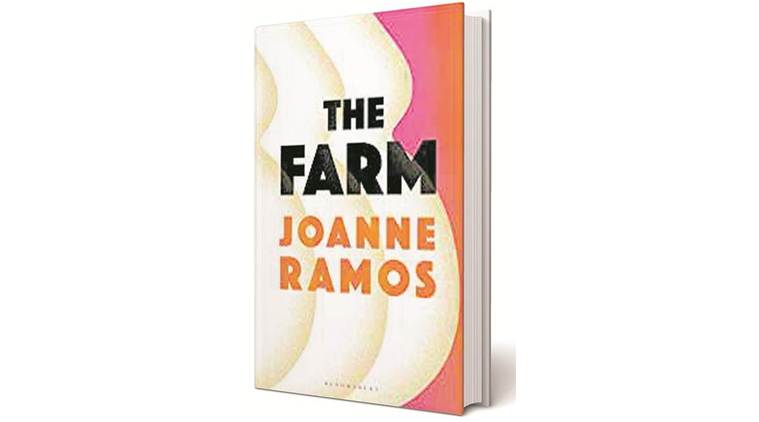 The Farm by Joanne Ramos
The Farm
Joanne Ramos
Bloomsbury
325 pages
Rs 499
It must be a sign of the times that a borderline-dystopic world is hard to tell apart from the “next big thing” incessantly pursued by capitalist bigwigs. Upon grasping the general concept of Joanne Ramos’s The Farm, that is being touted as one of the best debuts of the year, one of the first chilling reactions is the thought — “Doesn’t this already exist?” This blurred landscape, taken together with some very intriguing characters, is exactly what makes Ramos’s debut novel about the toxic remains of the American Dream so gripping.
The surrogacy debate is addressed in the very first pages of the book by the controlling head of the Golden Oaks “gestational retreat”, Mae. While meeting Reagan, “the holy trifecta” of Premium surrogates (Caucasian, “pretty but not sexy”, “smart but not intimidatingly so”), she says the premise of her “farm” is that of free trade. Both parties are happy with the deal. Both walk away with “more than adequate” compensation. The plutocratic clients, for whom the expense of hiring a surrogate is likely no more than a small accounting error on their balance sheets, get their premier babies handed to them with no fuss. All is well at the gestational retreat, as Mae tells her clients, among whom is also Jane.
Jane Reyes is on the other end of the scale from Reagan, as far as Golden Oaks is concerned. She is Filipino, mother of a newborn, for whom babies are a family business, in one way or another. Her elder cousin, 70-year-old Evelyn Arroyo (or Ate, as she is referred to), is to babies what Cesar Milan is to canines — to the point where the “richest of the rich” scheduled their deliveries according to her calendar. Ate is, perhaps, the most intriguing, well-developed character in the book, representing the struggles of immigrants from a different perspective than Jane’s. The book primarily revolves around these four characters, set in the “farm” that is presented as a world-class luxury spa.
If the characters breathe life into Ramos’s story, which would otherwise be no different from any number of sci-fi dystopian tales, it is the setting that allows Ramos to play in the space of ambiguity from beginning to end. Golden Oaks, which, if readers allow the larger plot to slip from their minds while turning the pages, sounds a lot like a resort that you would want to check into. The Hosts there are given the full “relaxation” experience, starting with the robes that symbolise a high-tier spa, to a fully curated diet of healthy delicacies and all other manners of pampering.
Indeed, the tell-tale signs that all is not well can mostly be overlooked, by the characters as well as the readers. The constant cameras are practically a staple at many high-end resorts anyway, the strict control on diet is something people pay for at health camps or with personal dieticians. The procedure of checking the bodies of hosts for ticks when they return from a walk is the only tangible “unease” inducing moment until the very last twist in the book, which highlights the fragility of the whole set-up.
There are subtler, less tangible signs, of course. It’s in the way the women have no say in whether a particular test is conducted as long as the client asks for it. It’s in the way the doctors gradually appeared to look past the women as if they were nothing but containers for what held true value — the plutocratic foetuses.
Ramos’s delicacy ensures that you always stay in the realm of questioning whether the line had been crossed. However, this is, perhaps, what leads to one of the biggest problems in the book — Mae. For those programmed to look for a villain in every story, Mae is the one in this book (and the shadowy, wealthy, obscure clientele such as Madame Dang). Her situation is best described as one on the threshold of true riches — she has dined with billionaire-clients, experienced the lifestyle and now wants it for herself. She is strict, excessively controlling, and while she arguably never crosses the threshold into true villainy, she gets very close.
The final portion of the book gives the impression that Ramos decided to “villain-wash” Mae after suddenly realising that the owner of the Oaks was moving out of ambiguous territory and into clear-cut villainy. The character development seems hasty, out of sync with the rest of the novel and seemingly done to reach a certain end rather than for the sake of the story.
Ultimately, Ramos’s book does not hold satisfying answers. Her premise and characters are gripping, and it is almost certain that the questions her book leads to regarding agency, capitalism, empowerment, objectification, immigration, wealth inequality and thought-colonialism will make for many lively book club debates. It can be said that The Farm is a classic example of themes outgrowing the book that highlighted them — but the book is no less engaging or insignificant for it.


