7 min read


📣 For more lifestyle news, click here to join our WhatsApp Channel and also follow us on Instagram
© IE Online Media Services Pvt Ltd



 Recently, the Ganjifa art form received governmental recognition with a Geographical Indication (GI) tag in January 2024
In the vibrant town of Sawantwadi, Maharashtra, a centuries-old art form is experiencing a revival. Ganjifa, the intricately hand-painted playing cards that once graced royal courts, is being brought back to life under the patronage of the Sawant Bhosale family and their skilled artisans. Originating from Persia, the term “Ganjifa” comes from “ganj,” meaning treasure or money.
Introduced to India in the 16th century, Ganjifa became a symbol of luxury and intellect under Mughal emperors like Akbar and Shah Jahan. Unlike conventional rectangular playing cards, Indian Ganjifa cards are circular, each serving as a canvas for artisans to decorate with colours and intricate designs.
Today, the Sawant Bhosale family continues to preserve this unique art form, ensuring its legacy remains a cherished cultural treasure.
“Ganjifa is a 16th-century art form,” said Yuvrani Shraddha Lakham Sawant Bhonsle, chef and owner of Sawantwadi Palace Boutique Art Hotel, in a conversation with indianexpress.com. She married into the royal family of Sawantwadi in 2019. “It came into Sawantwadi in the late 16th, early 17th century, where my ancestors first patronised it. It was revived by my grandparents-in-law in 1971.”
The history of these cards is as colourful as the artwork itself. According to Shraddha, Ganjifa’s journey to Sawantwadi began when King Khem Sawant III, a noted patron of the arts, welcomed Brahmins from Telangana and Andhra Pradesh who carried this artistic tradition with them.
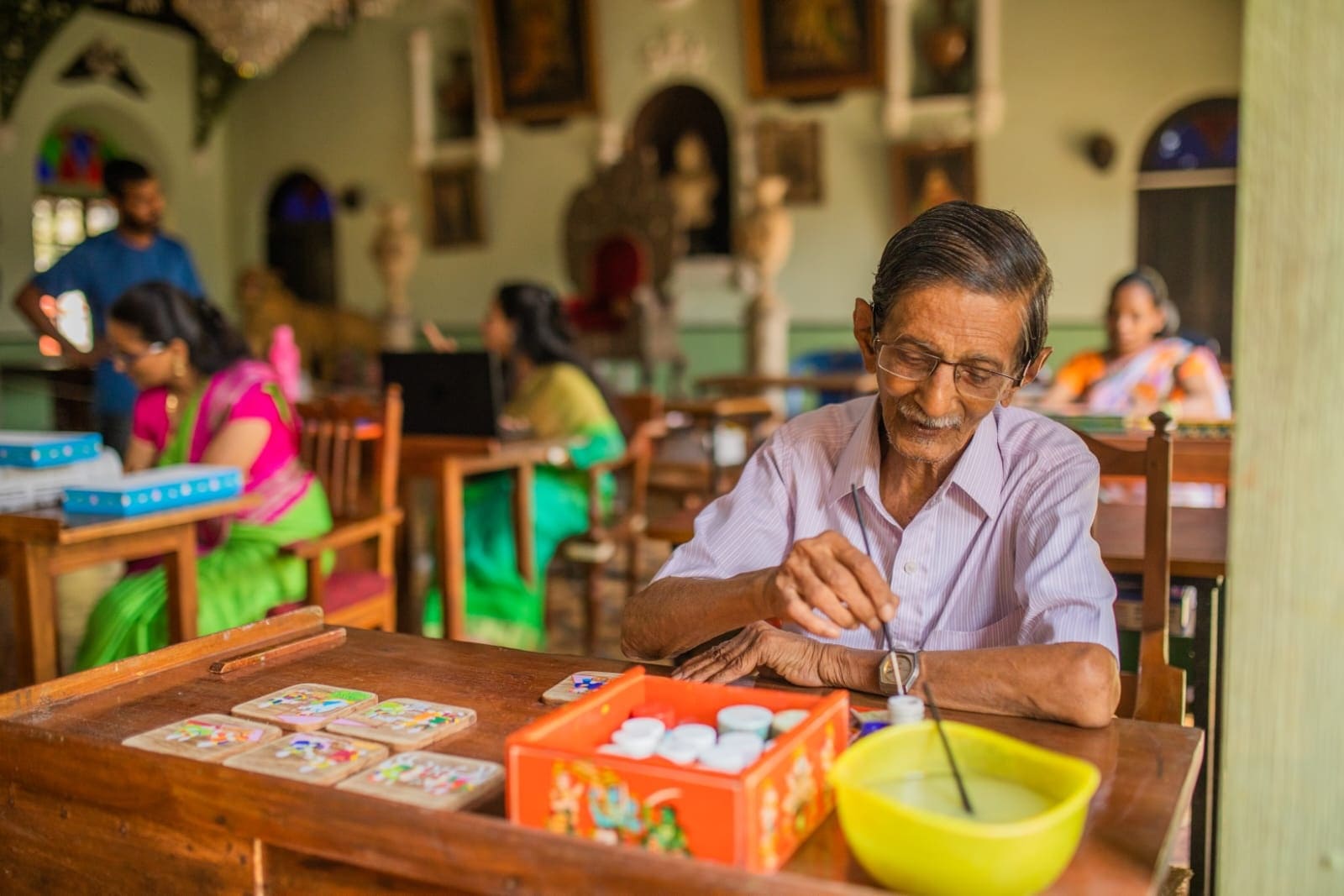 The history of these cards is as colourful as the artwork itself.
“At one point, Ganjifa was practised in every state,” Shraddha said. “Unfortunately, since it never gained widespread popularity, many artisans gave up over time because they were not getting fair compensation. The only reason it survived in Sawantwadi is because it was backed by the Sawant Bhosale family.”
Behind every Ganjifa card is a story of dedication and craftsmanship passed down through generations. The palace currently employs about 12 artisans, many of whom inherited their artistic skills from family members.
Lado Ramchandra Thakur, a senior artisan, began learning the craft at just 12 years old under his father’s guidance. For him, the art is deeply spiritual: “Vishnu’s 10 avatars are in front of me… We worship them.”
For Gayatri Vishwanath Kulkarni, who joined five years ago following in her father-in-law’s footsteps, Ganjifa has become more than just work. “I love this art. I don’t even realise how time flies. Now, I can’t imagine my life without it. I feel proud that I have become independent,” she said.
The process of creating these cards is painstaking. “First, we work on the borders, then fill in the colours. Next, we add the figures and details. The final step is applying lacquer,” said Gayatri. A complete set takes about a month and a half to create, with artisans working eight hours a day.
When Shraddha joined the family, she was faced with an immediate challenge: the COVID-19 pandemic. Rather than seeing it as a setback, she used the time to study Ganjifa by exploring her late grandmother-in-law’s workspace.
“I was cleaning my grandmother-in-law’s Ganjifa room, but in the process, I learned so much about her work and her vision for the art. Although she passed away before I joined the family, I understood her journey through her workspace,” she said.
Shraddha has since taken significant steps to modernise the preservation of this traditional art. She has established an online presence and secured partnerships with major corporations, including Reliance Retail’s Swadesh brand, with potential collaborations with the Aditya Birla Group.
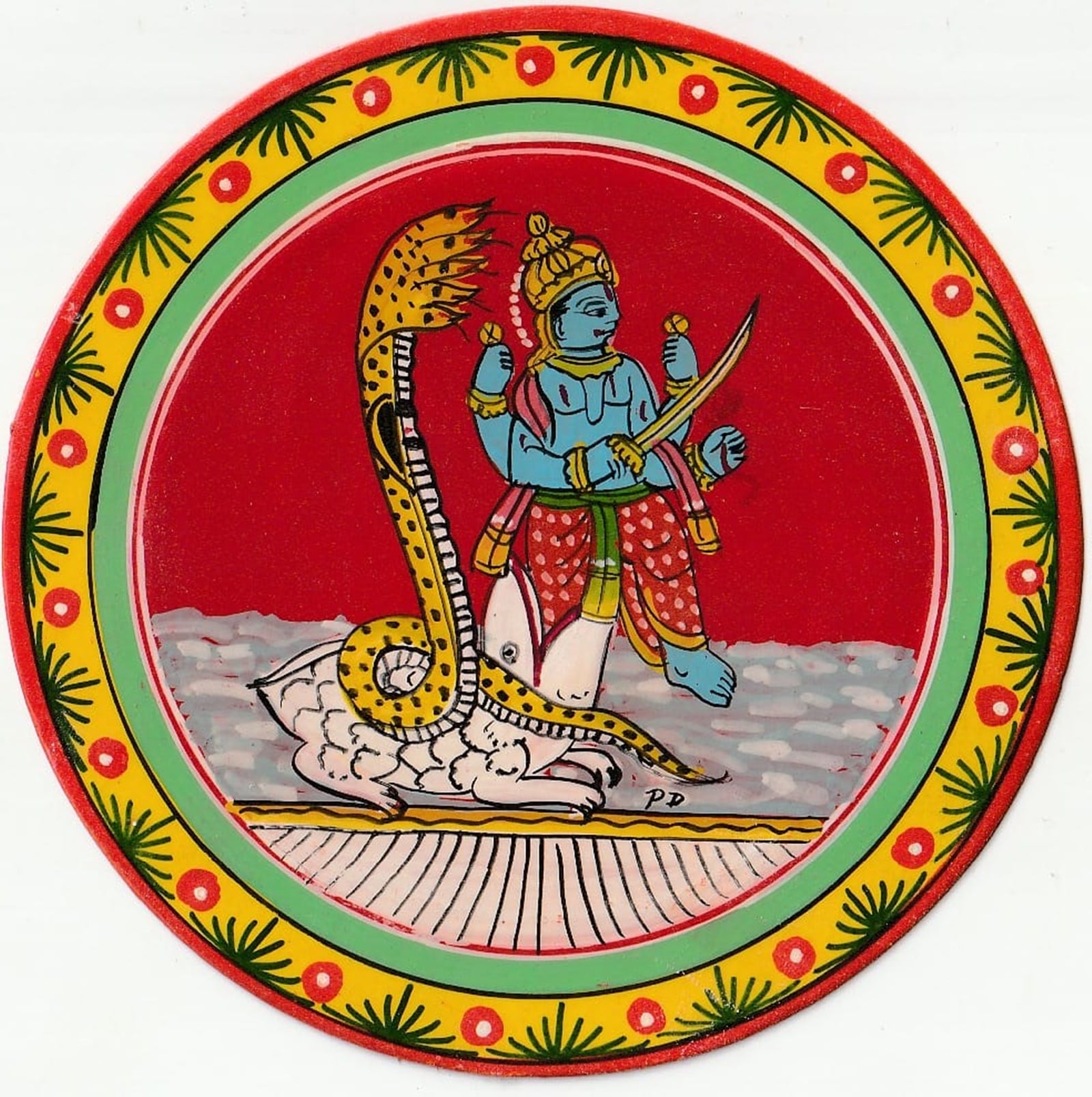 The story of Ganjifa in Sawantwadi represents more than just the preservation of an art form
Perhaps her most innovative effort has been transforming part of Sawantwadi Palace into a boutique art hotel with Ganjifa-themed rooms. “When guests enter they see rooms named—Matsya, Kurma, Varaha—which encourage them to learn about this traditional art form. From the doorknobs to the bathroom mirrors to the study tables, our artisans have painted every element of the room,” she said.
This immersive approach allows visitors to experience the art firsthand, live within it, creating a deeper connection than a typical gallery visit. In January 2024, the art form received governmental recognition with a Geographical Indication (GI) tag, marking another milestone in its revival journey.
Despite these achievements, challenges remain. “My main challenge right now is retaining artisans. Awareness is growing, and orders are increasing due to our collaborations, but we currently have only 12 artisans, some of whom work part-time,” Shraddha said.
The intricate nature of the craft makes training new artists difficult. “When we train students, we struggle to keep them engaged. Their minds are not fully present. They lack patience. It’s hard to gain their confidence,” Gayatri said.
Another issue is the perceived value of the craft. “Despite a set taking over a month and a half to create, we charge just Rs 14,000 per set. Many people think this is expensive; it’s entirely hand-painted,” Shraddha said.
Sachin Kulkarni, who began learning the art at 16 from his father, believes government support could make a difference. “I expect a lot from the government. If they support us, Ganjifa will become famous,” he said.
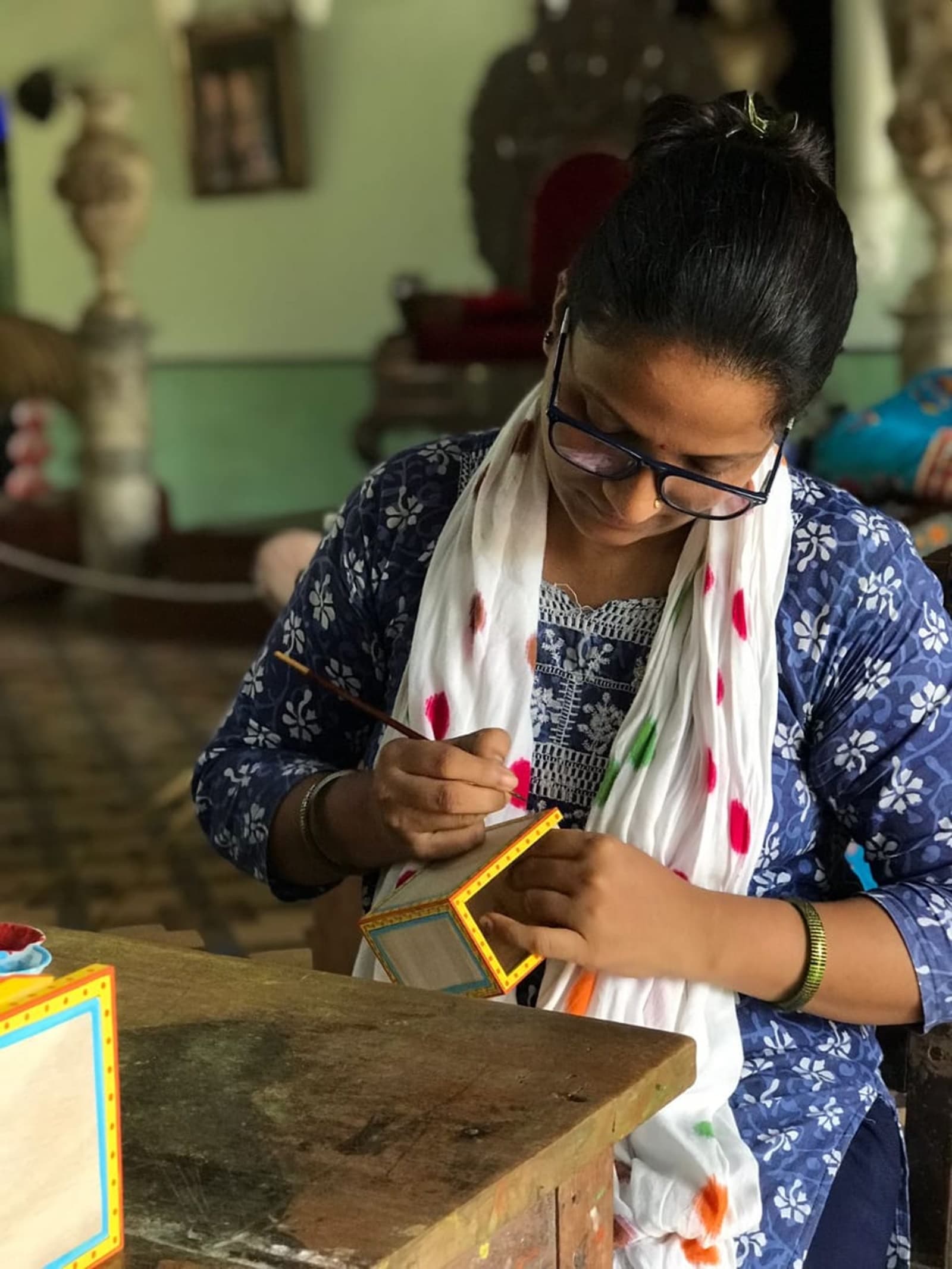 Through the combined efforts of the royal family and their skilled artisans, this ancient game of kings continues to tell stories of Hindu mythology while creating new narratives of cultural preservation and artistic innovation.
While Ganjifa remains deeply rooted in tradition, it has also evolved. Natural pigments have been replaced with poster colours, a change introduced by Shraddha’s grandmother-in-law to improve longevity. “Natural pigments were causing the sets to become corrugated. My grandparents-in-law consciously decided to switch to poster colours and then lacquer them for protection.”
Looking ahead, Shraddha envisions multiple ways to make Ganjifa more accessible to younger generations. She suggests incorporating Ganjifa designs into jewellery, textiles, and apparel, and even developing an app for the game.
“Making mythology cool again—giving it a modern twist and engaging younger audiences through graphics—could be key. If we can present mythology in a way that’s less intense and more relatable, it would be exciting,” she said.
The story of Ganjifa in Sawantwadi is a testament to how cultural heritage can adapt and remain relevant when championed by passionate individuals.
Through the combined efforts of the royal family and skilled artisans, this ancient game of kings continues to tell stories of Hindu mythology while creating new narratives of cultural preservation and artistic innovation. As Shraddha and her team push forward, they are not just saving a tradition—they are reimagining it for generations to come.
For now, in the workshops of Sawantwadi Palace, brushes continue to glide across card surfaces, carrying forward an artistic legacy that has already endured for four centuries—and is ready for many more.