


Journalism of Courage
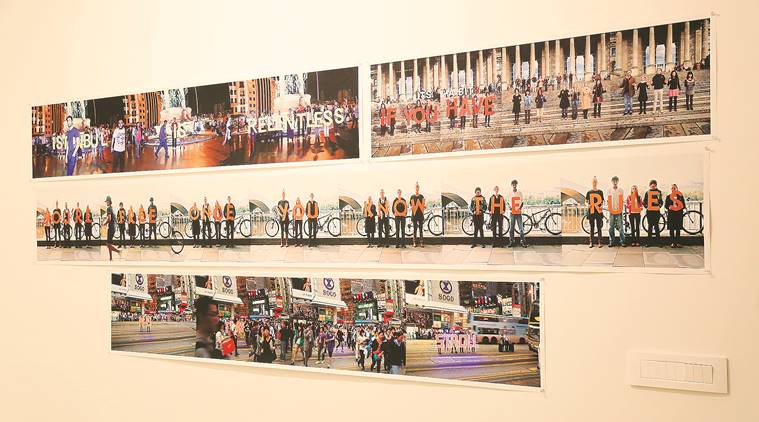 Sue Williamson’s paintings at an exhibition
This October, South African artist Sue Williamson conducted a workshop with a group of 12 students from Delhi colleges on a leisurely afternoon, where she asked them to describe their city. The attendees spoke about how the Partition had affected their family’s lives, the influence of caste and what it meant to live in the city after migrating from other parts of India. Despite complaining about its traffic jams and increasing pollution levels, they felt that the essence of Delhi was something they were drawn to. When asked to describe the Capital in a sentence, they resorted to “Delhi we know you but we don’t know you”. They were photographed holding these letters on a busy road next to a market, near the New Delhi Railway Station.
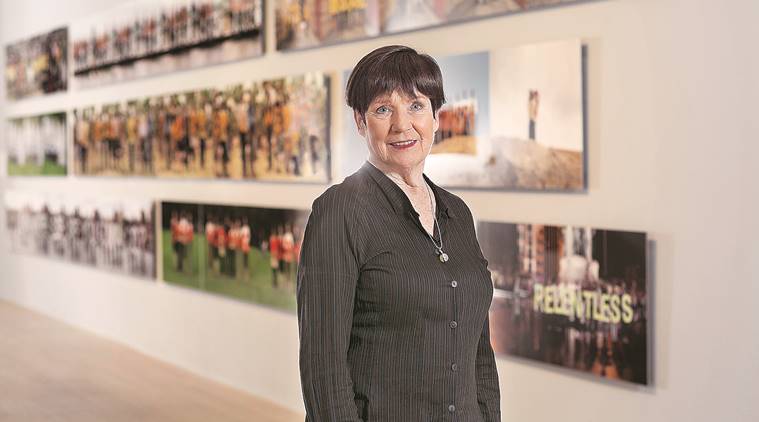
“We chose this statement because the city keeps changing and new people keep arriving. There are layers of culture, it is so vast and complex,” says Williamson, 76, whose photographs describing cities and their essence are on display at Shrine Empire gallery. Her exhibition “Other Voices, Other Cities” is the end result of a project she started in 2009. She conducted workshops in multiple cities to describe its character. Anushka Rajendran, curator of the show, says, “Every city has a story. Paris has its own issues, Zimbabwe has a lot of corruption, in Hong Kong there is no time even for a stroll since it is a very busy city. The show is an
exploration of such characters.”
In a photograph, residents of Rosengarten in Bern, Switzerland, are holding red-coloured letters stating, “Even nothing works”. Williamson arrived at this conclusion after holding multiple discussions with the residents, and has played around with a Swiss existential joke, on how one doesn’t have to do anything in the country, because everyone will always be supported by the social security system. “In Switzerland, the trains run on time and so does everything else. If one is unable to get a job, the state will support you. So everything works, even nothing,” she says.
 Sue Williamson
A 2011 photograph featuring youngsters from Krakow posing outside a wall built by the Nazis in 1942, that contained a Jewish ghetto, is a reflection on the consciousness of the country’s burdensome past, hidden under layers of the darkest chapters of World War II. The letters they hold read “Youth facing history”. Williamson says, “The tour buses in the city go to the Auschwitz concentration camps, that are the main tourist attraction. Upon reaching, there is always this feeling of weightiness. It’s a weighted history which the city dwellers and youngsters can’t forget.”
When Williamson travelled to New York, the anthem statement for the photograph that emerged was, “I Mean Where Else Are You Gonna Go?”. She photographed youngsters on a rooftop, with glittery skyscrapers in the background. “New York is funny and flippant, not that it does not have its own set of problems but people pit it as the greatest city in the world,” says Williamson. On the other hand, Johannesburg’s university students were unaware of who their city is named after. “It’s a young city that grew in the gold rush at the end of the 19th century. Workers from all over Africa go there to make a fortune. It’s always in a state of flux.” “Who is Johannes?”, thus became their slogan for the photograph shot near the central station in Johannesburg and the taxi rank.


