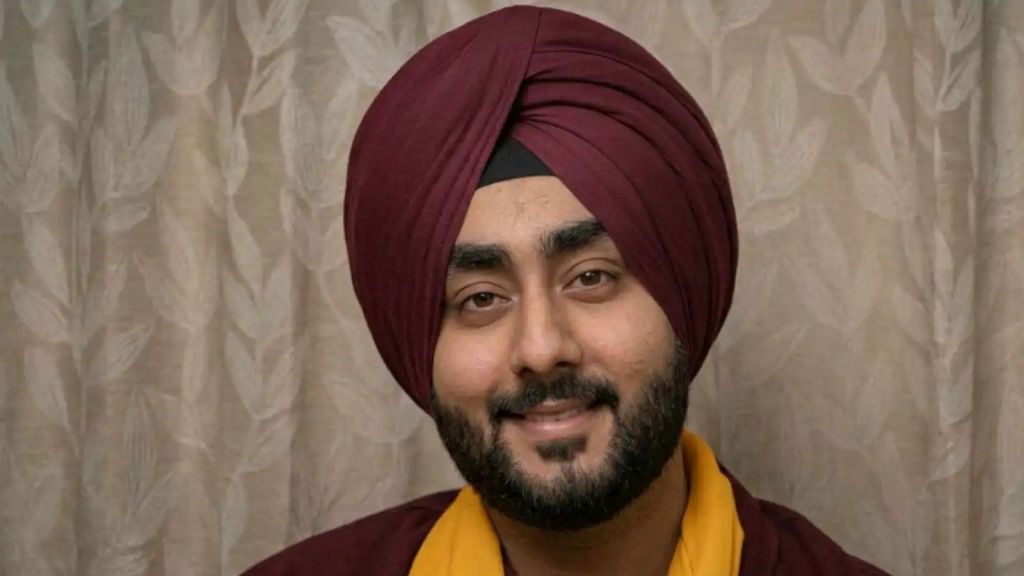
A Delhi court on Tuesday ordered an investigation into the possible role of Gurugram Police officers and the Medical Officer of the Gurugram Civil Hospital in the disposal of the body of 31-year-old Delhi-based real estate professional Yuvraj Singh Manchanda, saying their involvement in the “disappearance of evidence” could not be ruled out.
Yuvraj was allegedly killed by his former colleague Anya Vats and her partner Sanyam Sachdeva on September 6, with his body later found in a drain in Gurugram.
Citing “grave” procedural lapses by Badshahpur police station personnel, Judicial Magistrate First Class Rahul Jain of Saket Court directed that a copy of the order be sent to Gurugram deputy commissioner of police and a report be submitted in two weeks.
The court noted that the unidentified body was recovered September 10 but its particulars and photographs were uploaded on the ZIPNET database — an integrated online platform used by law enforcement agencies to circulate information about missing persons and unidentified bodies — only on September 16, two days after it had been cremated.
It observed that this was a “clear negligence” and failure to follow the standard operating procedure for unidentified bodies. “…the body was recovered on 10.09.2026 at 4.05 pm. However, the details and photographs were uploaded onto the ZIPNET database only on 16.09.2026, which was two days after the body had already been cremated. On the face of it, this shows clear negligence and a failure to follow the standard operating procedures established for such cases,” the court said.
Maintaining that there was a “delay of six crucial days in uploading this data”, the Judge said, “The complainant not only lost her brother allegedly to a brutal murder but could not even see or cremate his body due to the lapses of the Gurugram Police.”
Further, the court called the postmortem report prepared by Manav Chauhan, the Medical Officer of the Civil Hospital, “grossly deficient” and “incomplete”.
Story continues below this ad
“The police investigation by IO Chetna Mandia (Delhi Police) shows that the accused disclosed shooting the victim twice near his neck. There have been further recoveries of weapon of offence, mobile phone of deceased and other electronic evidence pointing towards the theory that the deceased died due to firing of two rounds at/around the neck,” the court said, noting that the body was later disposed of in order to conceal evidence.
“However, the postmortem report is inconsistent with the investigative theory. It states ‘NIL’ under external injuries and lists internal structures including the neck, scalp, skull, meninges, chest wall, and ribs as showing ‘No Abnormality Detected’. The doctor then concluded that cause of death is ante mortem drowning,” he added.
Moreover, the court noted that no X-ray was conducted or mentioned in the postmortem report to check for concealed metallic objects such as bullets. It said that, in ordinary circumstances, bullet paths or projectile injuries penetrating skin, tissue or bone do not vanish due to decomposition, but this could have been confirmed only if the postmortem had been conducted according to protocol.
It further took note of the failure to preserve forensic material, including viscera and samples required for diatom testing.
Story continues below this ad
The court summoned Chauhan to personally appear before it on October 15 – the next date of hearing – and give a written explanation regarding the discrepancies in the postmortem report.
Senior advocate Amit Prasad, who appeared for Yuvraj’s sister Harsimran – the complainant – had told the court that the police conducted a postmortem examination and then cremated the body as “unidentified”.
The court noted that the body was cremated despite an FIR over Manchanda’s disappearance having already been registered at Lajpat Nagar police station on September 11.
“…the flouting of norms are of grave concern. Thus, let a copy of this order be sent to the DCP Gurugram… regarding the procedural lapses by officials of police station Badshahpur, including the delayed ZIPNET entry, failure to conduct postmortem videography, and failure to inform the Executive Magistrate. A report on this matter shall be filed within two weeks,” it said.
Story continues below this ad
“After going through the reports and above circumstances, the role of police officials and the doctor of Civil Hospital Gurgaon in disposing of the body while flouting norms to cause disappearance of evidence cannot be ruled out. Thus, it is imperative that investigation be conducted on this aspect under Section 238 (disappearance of evidence of offence/giving false information) of BNS (Bharatiya Nyaya Sanhita),” the court added.
The court was hearing two applications filed by Harsimran – one demanding judicial monitoring of the investigation and another seeking production and preservation of records, evidence, physical items and digital material held by Badshahpur police station.
Delhi Police arrested Anya and Sanyam from Uttarakhand on September 16.