3 min readChandigarhDec 19, 2025 02:48 PM IST
First published on: Dec 19, 2025 at 02:48 PM IST
The Punjab and Haryana High Court held Friday that a victim challenging an acquittal in a private complaint case is entitled to file an appeal before the sessions court as a matter of right and is not required to seek special leave from the High Court.
Justice Sukhvinder Kaur passed the ruling while dealing with an application filed by Boota Ram seeking leave to appeal against the acquittal of the accused in a criminal complaint case decided by a Fazilka court in 2017. The trial court had acquitted the accused of offences under the Indian Penal Code.

The High Court noted that the application had been filed under Section 378(4) of the Code of Criminal Procedure (CrPC), which earlier required a complainant in a private complaint case to seek special leave from the High Court to challenge an acquittal. However, the legal position had changed after a recent Supreme Court judgment.
Referring to the apex court’s decision in M/s Celestium Financial vs A Gnanasekaran, the High Court observed that the Supreme Court had clarified the scope of the proviso to Section 372 of the CrPC, which grants victims a statutory right to appeal.
Quoting the Supreme Court, Justice Kaur noted that “the victim of a crime must have an absolute right to prefer an appeal which cannot be circumscribed by any condition precedent”. The judgment further stressed that “the right of a victim of a crime must be placed on par with the right of an accused who has suffered a conviction”, since a convicted person can appeal as a matter of right.
The Supreme Court had also held that insisting on special leave under Section 378(4) would be “contrary to what has been intended by the Parliament by insertion of the proviso to Section 372 of the CrPC”, the High Court said, reproducing key portions of the ruling.
Applying this principle, the High Court held that an appeal against acquittal filed by a complainant or victim “squarely falls within the ambit of the proviso of Section 372 of the CrPC”. It also referred to earlier orders of coordinate benches of the court that had taken the same view after the Supreme Court’s ruling.
Accordingly, the High Court directed the Sessions Judge, Fazilka, to treat Boota Ram’s application as an appeal filed under Section 372 of the CrPC and to decide it or assign it to the appropriate court. The court made it clear that it had not expressed any opinion on the merits of the case, leaving all issues open for consideration by the Sessions Court.
The appellant has been directed to appear before the Sessions Judge, Fazilka, on January 20, 2026, while the High Court registry has been asked to transmit the complete case record without delay.

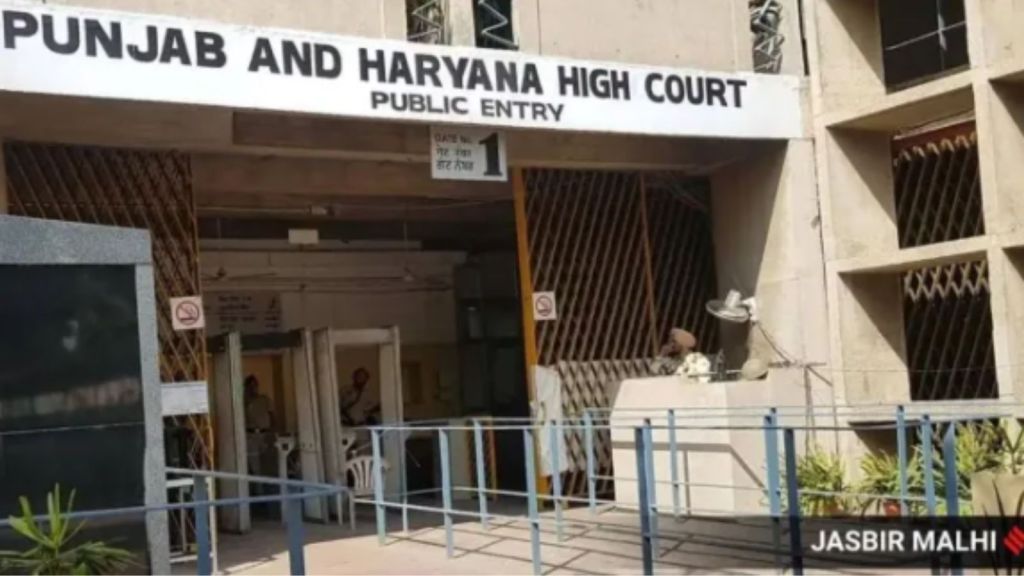 The Punjab and Haryana High Court ruled that victims in private complaint cases can appeal acquittals in Sessions Court as a statutory right. (File)



 Share


