
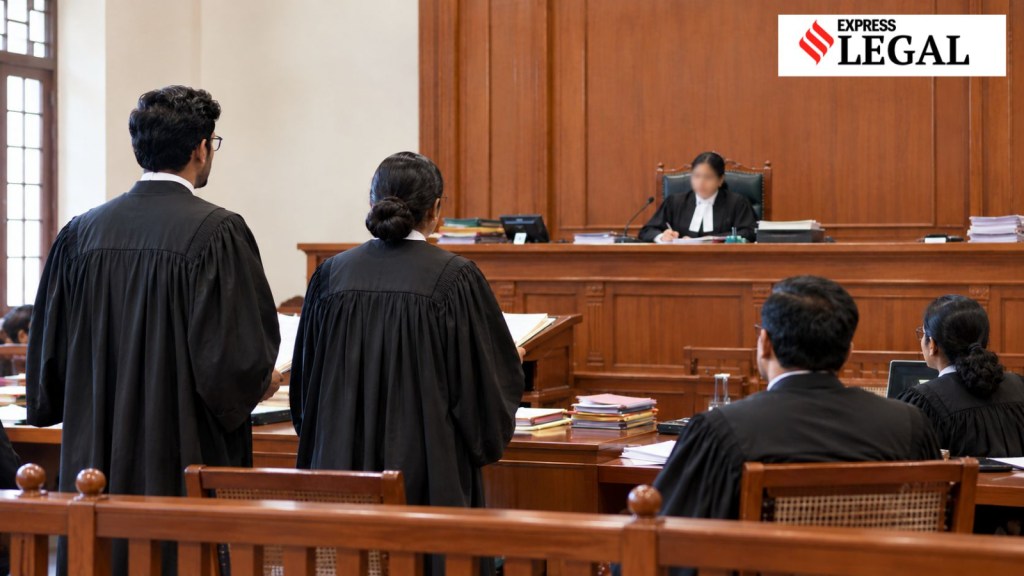
The Delhi High Court has restored an advocate’s name in the rolls of the Bar Council of India (BCI) after it was removed during local bar body polls on the allegation that she had used a fake caste certificate at the time of enrolment. The court said that the BCI does not have “unrestricted power” to remove an advocate’s name from the roll.
Justice Swarana Kanta Sharma was hearing a plea filed by an advocate whose name was removed from the roll of advocates while she was contesting Bar Council of Delhi (BCD) elections, for allegedly using a fake caste certificate to get enrolled with the bar.

“Mere furnishing of the disputed caste certificate, in the peculiar facts and circumstances of the present case, cannot be treated as sufficient to attract the proviso to Section 26(1) of the Advocates Act. The BCI was required to be satisfied not merely that the petitioner had furnished any fabricated document, but that she had got her name entered on the roll of advocates by fraud or by misrepresentation as to an essential fact,” the October 8 order read.
The high court also reprimanded the woman and stated that “the absence of any actual advantage to the petitioner (the woman) from the disputed caste certificate does not, however, diminish the seriousness of furnishing a fabricated document, even if it was not necessary for establishing her eligibility for enrolment.”
 Justice Swarana Kanta Sharma held that the Bar Council of India did not have unrestricted powers to remove an advocate’s name from state roll.
The woman claimed that she was a practising advocate in the Delhi High Court and was enrolled with the BCD in the year 2019. According to the woman, when she was contesting the elections to the BCD in 2026, certain complaints were lodged against her, questioning the genuineness of a caste certificate furnished by her at the time of seeking admission to the LL.B. course and, later, at the time of her enrolment.
It was alleged that the woman had secured admission in the LL.B. course and her enrolment on the basis of a fabricated caste certificate, so as to obtain relaxation in the minimum qualifying marks. Upon receiving the complaints, the BCD sent the caste certificate to the District Magistrate, Ghaziabad, Uttar Pradesh, for verification of its genuineness, and the certificate was also sent to the law college from where the woman had completed her law degree.
While the Tehsildar, Ghaziabad, confirmed that the caste certificate had not been issued to the woman, the law college informed the BCD that, as per their records, the woman had not submitted any caste certificate at the time of admission to the LL.B. course, and that she had taken admission under the general category.
Subsequently, proceedings were initiated against the woman and ultimately on May 7, the Bar Council of India (BCI) passed an order directing removal of her name from the State Roll of Advocates maintained by the BCD. Aggrieved by the directions given by BCI and the “consequential” cancellation of her candidature in the elections, the woman approached this high court.
‘No advantage’
Senior Advocates Mohit Mathur and Amit Chadha, appearing for the woman, argued that the proceedings were initiated and completed with “undue haste”. The counsel urged that the case of the woman was that she had merely ticked the OBC category in the relevant portion of the enrolment form and had not submitted any caste certificate along with the form.
The counsel further contended that the caste certificate was not necessary for enrolment and gave no advantage to her, so there was no “rational explanation” for the woman to forge a caste certificate.
Senior Advocates Jayant Mehta and T Singhdev, appearing for the Bar Council of Delhi, submitted that vague allegations that the complaints against the woman were motivated by the ongoing elections would not be a ground for setting aside the proceedings and the allegation of institutional bias was baseless.
Senior Advocate Gaurav Sarin, representing the Bar Council of India, contended that the issue before the BCI was whether the woman had actually entered the rolls, as an advocate, by filing a fabricated caste certificate, and not whether she got any specific benefit out of it. The counsel also urged that the order passed by the BCI was a detailed and reasonable one.
Fabricated caste certificate
The high court noted that the caste certificate had been found to be fabricated upon verification by the relevant authorities and “the enrolment form itself required a candidate, who selected the Other Backward Classes (OBC) category, to attach the relevant category certificate.” The court further noticed that, according to the record prepared while processing the woman’s enrolment application, there was a “specific noting on the form that an OBC Certificate issued in Uttar Pradesh was enclosed” which proved that a caste certificate was indeed submitted with the enrolment application.
The high court observed that the record did not show that the caste certificate submitted by the woman had helped her to “obtain admission to the LL.B. course, secure her law degree, obtain any fee concession, claim any reservation benefit, or overcome the minimum marks requirement” to secure her enrolment with the BCD.
According to the bench, in view of the BCD resolution dated March 15, 2019, the woman would have anyway got enrolled with the BCD, regardless of her caste and thus, “furnishing of disputed caste certificate did not result in any tangible or identifiable advantage to the petitioner (the woman) herein.”
While setting aside the BCI order, the high court held that “where the allegation is of obtaining enrolment – by fraud – the enquiry must not end only upon finding that a forged or fabricated document was furnished during the enrolment process.”
“The mere presence of a fraudulent document in the enrolment record cannot by itself be equated with obtaining enrolment by fraud, unless the fraud is shown to have played a material role in securing such enrolment,” the order added.

 Share


