


© The Indian Express Pvt Ltd
Tags:


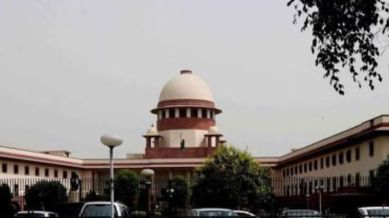
The Supreme Court Monday issued notice on an appeal challenging the election of Karnataka Chief Minister Siddaramaiah, which alleges that the “five guarantees” promises in the Congress’s manifesto were corrupt practices under The Representation of the People (RP) Act, 1950.
The election petition against Siddaramaiah was filed by K Shankara, a voter in the Varuna constituency of Karnataka, who argued that the election results should be declared void on account of corrupt practices under the Act. The Karnataka High Court dismissed the petition in April this year, following which he approached the Supreme Court.

On Monday, a bench of Justices Vikram Nath and Sandeep Mehta issued the notice after it was informed that petitions challenging the 2013 SC judgement in the Subramaniam Balaji case, which said the “state distributing largesse in the form of distribution of colour TVs, laptops, etc. to eligible and deserving persons is directly related to the directive principles of the State policy”, and warrants no interference by the court, are already pending for consideration by a three-judge bench.
Before the Karnataka HC, Shankara argued, amongst other contentions, that the “five guarantees” in the Congress election manifesto amounted to a corrupt practice, and those whose photos appeared on those manifestos, like Siddaramaiah, would be liable.
Siddaramaiah’s counsel argued that the corruption allegations were not substantiated, as the manifesto policies were welfare schemes rather than corrupt practices. It was also pointed out that, as per the Supreme Court case of S Subramaniam Balaji vs State of Tamil Nadu and Others, promises in a manifesto would not count as corrupt practices.
Agreeing with the argument, the High Court said the “guarantees”, which are promised freebies in the manifesto, cannot be considered to constitute a corrupt practice under Section 123 of the RP Act in light of the law laid down by the apex court.
“In the case of legislators belonging to the Indian National Congress Party who had contested elections for the Karnataka Legislative Assembly for the term 2023 to 2028, identical allegations have been made in election petitions filed against them.”
In the 2006 Tamil Nadu Assembly polls, the Dravida Munnetra Kazhagam (DMK) promised free colour television sets to all households that did not have them if it was elected to power. The DMK won the polls, and it made a provision of Rs. 750 crore in the budget for implementing the promise. In the 2011 Assembly polls, the ruling DMK announced more freebies.
Opposition AIADMK-led alliance too announced free grinders, mixies, electric fans, laptop computers, four gm gold, thalis (mangal sutra), Rs. 50,000 cash for women’s marriage, green houses, 20 kg of rice to all ration card holders, even to those above the poverty line, and free cattle and sheep, if it won. The AIADMK won the polls and took steps to implement the promise.
Subramanian Balaji challenged these schemes in court, and this led to the 2013 ruling.
On August 26, 2022, a three-judge bench headed by the then Chief Justice of India referred petitions seeking a ban on freebies to a three-judge bench, which it said would also look into prayers for reconsidering the top court’s judgment in the Subramaniam Balaji case.


