Hearing a plea challenging the summons issued by a Magistrate’s court in a case of alleged criminal defamation for an online article in relation to Jawaharlal Nehru University (JNU), the Supreme Court Monday remarked that it was time to decriminalise such matters.
“It’s time to decriminalise all this,” Justice M M Sundresh, presiding over a two-judge bench, remarked orally.

The bench, also comprising Justice S C Sharma, was hearing the appeal filed by the Foundation for Independent Journalism, which runs the portal, and its journalist Ajoy Ashirwad Mahaprastha, seeking quashing of the summons issued to them over the 2016 article titled “Dossier Call JNU “Den of Organised Sex Racket”; Students, Professors Allege Hate Campaign”.
The complaint was filed by former JNU professor Amita Singh.
Interestingly, a bench presided by Justice Sundresh in July 2024 reversed a Delhi High Court order that had quashed the first summons issued by the Magistrate’s court in the case.
Senior Advocate Kapil Sibal, who appeared for the petitioners, pointed out that there are also appeals filed by Congress leader Rahul Gandhi challenging the summons to him in some criminal defamation cases, which raise similar questions. The bench then issued notice on the Foundation’s plea.
Singh had alleged that the impugned write-up by Mahaprastha indicated that the alleged dossier was prepared by her and that this had damaged her reputation.
Acting on the complaint, a Delhi Metropolitan Magistrate’s court summoned the portal editor and the journalist on January 7, 2017. The Delhi High Court, however, quashed the summons in 2023.
On appeal by Singh, a Supreme Court bench of Justices Sundresh and Arvind Kumar on July 24, 2024 set aside the HC judgment and remitted the matter back to the trail court.
The SC then said, “We are of the view that the High Court has certainly exceeded its jurisdiction. Section 204 of the CrPC, as it then was, merely facilitates a Magistrate who, upon entertaining a private complaint, has to proceed further by issuing summons for which purpose he has to satisfy the existence of sufficient grounds. In such view of the matter, we have no hesitation in setting aside the impugned order. Suffice it is to state that the learned Magistrate has not looked into the actual publication. Law does not prohibit him to look into the same and, on the contrary, he ought to have looked into it before issuing the summons. In such view of the matter, without expressing anything on merits, we set aside the impugned order by remitting the issue of summons to the learned Magistrate after duly taking note of the publication said to have been made by the respondents.”
The trial court again summoned the duo, who challenged it in the HC, which, however, refused to give them any relief. Following this, they again moved the SC.
A two-judge bench of the top court had, on May 13, 2016, in the case Subramanian Swamy vs. Union of India, Ministry of Law and Others, upheld the constitutional validity of Sections 499 and 500 of the Indian Penal Code and Section 199 of the Code of Criminal Procedure.
Section 499 IPC deals with defamation, while Section 500 IPC outlines the punishment for defamation — simple imprisonment for a term which may extend to two years, or fine, or both.
The SC said, “Once we have held that reputation of an individual is a basic element of Article 21 of the Constitution and balancing of fundamental rights is a constitutional necessity and further the legislature in its wisdom has kept the penal provision alive, it is extremely difficult to subscribe to the view that criminal defamation has a chilling effect on the freedom of speech and expression.”
It added, “One cannot be unmindful that right to freedom of speech and expression is a highly valued and cherished right but the Constitution conceives of reasonable restriction. In that context criminal defamation which is in existence in the form of Sections 499 and 500 IPC is not a restriction on free speech that can be characterized as disproportionate. Right to free speech cannot mean that a citizen can defame the other. Protection of reputation is a fundamental right. It is also a human right. Cumulatively it serves the social interest. Thus, we are unable to accept that provisions relating to criminal defamation are not saved by doctrine of proportionality because it determines a limit which is not impermissible within the criterion of reasonable restriction.”

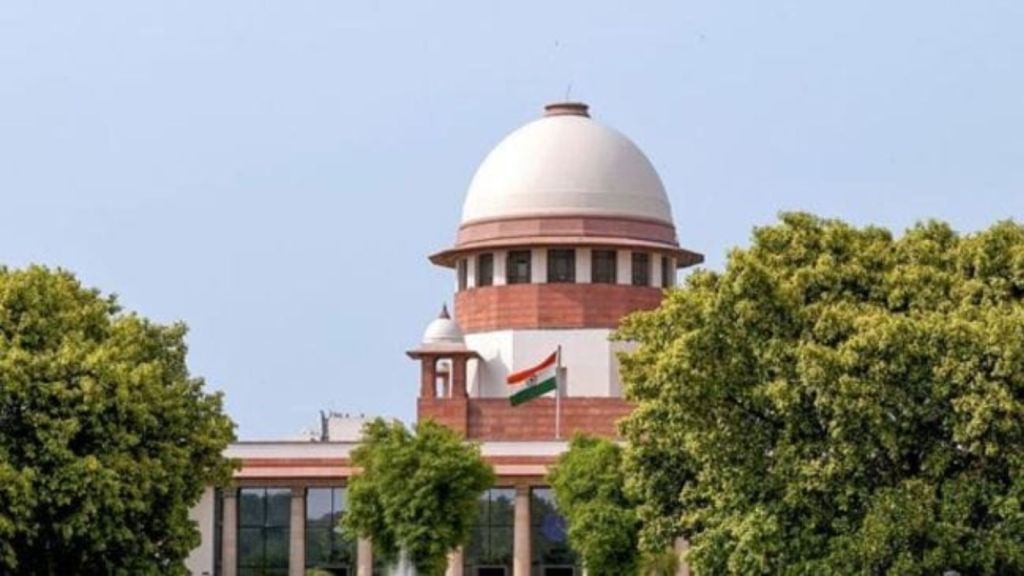 On appeal by Singh, a Supreme Court bench of Justices Sundresh and Arvind Kumar on July 24, 2024 set aside the HC judgment and remitted the matter back to the HC. (PTI)



 Share


